Get Started for as Low as $49 for the First Month: Click Here
Written by Mark Clayborne
Last updated on October 6, 2026

Picking the right credit repair software is harder than it looks. Most platforms sound the same on the surface. They all say they automate disputes, manage clients, and help fix credit reports. But once you dig into how each one works, the differences matter a lot.
Whether you are a credit repair professional serving dozens of clients, a business owner just getting started, or someone working on your own credit, this guide gives you what you need to make a smart decision. You will learn what to look for, what separates good software from average software, and how Client Dispute Manager Software helps credit repair businesses run compliantly and professionally.
The best credit repair software automates dispute letters, organizes client files, tracks responses from the credit bureaus, and keeps your business in line with federal consumer protection law. When choosing a platform, prioritize compliance tools, automation features, ease of use, and the quality of training and support provided.
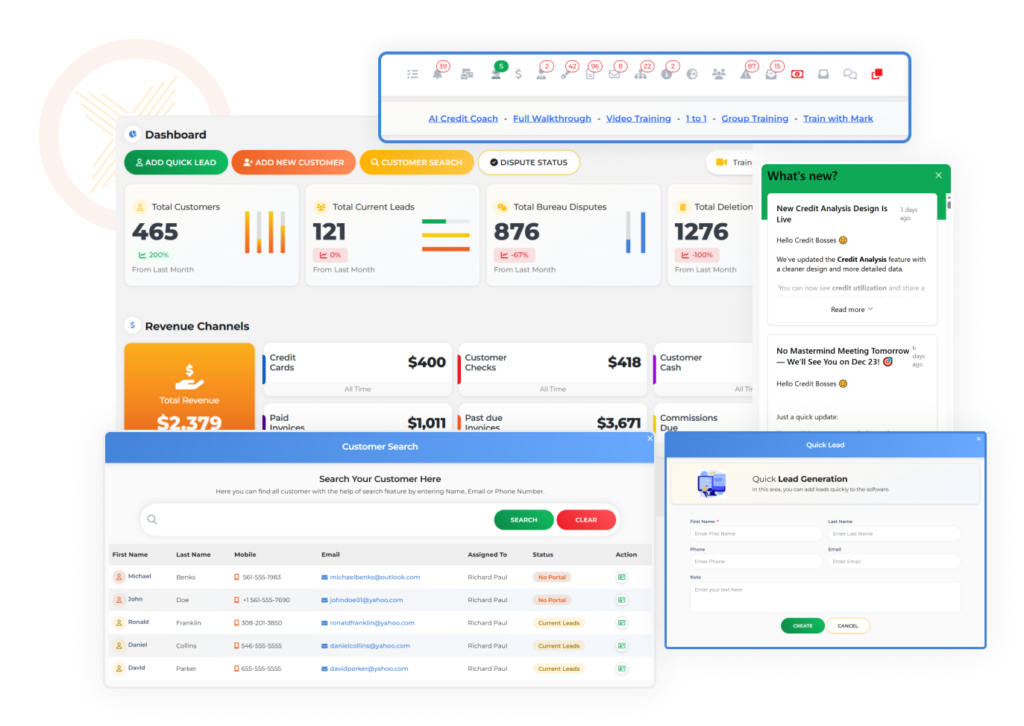
Credit repair software is a platform that helps users identify errors on credit reports, create dispute letters, track bureau responses, and manage client files. It replaces a slow, manual process with an organized, automated system. Credit repair software for business is designed for professionals who manage multiple clients at once. Do it yourself credit repair software is designed for individuals working on their own credit.
A good credit report repair software platform does several things at once. It pulls in credit report data, identifies negative items worth disputing, and helps you build a dispute strategy. It then generates letters, tracks whether the bureaus respond on time, and logs everything in a client file for your records.
For professionals running a credit repair business, the software becomes the central system for the entire operation. You use it to onboard clients, manage their files, send disputes, track results, and report progress back to clients. Without software, all of that happens manually across spreadsheets, email threads, and paper files. That approach does not scale.
For individuals to do it yourself credit repair, the software simplifies a process that can otherwise feel overwhelming. Instead of figuring out what to dispute, how to write the letter, and how to track the response, the software walks you through it step by step.
The Fair Credit Reporting Act gives consumers the right to dispute inaccurate or incomplete information on their credit reports at no cost. Credit bureaus must investigate disputes within 30 days in most cases and must correct or remove items that cannot be verified.
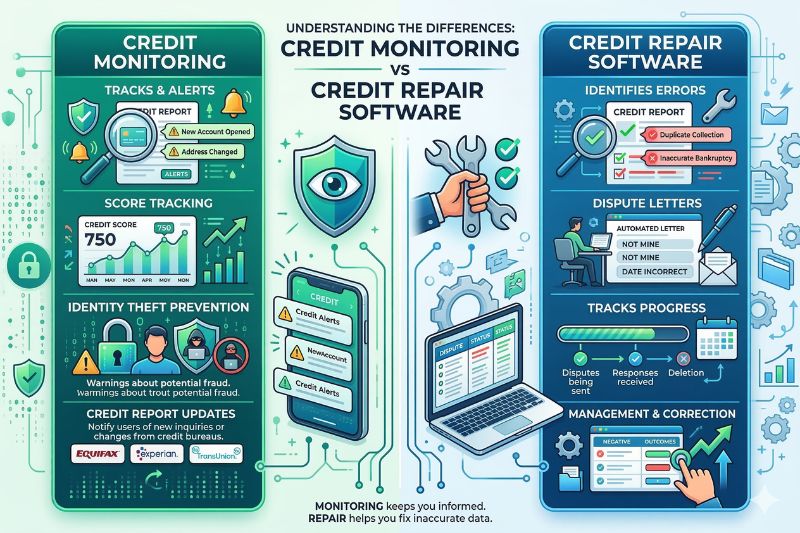
Credit monitoring watches your credit report and alerts you when something changes. Credit repair software acts by helping you dispute errors and remove inaccurate items.
Monitoring is passive. Credit repair is active. If your credit report contains mistakes, monitoring will tell you there is a problem. Credit repair software gives you the tools to fix it.
Think of credit monitoring like a smoke detector. It tells you when there is a problem. Credit repair software is more like the fire extinguisher. It gives you what you need to actually deal with the issue.
Some platforms include basic monitoring features like score tracking or alerts when a previously disputed item reappears.
But those are supplemental features. The core job of credit repair software is dispute management, document tracking, and client communication.
Here is a simple way to remember the difference:
| Feature | Credit Monitoring | Credit Repair Software |
|---|---|---|
| Primary Purpose | Watches your credit report for changes | Helps you dispute and correct inaccurate items |
| Role | Alerts you when something changes | Provides tools to take action |
| Activity Level | Passive | Active |
| When Errors Appear | Notifies you that a problem exists | Helps you challenge and remove incorrect items |
| Core Function | Report alerts, score tracking, change notifications | Dispute management, document tracking, communication tools |
| Fixing Credit Report Errors | Does not fix issues | Supports the dispute process to correct mistakes |
| Typical Features | Alerts, monitoring, score updates | Dispute letters, case tracking, record management |
| Simple Way to Think About It | Like a smoke detector that alerts you | Like a fire extinguisher that helps you handle the issue |
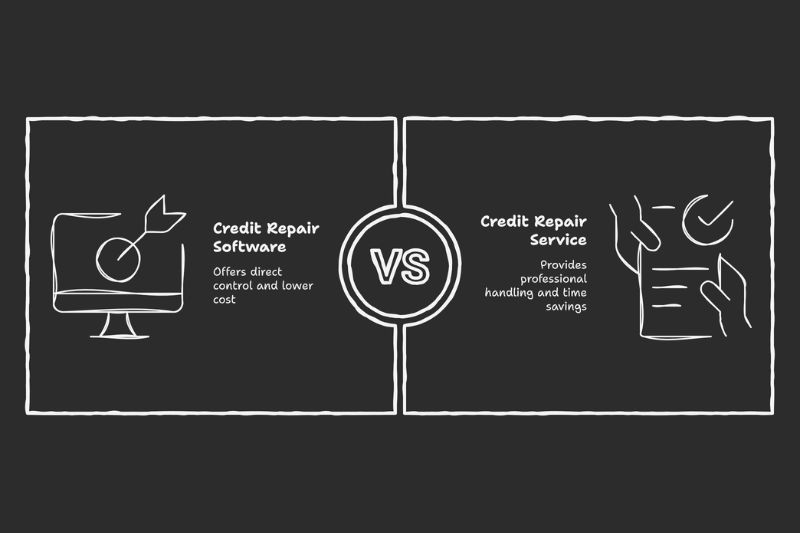
Using credit repair software gives you direct control over the dispute process at a lower cost. Hiring a credit repair service means paying a company to handle disputes on your behalf. Software is better suited for DIY users and credit repair professionals running their own businesses.
A professional service may help if your credit situation is complex and you have very limited time to manage it yourself.
This comes down to three things: Cost, Control, and Time.
Credit repair organizations must provide every client with a written contract before any services are performed. The contract must outline the services to be provided, the timeframe, and the total cost. Clients also have the right to cancel within three business days of signing.
Top rated credit repair software should include automated dispute letter generation, multi-client file management, compliance-ready workflows, bureau response tracking, client reporting tools, and strong training and support. The platform should be built with federal credit repair laws in mind, including the Credit Repair Organizations Act and the Fair Credit Reporting Act.
Not all credit repair platforms are built the same way. Some are designed for individual users doing DIY credit repair. Others are designed as credit repair software for professionals managing dozens of clients at once. The right platform depends on how you plan to use it.
Here is a breakdown of what to evaluate before choosing any platform:
| What to Evaluate | Why It Matters | What to Look For |
|---|---|---|
| Dispute Automation | Saves hours of manual letter writing per client | Customizable templates, multi-round tracking, bureau response logging |
| Compliance Tools | Protects your business from federal law violations | CROA-compliant contracts, TSR-aligned workflows, fee structure guidance |
| Client Management | Keeps all client files organized as you grow | Separate dashboards per client, document storage, communication logs |
| Reporting | Keeps clients informed and reduces status call volume | Automated progress reports, exportable summaries, client portal |
| Training and Support | Reduces your learning curve and onboarding time | Video training library, live support, knowledge base, onboarding guidance |
| Free Trial Length | Lets you test before committing money | At least 7 days of full access; 30 days is the gold standard |
There are several credit repair software platforms available for professionals and individuals in the US market. When evaluating any platform, focus on whether it is built for your specific use case: individual credit repair, small business, or professional agency management.
Key questions to ask when reviewing any platform:
Client Dispute Manager Software checks all these boxes. It is covered in detail in the Client Dispute Manager section below.
Do it yourself or DIY credit repair software gives individuals the tools to dispute credit report errors without hiring a professional service. A good DIY platform provides letter templates, step-by-step dispute guidance, bureau tracking, and progress monitoring. Using DIY software means you handle the process yourself, which takes time but costs significantly less than hiring an outside service.
If you are working on your own credit and want to take a hands-on approach, do it yourself credit repair software is a practical starting point. The key is understanding what the process actually involves before committing to a platform.
Here is what the DIY credit repair process looks like in practice:
Good do it yourself credit repair software automates the letter writing, tracks the timeline, and stores your documents so you do not have to manage all of that manually. It also helps you stay organized as you move through multiple rounds of disputes.
Under the Fair Credit Reporting Act, you have the right to dispute inaccurate or incomplete information with credit reporting agencies at no cost. Credit bureaus must investigate disputes and respond within 30 days. If they cannot verify the information, they must remove it.
One thing to keep in mind: Even the best credit repair software cannot remove accurate negative information. If a debt is real, current, and within the legal reporting period, it cannot be legitimately disputed away. What software helps you do is identify and challenge items that are inaccurate, unverifiable, or reported incorrectly.
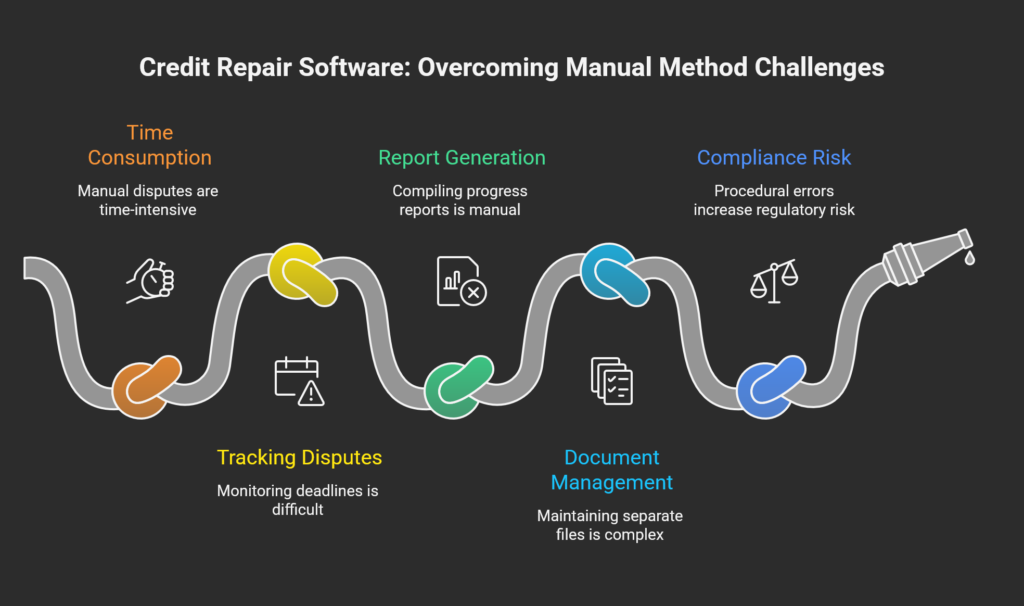
Credit repair software saves significant time compared to managing disputes manually. It automates dispute letter generation, tracks bureau response deadlines, stores all documents in one place, and produces client progress reports without manual compilation. For credit repair businesses managing multiple clients, software is not a convenience. It is a necessity.
Here is what the manual approach actually requires if you run a credit repair business without software:
You pull credit reports for every client, read them line by line, write individual dispute letters, mail them, log the date, watch the 30-day response window, pull updated reports to check what changed, and then compile a progress summary for each client. Multiply that across 10, 20, or 50 clients and the manual approach collapses quickly.
Software handles the repetitive parts so you can focus on work that requires your judgment.
Here is what automation replaces:
Beyond time savings, software also reduces compliance risk. When your dispute workflows follow a consistent, structured process built around CROA and FCRA requirements, you reduce the chance of procedural errors that could expose your business to regulatory problems.
The best credit repair software for small businesses must handle multiple client files, automate dispute workflows, support CROA and TSR compliance, and include training resources that help new operators get up to speed quickly. A free trial long enough to fully evaluate the platform is also a key consideration for business owners who are just getting started.
If you are running a small credit repair business, the platform you choose becomes the backbone of your entire operation. Here is what matters most at the small business level:
The Telemarketing Sales Rule prohibits credit repair companies from requesting or receiving payment before the promised services have been fully performed. If you market your services by telephone or online, you must understand how the TSR applies to your specific business model.
Anyone using credit repair software to operate a business must understand the key federal laws that govern the industry. The Credit Repair Organizations Act, the Fair Credit Reporting Act, the Telemarketing Sales Rule, and FTC regulations all define what is and is not legal. Violating these laws can result in civil liability and federal enforcement action. Compliance is not optional.
Using credit repair software does not automatically make your business complaints. The software is a tool. Your responsibility as a business owner is to understand the legal framework and operate within it.
CROA is the primary federal law regulating credit repair businesses. It sets strict rules around contracts, disclosures, and prohibited practices.
Under CROA:
The FCRA governs how credit reporting agencies collect, store, and share consumer credit information. It gives consumers the right to access their credit reports, dispute inaccurate information, and seek damages when credit bureaus or furnishers violate the law.
Key FCRA provisions that apply to credit repair include:
The TSR is enforced by the Federal Trade Commission and applies to credit repair businesses that market their services by phone or online. The most important rule under the TSR for credit repair is the advance fee prohibition.
You cannot request or receive payment from a client before the promised credit repair services have been fully performed and the promised results have been achieved.
The TSR advance fee prohibition applies broadly. If you are marketing credit repair services by telephone or internet, review the full TSR requirements carefully. A qualified attorney familiar with credit repair compliance can help you structure your business model correctly.
The Federal Trade Commission Act prohibits unfair or deceptive acts or practices in commerce. For credit repair businesses, this means you cannot make unsubstantiated claims about results, use deceptive advertising, or mislead consumers about what your services can achieve. Any representation you make to potential clients must be truthful, substantiated, and not misleading.

Client Dispute Manager Software is a credit repair software for professionals and business owners built by Mark Clayborne, a credit repair industry specialist with over a decade of hands-on experience. The platform combines automated dispute tools, client management features, compliance-ready workflows, and a practitioner-level training library into one system designed for credit repair businesses that want to operate professionally from day one.
Mark Clayborne built Client Dispute Manager Software out of real experience running a credit repair business. The platform reflects what actually works in practice, not what sounds good in a marketing brochure. The training content, dispute workflows, and compliance guidance in the platform come from years of working directly with credit repair clients and navigating the regulatory environment that governs the industry.
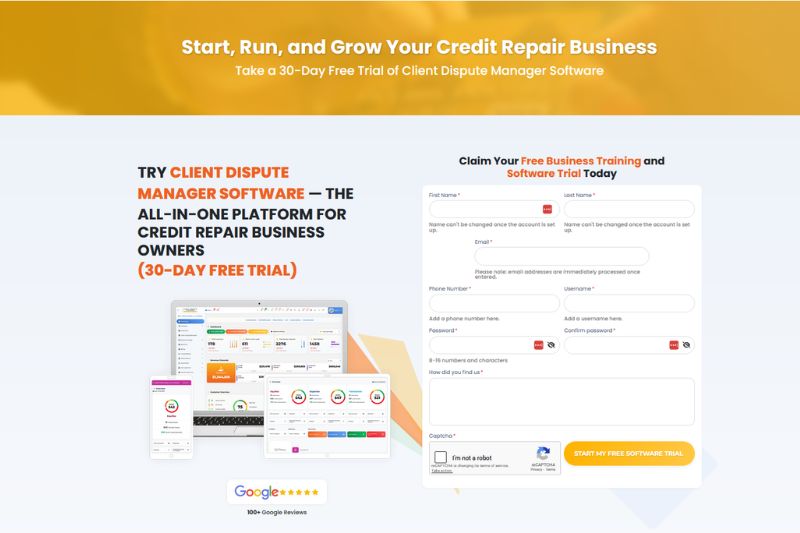
CDMS is used by credit repair business owners at every stage, from professionals managing their first client file to agencies handling hundreds of active clients. The 30-day free trial gives you full access to the platform with no credit card required, which is the best way to see whether it fits your business before you commit to anything.
Here is what you get inside the platform:
No legitimate credit repair software can legally guarantee specific credit score improvements or promise the removal of negative items. The Credit Repair Organizations Act prohibits those claims. Platforms that offer free trials or money-back guarantees apply to the software subscription itself, not to credit repair outcomes. Any platform claiming guaranteed score jumps or item deletions is a compliance red flag.
This is one of the most misunderstood areas of the credit repair industry, and it is worth being direct about it.
Under CROA and the FTC Act, credit repair organizations cannot make performance guarantees before services are delivered. That means no company can legally tell you they guarantee 100 points in 90 days or promise that a specific collection account will be removed. If any platform makes those claims, they are violating federal law.
What legitimate platforms offer is a satisfaction guarantee or free trial on the software subscription itself. If you try the platform and decide it is not right for your business, you receive a refund on the subscription fee or you simply do not pay. That is a customer service commitment, not a credit repair performance promise.
The top-rated credit repair software platforms are designed for either individual credit repair or professional credit repair business management. When evaluating any platform for fixing bad credit, look for automated dispute letter tools, bureau response tracking, FCRA-compliant workflows, and clear progress reporting.
Client Dispute Manager is consistently recognized as a leading platform for credit repair professionals due to its built-in compliance tools, automation features, and practitioner-level training content from founder Mark Clayborne. A 30-day free trial with no credit card required is the best way to evaluate whether the platform fits your situation.
Third-party reviews for credit repair software are available on Trustpilot, Capterra, and G2. When reading reviews, pay attention to whether the reviewer is an individual doing DIY credit repair or a business owner managing client files. Those two groups evaluate software very differently, and a review that is useful for one may not apply to the other.
Industry communities focused on credit repair professionals, including Facebook groups and online forums, also provide candid feedback based on real day-to-day use.
You can find reviews for credit repair and credit score optimization software on Trustpilot, Capterra, G2, and in credit repair industry communities online. When comparing reviews, look specifically for feedback on compliance tools, customer support quality, ease of dispute automation, and the learning curve for new users.
Platforms that include strong training resources tend to receive better long-term reviews from business owners who need to onboard staff and scale operations over time.
Client Dispute Manager offers a 30-day free trial with full platform access and no credit card required. That is a stronger commitment than a post-payment refund window because you test the entire platform before spending anything. When evaluating any platform’s guarantee policy, read the terms carefully.
A satisfaction guarantee on a software subscription fee is a legitimate customer service commitment. Any platform claiming to guarantee specific credit score improvements or item removals is making a claim that violates federal law under CROA.
No legitimate credit repair software or service can legally guarantee specific credit score improvements or promise the removal of particular negative items. The Credit Repair Organizations Act prohibits performance guarantees before services are delivered. This is not a gray area.
Any platform or service that promises guaranteed deletions or guaranteed score jumps is making a claim that violates federal consumer protection law. Choose platforms based on features, honest reviews, and the strength of their free trial offer.
Choosing the best credit repair software is a decision that affects every part of how you run your business or manage your own credit. The right platform automates the manual work, keeps you compliant with federal law, and gives you the tools to deliver real results for your clients.

Mark Clayborne specializes in credit repair, starting and running credit repair businesses. He's passionate about helping businesses gain freedom from their 9-5 and live the life they really want. You can follow him on YouTube.

Experience our credit repair software, risk-free.
Start today and explore the features firsthand!