

Have you ever wondered what rules protect your credit repair business and how to avoid breaking them? The answer starts with understanding the Credit Repair Organizations Act (CROA), a powerful federal law that sets the ground rules for how credit repair companies must operate.
If you run a credit repair business or plan to start one in 2025, this credit repair law can either protect your business or shut it down if ignored.
CROA exists to protect consumers from shady credit repair practices. But it also protects legit, ethical businesses like yours as long as you follow the rules. From banning upfront payments to requiring clear contracts and giving clients the right to cancel, CROA ensures that your company stays legal and trusted in the eyes of both customers and regulators.
In this guide, you’ll discover how CROA compliance works, the exact rules you must follow, and how these laws actually help you build a stronger, safer, and more professional business. Whether you’re new to the industry or already helping people fix their credit, this CROA compliance checklist for 2025 will keep you on the right track without the legal headaches.
Key Takeaways From This CROA Compliance Guide
- CROA compliance is legally required for all credit repair businesses and protects both you and your clients.
- You must provide a written contract, required disclosures, and a 3-day cancellation option before offering any services.
- Charging advance fees is illegal—only bill clients after services are fully performed, especially under TSR rules.
- Misleading advertising and verbal promises can trigger FTC enforcement, lawsuits, or shutdowns.
- Credit repair software like Client Dispute Manager helps automate contracts, track disputes, and keep your business compliant in 2025.
Understanding the Credit Repair Organizations Act (CROA) and Why It Matters in 2025?

The Credit Repair Organizations Act (CROA) is a federal law passed in 1996 as part of the Consumer Credit Protection Act. Its main purpose is to protect consumers from scams and shady practices by companies that offer to fix or improve credit reports.
But for you, the business owner, CROA is more than just a consumer law it’s a compliance roadmap that shows you exactly how to operate legally, build trust, and avoid trouble with regulators.
At its core, CROA tells credit repair companies what they can and cannot do. It lays out specific rules around contracts, fees, advertising, and customer rights. If you violate these rules even by mistake you could face serious penalties from the Federal Trade Commission (FTC), the agency that enforces CROA.
In 2025, staying compliant with CROA regulations is more important than ever. Why? Because the credit repair industry is growing fast, and so is government oversight. The FTC has been cracking down on businesses that charge upfront fees, make false promises, or fail to give customers their legal disclosures.
One mistake could cost you fines, lawsuits, or even get your business shut down. But here’s the good news: CROA isn’t just a list of don’ts. It actually helps you build a better, more trustworthy credit repair company. When you follow the law, your clients feel safer, your reputation grows, and you stand out from competitors who cut corners.
Plus, compliance gives you peace of mind you’re building something real, not risky.
So if you’re asking, “How do I keep my credit repair business legal in 2025?” CROA is your starting point. Up next, we’ll walk through the five most important CROA compliance rules you need to follow to run a smart, ethical, and profitable business this year.
Why CROA Compliance Is Essential for Every Credit Repair Business Owner?
If you’re running a credit repair business in 2025, CROA compliance isn’t optional it’s your safety net. The Credit Repair Organizations Act was designed to protect consumers, but in doing so, it also helps protect honest business owners like you from legal trouble, financial risk, and client complaints.
The Federal Trade Commission (FTC) actively monitors credit repair companies for violations of CROA. Businesses that charge upfront fees, fail to disclose cancellation rights, or use misleading ads are often hit with lawsuits, fines, or forced shutdowns. And the worst part? Many of these businesses thought they were following the rules until it was too late.
Staying compliant with FTC credit repair regulations means you’re not just avoiding penalties you’re keeping your doors open, your finances safe, and your reputation clean.
Violating CROA can lead to expensive lawsuits filed by either the FTC or your own customers. You could be forced to refund every dollar a client paid you even years later if your contract or disclosures were non-compliant. That’s why it’s critical to use a CROA-compliant credit repair contract and keep records of every disclosure and signed agreement.
When you follow CROA to the letter, clients feel safe doing business with you. They know you’re not just promising results you’re giving them legal protections, clear expectations, and the freedom to cancel if they change their mind. That kind of transparency builds loyalty, referrals, and long-term business growth.
Most consumers don’t understand the difference between a legitimate credit repair business and a shady one. But CROA helps you stand out. When you promote your services with CROA compliance front and center clear contracts, no upfront fees, honest advertising you gain a huge edge over competitors who bend or break the rules.
The 5 Core CROA Rules Every Credit Repair Business Must Follow
Running a credit repair business comes with powerful opportunities but also serious responsibilities. If you want to build a company that’s legally safe, respected, and trusted by clients, you need to follow these five essential rules.
They’re all part of the Credit Repair Organizations Act (CROA) and are enforced by the Federal Trade Commission (FTC).
Let’s walk through each one in simple terms along with the actual legal sections they come from so you can stay compliant and confident in 2025.
#1: Follow the No Advance Fee Rule Under CROA and TSR Compliance

According to CROA Section §1679b(b), credit repair companies are prohibited from collecting advance fees. In simple terms: you can’t get paid until your service is completed. This credit repair law ensures that clients only pay after seeing real results.
It gets stricter under the Telemarketing Sales Rule (TSR – 16 CFR §310.4(a)(2)). If you’re selling services by phone or online, you must wait six months after delivering results before charging any fees. That means “setup fees” and “initial consultations” are off-limits unless you’ve already completed your work.
CROA compliance checklist for this rule:
- Never charge upfront for credit repair services.
- Bill only after verified disputes or deliverables.
- Avoid verbal sales or consults unless you meet TSR compliance terms.
#2: Provide a CROA-Compliant Written Contract for Every Client
Your credit repair contract is your legal shield—and a required step under CROA Section §1679d. The contract must clearly spell out what your business will do, how much it will cost (post-service only), and how long it might take.
It must also include:
- A detailed service description
- Payment terms that follow the no upfront payment rule
- The 3-day cancellation policy
- Your company name and physical address
This is the core of your credit repair business compliance process. Without it, you’re risking client disputes and potential FTC enforcement.
Compliance tips:
- Use a standard, transparent agreement.
- Make sure clients sign before services begin.
- Store all signed contracts securely for at least two years.
#3: Deliver Mandatory CROA Disclosures Before Starting Credit Repair Services
Before your client signs anything, you must provide the CROA disclosure titled “Consumer Credit File Rights Under State and Federal Law” as outlined in §1679c.
This document tells clients:
- They have the right to dispute errors on their own for free.
- No company can legally remove accurate negative information.
- They have a 3-day right to cancel the agreement.
This step ensures you’re aligned with FTC credit repair regulations and that clients are fully informed before committing.
How to stay compliant:
- Present the disclosure separately from the contract.
- Record proof of delivery and client acknowledgment.
- Don’t skip this—even if the client says it’s not needed.
#4: Honor the Three-Day Cancellation Right for All Credit Repair Clients
Under §1679e, every credit repair client has the right to cancel their contract within three business days of signing. This cooling-off period protects consumers from feeling pressured into making fast decisions.
To meet CROA compliance:
- Include a visible cancellation form in your onboarding packet.
- Allow clients to cancel easily no hidden steps or resistance.
- Keep all cancellation forms on file for audit protection.
Providing this FTC-required cancellation option not only meets the law, it reinforces your reputation as a client-focused and ethical company.
#5: Avoid False or Misleading Credit Repair Marketing Claims

Marketing is where many businesses break the law without realizing it. CROA Section §1679b(a) and FTC credit repair rules forbid any statements that are false, deceptive, or unrealistic.
Examples of illegal credit repair marketing claims:
- “Guaranteed 100-point credit score boost!”
- “Erase all negative items instantly!”
- “We work directly with Equifax and Experian!”
Instead, use compliant, ethical messaging such as:
- “We help you identify and dispute inaccurate or unverifiable items on your credit report.”
- “Results vary. No company can remove accurate, timely information.”
This is one of the most critical areas of credit repair law. Violations can bring investigations, fines, and loss of client trust.
By following these 5 CROA rules, you’re not just protecting your business you’re creating a foundation of trust, transparency, and long-term success. Your clients will notice, and so will regulators just in the best way possible.
Required CROA Disclosures and Consumer Rights Explained
One of the most important but often overlooked parts of CROA compliance is the required disclosure statement you must give to every client before they sign a contract. This simple document, called the “Consumer Credit File Rights Under State and Federal Law,” is your legal obligation and your trust-building tool.
According to CROA Section §1679c, credit repair businesses must provide this standalone document before starting any services. It’s not optional and must never be hidden inside a larger contract.
The disclosure gives clients a clear summary of their consumer credit rights, including:
- Their right to dispute information directly with the credit bureaus for free
- A reminder that no one can legally remove accurate and timely negative information
- Their 3-day cancellation right under CROA (also detailed in §1679e)
This is part of the credit repair law’s goal to prevent fraud, scams, and false promises. By explaining these rights clearly, you help clients make informed decisions and protect your business from liability.
CROA Penalties, FTC Enforcement, and Common Violations to Avoid

Failing to follow the Credit Repair Organizations Act (CROA) isn’t just a technical slip-up—it can bring serious consequences. The Federal Trade Commission (FTC) actively monitors the credit repair industry and regularly takes enforcement action against businesses that violate CROA or the Telemarketing Sales Rule (TSR).
If your credit repair business isn’t in full CROA compliance, you could face lawsuits, hefty fines, refund demands, or even criminal charges. Understanding what not to do is just as important as knowing what to do.
Under CROA Sections §1679g and §1679h, violators can face:
- Civil liability for damages to consumers
- Class-action lawsuits
- FTC investigations and legal actions
- Mandatory refunds of all client payments
- Payment of attorney’s fees and court costs
If your actions are deemed fraudulent or intentionally deceptive, the FTC may refer your case for criminal prosecution.
Common CROA and TSR Violations to Watch Out For
Here are the most frequent mistakes that lead to regulatory trouble:
- Charging advance fees before services are delivered (CROA §1679b, TSR 16 CFR §310.4)
- Failing to provide the mandatory CROA disclosure or 3-day cancellation form
- Using misleading marketing claims, like “Guaranteed results” or “Erase bad credit fast”
- Missing or incomplete credit repair contracts
- Not maintaining proper recordkeeping (e.g., client consents, signed disclosures, service logs)
- Offering illegal phone-based sales without TSR compliance
Even unintentional violations can result in FTC penalties, so it’s critical to understand and follow all credit repair law requirements.
CROA Compliance in the Digital Age – Staying Legal with Credit Repair Software in 2025

In today’s digital-first world, most credit repair businesses operate online—using websites, virtual meetings, client portals, and automated tools. But with convenience comes responsibility.
If you’re running a virtual or remote business, you must still meet every requirement of the Credit Repair Organizations Act (CROA).
That means understanding how CROA compliance applies to things like e-signatures, digital contracts, and client data security. Fortunately, the right credit repair software can help you stay legal, efficient, and audit-ready.
Are E-Signatures and Online Contracts Allowed Under CROA?
Yes—electronic signatures and digital contracts are legally accepted under CROA, as long as they meet all the same legal standards as paper forms. You still must:
- Provide a CROA-compliant written contract before any services begin
- Include all required terms: services, fees, timelines, cancellation rights
- Offer a digital 3-day cancellation form
- Deliver the “Consumer Credit File Rights” disclosure as a separate file
Whether clients sign on paper or with a click, the FTC credit repair regulations apply equally.
Best Practice: Use a platform that tracks every client signature, timestamp, and consent action to ensure your digital records hold up under scrutiny.
Secure Client Data and Maintain FCRA Compliance
If your business handles sensitive credit information, you’re not just under CROA—you’re also subject to the Fair Credit Reporting Act (FCRA) and the FTC Safeguards Rule.
That means:
- Encrypting all client data in storage and transit
- Controlling who can access dispute records, credit reports, and communications
- Keeping secure backups and audit logs
- Following strict authentication for login access
Failing to protect consumer data can lead to penalties under FCRA §623, FTC action, and serious reputational damage.
Best Practice: Choose credit repair software that offers encryption, user permissions, secure portals, and automatic backups to stay fully FCRA and FTC compliant.
How Credit Repair Software Helps You Stay Compliant?
Leading platforms like Client Dispute Manager Software are built with compliance in mind.
They help you:
- Store all contracts, disclosures, and signed forms in one secure dashboard
- Track every service action to meet the no advance fee billing rule
- Automate delivery of CROA-required documents and notices
- Generate timestamped audit trails for each client
- Manage encrypted client records in line with FTC data standards
- Customize workflows to meet CROA, FCRA, and TSR requirements
This makes it easier to scale your business while still operating 100% legally.
How Client Dispute Manager Software Helps You Stay Compliant in 2025
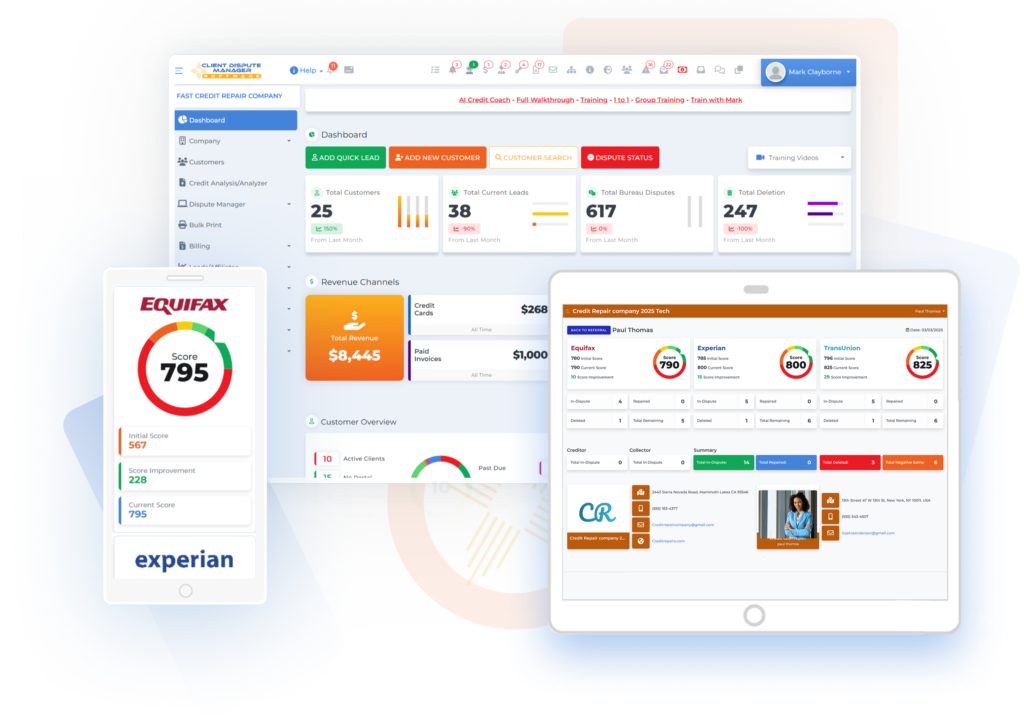
Navigating CROA compliance in a digital business model can be overwhelming—but it doesn’t have to be. Client Dispute Manager Software was built specifically for credit repair professionals who want to grow their business while staying compliant with FTC regulations, CROA rules, and FCRA data protection standards.
This all-in-one platform takes the guesswork out of legal compliance by combining powerful automation with airtight recordkeeping. Whether you’re managing disputes, onboarding clients, or maintaining digital contracts, Client Dispute Manager Software keeps you compliant, organized, and protected.
Start Today and Explore the Features Firsthand!
Key Compliance Features of Client Dispute Manager Software
- CROA-Compliant Contract Templates: Pre-built contract templates that include all required terms (services, fees, timeframes, and cancellation rights), fully customizable to meet your business needs.
- Automated Disclosure Delivery: Send the legally required “Consumer Credit File Rights” notice to every client before contract signing automatically and with timestamped proof.
- E-Signature with Audit Trails: Secure, legally binding e-signature capabilities track exactly when and how a document was signed. This helps you stay in compliance with both CROA and TSR billing timelines.
- Dispute Tracking and Completion Logs: Easily track dispute letter timelines, delivery dates, and outcomes critical for proving when services were rendered under the no advance fee rule.
- Encrypted Client Data Storage: Built-in encryption and user permissions help you meet FCRA compliance and FTC Safeguards Rule requirements. Client data stays private, protected, and backed up.
- 3-Day Cancellation Form Integration: Automatically attach and store the required cancellation notice with each client onboarding packet, ensuring every client gets what the law demands.
- Comprehensive Record keeping: Maintain digital records of contracts, disclosures, communications, and payment history for years all in one secure place.
Start Today and Explore the Features Firsthand!
The Ultimate CROA Compliance Checklist for Credit Repair Business Owners
Running a legally sound credit repair business means more than just knowing the law—it means following it every day. Whether you’re just launching or scaling your company, this CROA compliance checklist gives you the exact steps to protect your business from FTC violations, client disputes, or penalties.
Each step aligns with Credit Repair Organizations Act (CROA) rules, TSR compliance, and FCRA consumer protection standards—so you can operate with total confidence.
- Use a CROA-Compliant Written Contract for Every Client: Include required terms like services, fees, time estimates, and 3-day cancellation rights. Use templates designed for credit repair contract compliance.
- Deliver the “Consumer Credit File Rights” Disclosure: Provide this CROA-mandated notice before contract signing, and keep a signed record of receipt in your CRM or software.
- Attach a 3-Day Cancellation Form with Every Contract: Ensure every client receives and signs a cancellation notice, as required by CROA Section §1679e.
- Never Charge Advance Fees: Bill only after completing services like credit disputes. Use software that logs completed actions to meet TSR and CROA fee rules.
- Use Clear, FTC-Compliant Marketing Language: Avoid phrases like “Guaranteed score boost” or “Instant credit fix.” Use transparent messaging that explains the dispute process truthfully.
- Track All Dispute Actions and Outcomes: Maintain accurate logs of dispute letters, bureau responses, and results for each client to ensure FCRA and CROA compliance.
- Keep Contracts and Compliance Records for 2+ Years: Store all signed documents, cancellation forms, and disclosures to meet FTC retention rules.
- Conduct Quarterly Internal Audits: Review a sample of client files, contracts, marketing materials, and staff communications to identify compliance gaps.
- Train Your Staff on CROA and FTC Rules: Document regular compliance training sessions and updates to ensure your team understands the law and knows how to follow it.
- Use Credit Repair Software to Automate Compliance: Platforms like Client Dispute Manager Software automate onboarding, disclosures, billing, audit trails, and secure document storage—so you stay legally covered while scaling up.
Frequently Asked Questions (FAQs)
What Is Required Under the Credit Repair Organizations Act (CROA)?
CROA requires credit repair businesses to:
- Provide a written contract with specific details like services, fees, and cancellation rights
- Give every client a separate disclosure titled “Consumer Credit File Rights Under State and Federal Law”
- Allow clients to cancel within 3 business days
- Avoid charging any fees before services are fully performed
- Never make false or misleading claims in marketing or conversations
These rules are designed to protect consumers from scams and ensure credit repair businesses follow transparent, ethical practices.
Who Enforces CROA Compliance for Credit Repair Businesses?
The Federal Trade Commission (FTC) is the main agency that enforces CROA compliance. They investigate companies that break the rules and may issue lawsuits, fines, or shutdown orders. State attorneys general may also take legal action against businesses that violate state or federal credit repair laws.
What Does the CROA Disclosure Notice Include?
The CROA disclosure notice, officially titled “Consumer Credit File Rights Under State and Federal Law,” explains that:
- Consumers can dispute credit errors on their own for free
- No one can legally remove accurate negative items
- Clients have a 3-day right to cancel the contract
- Credit repair services cannot promise guaranteed results
You must present this notice before the contract is signed, and it must be a separate document.
What Are CROA Penalties for Violations?
Violating CROA can lead to serious consequences, including:
- Lawsuits from clients or the FTC
- Full refunds to every affected client
- Civil penalties and court costs
- FTC investigations and potential shutdowns
- Criminal charges for repeated or intentional violations
Most violations happen due to charging advance fees, using misleading ads, or failing to give clients the required disclosures.
How Does Credit Repair Software Help With CROA and FTC Compliance?
Modern credit repair software, like Client Dispute Manager Software, helps automate and track your CROA compliance. It can:
- Send required disclosures before contracts
- Generate and store compliant written contracts
- Track dispute work and service delivery
- Log e-signatures and timestamps for legal protection
- Encrypt client data to meet FCRA and FTC Safeguards Rule standards
- Provide built-in audit logs to simplify recordkeeping
Using the right tools doesn’t just make your job easier—it helps you stay protected from costly mistakes.
Conclusion
Following the Credit Repair Organizations Act (CROA) isn’t just about avoiding penalties—it’s how you build a trustworthy, professional credit repair business.
By using compliant contracts, honoring client rights, and avoiding risky marketing, you show clients and regulators that your business is honest and reliable. And with tools like Client Dispute Manager Software, staying compliant becomes simple and automatic.
Protect your business. Earn your clients’ trust. Stay 100% compliant in 2025 and beyond.

Mark Clayborne
Mark Clayborne specializes in credit repair, starting and running credit repair businesses. He's passionate about helping businesses gain freedom from their 9-5 and live the life they really want. You can follow him on YouTube.
Start Today and Explore the Features Firsthand!
Below Is More Content For Your Review:
