Get Started for as Low as $49 for the First Month: Click Here
Written by Mark Clayborne
Last updated on September 15, 2026
Bankruptcy is not the end of your financial life. It is a legal process designed to give people a way out from debt they cannot pay. But it does leave a serious mark on your credit report, and the months after discharge can feel like standing at the bottom of a very long climb.
The good news is that rebuilding starts the day after discharge, not years from now. With the right steps in the right order, most people reach a 620 to 650 credit score within two years. Reaching 700 or above is realistic within three to four years. The process is the same whether you went through Chapter 7 or Chapter 13, though the timelines and starting conditions differ.
This guide covers the exact difference between Chapter 7 and Chapter 13 recovery, the step-by-step process to rebuild your score, the financial products that help most, how to dispute any errors in how your bankruptcy is reported, and how Client Dispute Manager Software automates the dispute and monitoring side of the process so you can focus on rebuilding.
Chapter 7 bankruptcy discharges most unsecured debts in three to six months and stays on your credit report for ten years from the filing date. Chapter 13 involves a three to five year court-supervised repayment plan and stays on your report for seven years.
Both drop your score significantly at filing, but Chapter 13 filers have a built-in advantage: every on-time repayment plan payment adds to your payment history, which means the rebuilding process is already underway before discharge.
Understanding which type of bankruptcy you filed determines your starting point and your timeline.
| Factor | Chapter 7 Bankruptcy | Chapter 13 Bankruptcy |
|---|---|---|
| Time on Credit Report | 10 years (long-term impact) | 7 years (shorter recovery window) |
| Discharge Timeline | 3–6 months (fast relief) | 3–5 years (structured repayment) |
| Debt Outcome | Most unsecured debt wiped out | Partial discharge after repayment |
| Credit Score After Discharge | Typically 500–550 range | Similar, depends on prior profile |
| Payment History During Process | No active reporting | Yes — builds positive history |
| FHA Loan Eligibility | 2 years after discharge | Eligible after 1 year (with approval) |
| Conventional Loan Eligibility | 4 years after discharge | 2 years after discharge |
| Best First Rebuilding Step | Secured credit card after discharge | Secured card during or after plan |
Choosing between Chapter 7 and Chapter 13 bankruptcy is not just about debt it directly impacts how soon you can qualify for a mortgage, rebuild your credit, and regain financial control. Even small differences in timeline or reporting can delay approvals or cost thousands in interest over time.
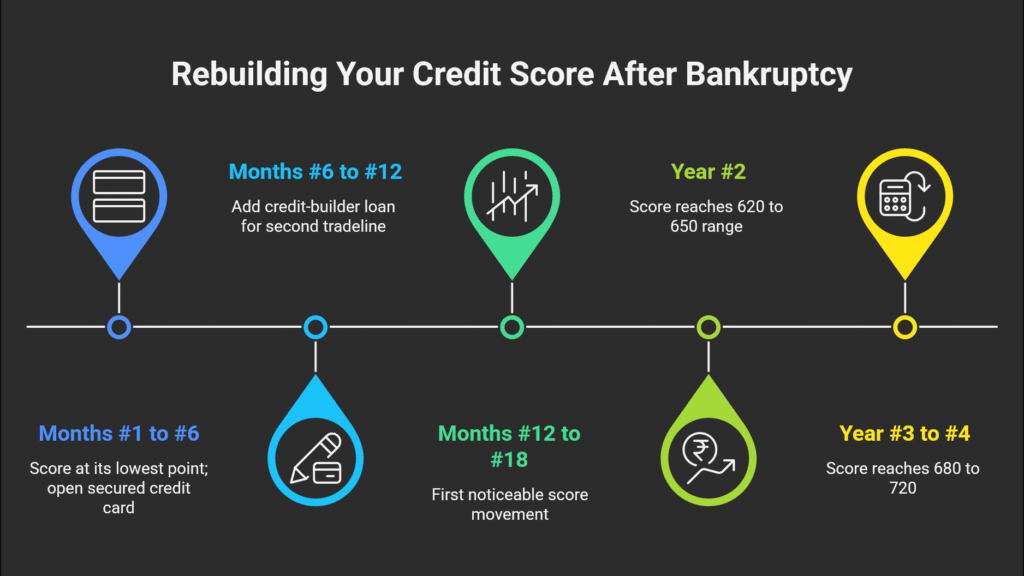
Most consumers see their first measurable score improvement within 12 to 18 months of discharge when they follow a consistent rebuilding plan. The score typically moves from the 500 to 550 discharge range to 620 to 650 within two years.
Reaching 700 or above takes three to four years of clean payment history, low credit utilization, and a mix of positive tradelines. Chapter 13 filers who made every repayment plan payment on time often reach the 620 range faster because the payment history was already building during the plan.
Here is what a realistic recovery timeline looks like by milestone:
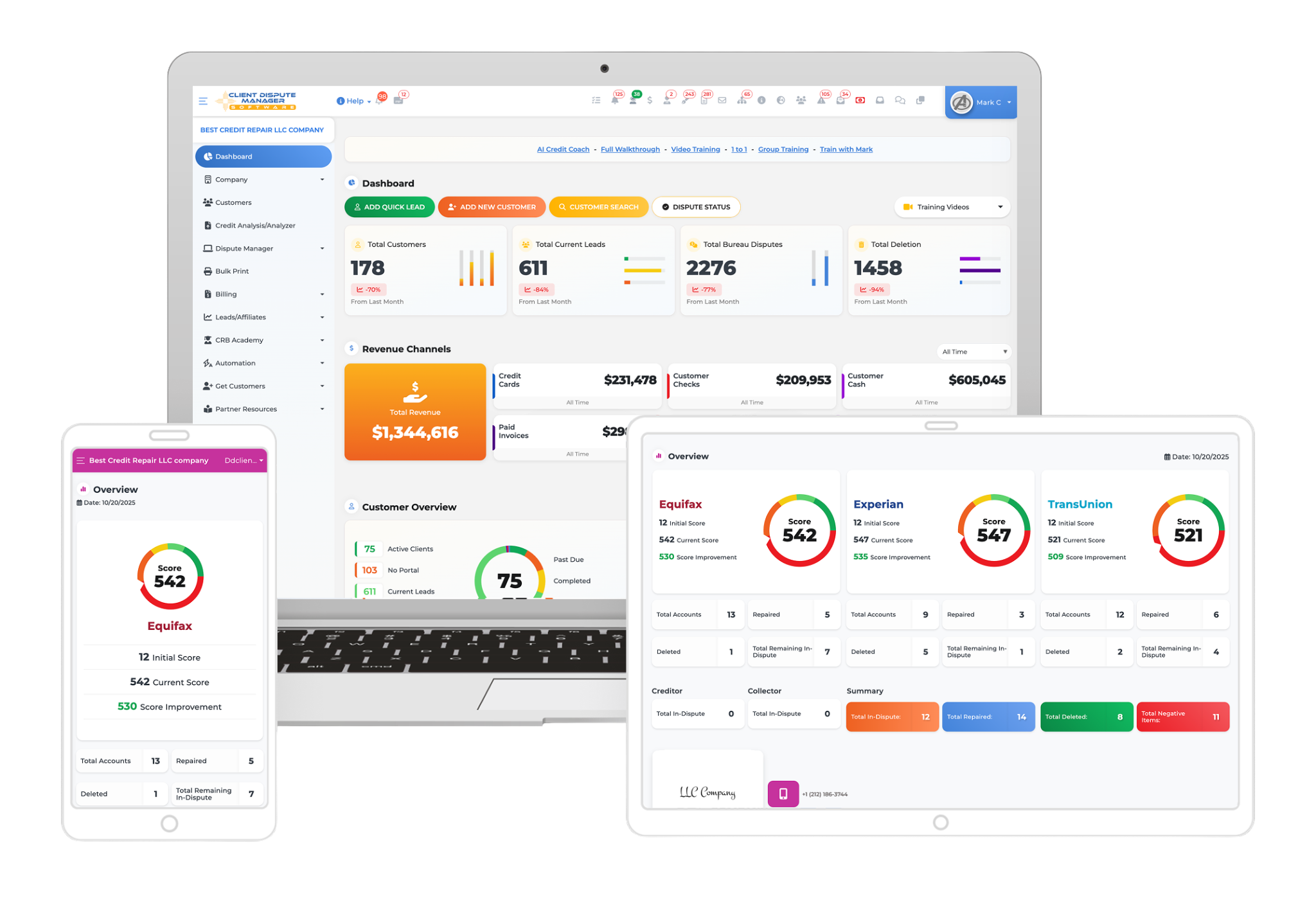
Client Dispute Manager Software monitors your score across all three bureaus in real time so you can see which actions are producing results and catch any new errors as they appear.
Rebuilding credit after bankruptcy follows a specific sequence. The first priority is accuracy: any error in how the bankruptcy is recorded on your credit report will drag your score down every month it remains.
Once inaccurate items are disputed, the focus shifts to adding new positive payment history through secured accounts and keeping utilization low. Client Dispute Manager Software handles the dispute and monitoring steps automatically, so you can focus on the habits that drive score recovery.
Follow these steps in order. Each one builds on the one before it.
The most effective financial products for post-bankruptcy rebuilding are secured credit cards and credit-builder loans because they are accessible immediately after discharge and both report positive payment history to the three major bureaus.
Authorized user status on an existing account is the fastest single action available because it requires no application, no credit check, and no new account, yet adds an established account history to your file within 30 to 60 days.
Secured credit cards are the primary tool for utilization management after bankruptcy. The credit limit is equal to the deposit you make, typically $200 to $500. Keeping the reported balance below 10 percent of that limit, not 30 percent, produces the maximum utilization benefit.
Requesting a credit limit increase after 12 months of on-time payments improves the utilization ratio without opening a new account or triggering a hard inquiry. Client Dispute Manager Software tracks utilization changes as new data reports to your bureau file each month.
Being added as an authorized user on a credit card with a long, clean history adds the primary account holder’s positive payment history to your credit file. The primary cardholder does not need to give you access to the card. The impact appears within 30 to 60 days of being added. For a consumer who just received a bankruptcy discharge and has a thin file of only negative entries, this is one of the most powerful actions available because it adds years of positive history immediately, with no application and no hard inquiry on your file.
The account does need to be the right one. A card with late payments or high utilization will not help. Choose a card with three or more years of on-time payments and a utilization rate consistently below 30 percent.
| Product | Best Use | When to Open | Score Impact |
|---|---|---|---|
| Secured credit card | Primary revolving tradeline, utilization control | Month 1 to 3 after discharge | High — builds payment history and utilization |
| Credit-builder loan | Installment tradeline, credit mix | Month 3 to 6 | Medium-high — adds second tradeline type |
| Authorized user account | Inherited positive payment history | Immediately available, no application needed | High — fastest legal score boost available |
| Rent reporting service | Alternative payment history tradeline | Immediately available | Medium — adds positive history for thin files |
| Low-limit retail card | Additional revolving tradeline | Year 1 to 2, after secured card is established | Low-medium — secondary step only |

The most effective credit repair approach after bankruptcy combines disputing any inaccurate bankruptcy entry details under the FCRA with building new positive tradelines in parallel.
Software-first credit repair is significantly more cost-effective than traditional service companies and gives you full transparency into every dispute letter sent, every bureau response received, and every score change recorded.
Look for platforms that are CROA-compliant, charge no advance fees, and were built by practitioners who understand how the dispute process actually works.
When evaluating credit repair services or software for bankruptcy recovery, check for:
Client Dispute Manager Software was built by Mark Clayborne, a certified credit consultant and CROA practitioner. It automates bankruptcy-specific dispute letters, tracks bureau response deadlines across all three bureaus, monitors score changes tied to each dispute round, and includes a practitioner training library covering the full credit repair process.
You cannot dispute a legally filed and accurate bankruptcy. What you can dispute are inaccurate details within the bankruptcy entry:
The wrong chapter listed, an incorrect filing date or discharge date, accounts incorrectly tied to the filing, accounts that should have been discharged but still show an outstanding balance, and entries that remain on the report past the seven-year limit for Chapter 13 or the ten-year limit for Chapter 7.
Submit a dispute to all three bureaus with certified court documentation that proves the specific error. CDMS generates bankruptcy-specific dispute letters with the correct FCRA citations and tracks each bureau investigation to its deadline.
Once you are two or more years into your post-bankruptcy rebuilding plan and approaching a mortgage application or auto loan, a few targeted actions can accelerate your score.
Pay revolving balances down to below 10 percent utilization before the statement closing date. Submit any remaining disputes through CDMS immediately. Avoid applying for any new credit in the six to twelve months before a major loan application.
If you are working with a mortgage lender, ask specifically about rapid re-scoring, which can push verified bureau corrections through in three to five business days instead of waiting the full 30-day dispute cycle.
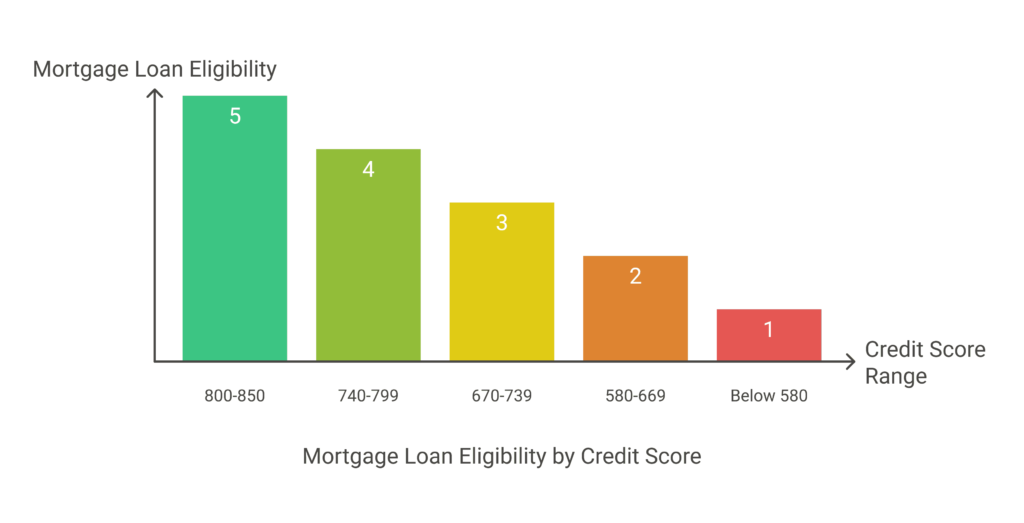
Mortgage eligibility timelines after bankruptcy:
These timelines assume re-established credit during the waiting period. Lenders will want to see at least two to three active accounts with clean payment history and a credit score above the loan program minimum before approving an application. CDMS helps you track exactly where you stand against these requirements month by month.
Most consumers reach 620 to 650 within two years of discharge with consistent positive payment history and one or two active accounts in good standing. Reaching 700 or above takes three to four years.
Chapter 13 filers who made every repayment plan payment on time often rebuild faster because the payment history was already accumulating during the plan period. The single most important factor is consistent on-time payment history after discharge.
Yes. The FCRA gives every consumer the right to dispute inaccurate credit report entries directly with Experian, Equifax, and TransUnion at no cost. You can write dispute letters yourself and send them certified mail. The process is legal, free, and effective.
The challenge is managing deadlines and follow-ups across three bureaus simultaneously. Credit repair software like CDMS automates that side of the process for a low monthly fee, at a fraction of the cost of a traditional service company.
Pull all three credit reports and dispute any inaccurate entries first. Then open a secured credit card and pay it in full every month. Add a credit-builder loan for a second tradeline. Become an authorized user on a trusted account with clean history.
Use a rent reporting service to add on-time rent payments to your file. Keep utilization below 10 percent for maximum score impact. Monitor all three bureaus monthly with CDMS to track progress and catch new errors early.
The first measurable improvements typically appear within 12 to 18 months of discharge for consumers who follow a consistent rebuilding plan. The score usually moves from the 500 to 550 discharge range to 620 to 650 within two years.
Reaching 700 or above takes three to four years. The actions that produce the fastest results are paying down revolving balances to below 10 percent utilization and becoming an authorized user on an established account with clean history.
Secured credit cards are the primary tool because the consumer controls the utilization ratio by controlling the balance. Keep the reported balance below 10 percent of the credit limit, not 30 percent, for the maximum score benefit.
Requesting a credit limit increase after 12 months of on-time payments also improves the utilization ratio without opening a new account. Credit-builder loans add an installment tradeline that does not affect revolving utilization but contributes to payment history and credit mix.
Rebuilding your credit after bankruptcy takes time, but the process is clear when you follow the right steps. Chapter 7 or Chapter 13 does not stop you from improving your credit. It resets your starting point. As shown on page 1, the key actions include reviewing your credit reports, correcting errors, establishing new positive accounts, and making every payment on time. These habits show lenders that you can manage credit responsibly again.
Progress builds month by month when you stay consistent. Start small with secured credit or credit-builder accounts, keep your usage low, and avoid missing payments. Over time, these actions can raise your score and strengthen your credit profile. The goal is to stay active, track your progress, and keep building positive history so you can qualify for better financial options in the future.

Mark Clayborne specializes in credit repair, starting and running credit repair businesses. He's passionate about helping businesses gain freedom from their 9-5 and live the life they really want. You can follow him on YouTube.
Experience our credit repair software, risk-free.