![Starting a Credit Repair Business in Tennessee [2026]](https://clientdisputemanagersoftware.com/wp-content/uploads/2023/05/Starting-a-Credit-Repair-Business-in-Tennessee-2026.jpg)
Starting a credit repair business in Tennessee requires understanding federal compliance, state registration rules, and ethical service delivery. Entrepreneurs must follow the Credit Repair Organizations Act (CROA) and Tennessee Credit Services Business laws while building systems that manage disputes, clients, and documentation efficiently from day one.
What Does a Credit Repair Business Actually Do?

A credit repair business helps consumers dispute inaccurate, outdated, or unverifiable items on credit reports. The goal is not to “fix” credit instantly but to ensure reporting accuracy under federal law.
Most services include reviewing credit reports, preparing dispute letters, tracking bureau responses, and educating clients about credit behavior. Businesses operate as credit service organizations under U.S. regulations.
Success depends less on technical complexity and more on compliance, organization, and consistent client communication.
What Laws Regulate Credit Repair Businesses in Tennessee?
Credit repair companies must follow both federal and Tennessee state laws simultaneously.
At the federal level, the Credit Repair Organizations Act (CROA) regulates how services are marketed and delivered. The law prohibits misleading claims, requires written contracts, and prevents charging fees before services are performed.
At the state level, Tennessee regulates businesses under the Tennessee Credit Services Businesses Act (TN ST §47-18-1001). Oversight is handled by the Tennessee Department of Commerce and Insurance.
Understanding both layers is essential because federal law protects consumers nationwide while state law governs business operation locally.
Do You Need a License to Start a Credit Repair Business in Tennessee?
Tennessee generally does not require a specific standalone “credit repair license,” but registration and local business licensing may still apply.
Businesses operating as credit service organizations must register with appropriate state regulatory authorities and follow disclosure requirements.
Cities or counties may require local business permits depending on where operations occur. Even home-based businesses typically need local registration.
Always verify requirements with state and local agencies before accepting clients.
Is a Surety Bond Required in Tennessee?

Yes, Tennessee requires credit service organizations to maintain a surety bond.
The required bond amount is typically $100,000, designed to protect consumers if the business violates regulations or causes financial harm.
The bond must remain active during operations and for a period after the business stops serving Tennessee residents. Bond costs vary depending on the owner’s credit profile and underwriting risk.
This requirement is one of the most important compliance steps when starting.
What Federal Rules Must Credit Repair Businesses Follow?
The CROA establishes strict operating standards for all credit repair companies.
Businesses must provide written contracts explaining services, pricing, and consumer rights before beginning work. Advance payment before services are performed is prohibited under federal law.
Consumers also receive cancellation rights, and companies cannot promise guaranteed score increases or instant removals.
Compliance is not optional; violations can result in penalties or lawsuits.
How Do You Legally Structure a Credit Repair Business?
Most Tennessee credit repair entrepreneurs choose an LLC structure.
An LLC separates personal assets from business liabilities while creating credibility with clients and payment processors. After forming the entity, business owners typically obtain:
- EIN from the IRS
- Business bank account
- Operating agreement
- Required registrations and bonds
Proper structure builds trust and simplifies tax management.
What Services Should You Offer in 2026?

Modern credit repair businesses provide more than dispute letters.
Clients expect education, transparency, and progress tracking. Common services include credit analysis, dispute management, credit education coaching, and monitoring guidance.
The industry is shifting toward compliance-focused consulting rather than aggressive deletion promises.
Businesses that position themselves as financial education partners tend to retain clients longer.
How Can Software Help You Run a Credit Repair Business?
Managing disputes manually quickly becomes overwhelming as client volume grows.
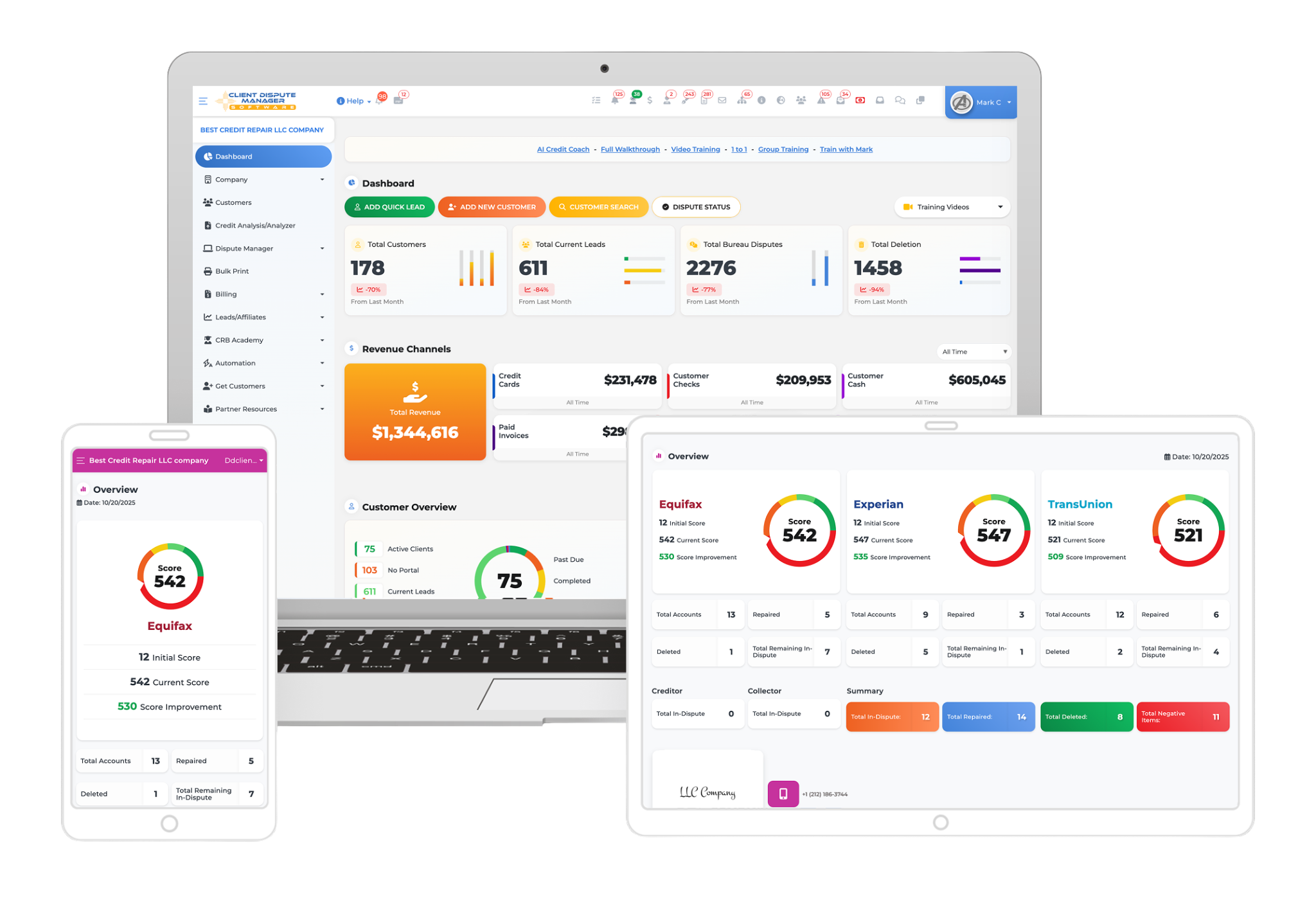
Credit repair software automates workflows such as importing credit reports, generating dispute letters, tracking responses, and organizing documentation. Platforms like Client Dispute Manager are designed to help entrepreneurs start, automate, and scale operations efficiently from day one.
Automation reduces administrative workload and allows business owners to focus on client acquisition and service quality.
In 2026, software is no longer optional if you plan to scale.
How Do You Get Clients for a Tennessee Credit Repair Business?

Client acquisition depends on education and trust rather than aggressive advertising.
Successful businesses build authority through financial education content, partnerships with real estate agents or loan officers, and local marketing strategies.
Common acquisition channels include:
- Educational webinars
- Referral partnerships
- Social media education content
- Local SEO visibility
Consumers choose businesses that explain processes clearly and ethically.
How Much Does It Cost to Start a Credit Repair Business?
Startup costs vary based on structure and tools used.
Typical expenses include business formation, surety bond premiums, software subscriptions, website setup, and marketing. Software investments often range widely depending on features and automation levels.
Compared to many service businesses, startup costs remain relatively low, making credit repair attractive for entrepreneurs entering financial services.
How Can Client Dispute Manager Software Help You Start and Manage a Credit Repair Business?

Starting a credit repair business in Tennessee requires more than understanding laws and disputes. You also need systems that keep client data organized, ensure compliance, and automate repetitive tasks. Client Dispute Manager Software is designed to help credit repair entrepreneurs manage operations efficiently while staying aligned with federal and state requirements.
- Automated Dispute Letter Generation: Client Dispute Manager Software allows users to generate compliant dispute letters quickly using structured workflows. This helps ensure consistency while reducing manual errors when preparing disputes for credit bureaus and creditors.
- Client Dashboard and Case Management: The platform provides a centralized dashboard where businesses can track client progress, disputes, responses, and documentation in one place. This improves organization and helps maintain accurate records for compliance purposes.
- Credit Report Import and Analysis: Users can import credit reports and review negative items directly inside the system. This simplifies the analysis process and allows businesses to identify dispute opportunities faster without managing multiple tools.
- Compliance-Focused Workflow Automation: The software supports structured processes aligned with CROA guidelines, helping businesses avoid common compliance mistakes such as improper documentation or missing disclosures.
- Secure Document Storage and Tracking: All client files, dispute histories, and communications can be stored securely within the platform. This ensures important records remain accessible if verification or audits are required.
- Progress Tracking and Client Communication Tools: Built-in tracking features allow businesses to monitor dispute timelines and update clients on progress. Clear communication builds trust and improves client retention.
- Scalable System for Business Growth: As client volume increases, the software helps automate operational tasks so businesses can scale without significantly increasing administrative workload. This allows owners to focus more on marketing and client relationships rather than manual processing.
Start Today and Explore the Features Firsthand!
What Mistakes Should New Credit Repair Business Owners Avoid?
The biggest mistakes usually involve compliance misunderstandings.
Many new entrepreneurs focus on marketing before understanding legal requirements. Others promise unrealistic outcomes, which violates federal regulations.
Common pitfalls include:
- Charging upfront fees
- Using misleading advertising
- Skipping contracts or disclosures
- Operating without required bonding
A compliance-first approach protects both clients and the business.
How Can You Scale a Credit Repair Business After Launch?
Growth happens through systems, not workload.
Scaling typically involves automation, standardized workflows, and clear onboarding processes. Businesses expand by improving client retention rather than constantly chasing new leads.
Adding educational services or partnerships with financial professionals can also increase recurring revenue.
The most successful companies operate like structured service firms, not side hustles.
Frequently Asked Questions About Starting a Credit Repair Business in Tennessee
Is Starting a Credit Repair Business Legal in Tennessee?
Yes, credit repair businesses are legal when they comply with federal CROA regulations and Tennessee Credit Services Business laws. Proper registration, bonding, and contracts are required to operate legally.
Can I Run a Credit Repair Business From Home?
Yes, many Tennessee credit repair businesses operate remotely or from home offices. However, local city or county business licensing requirements may still apply depending on where the business is registered.
Do I Need Certification to Start?
Certification is not legally required to start a credit repair business. However, training and education help improve credibility and reduce compliance mistakes, especially when handling disputes and consumer protection requirements.
How Long Does It Take to Start a Credit Repair Business?
Most entrepreneurs can launch within a few weeks once business formation, surety bonding, compliance documents, and operational systems are properly set up.
Can I Charge Clients Upfront?
No, federal law under the Credit Repair Organizations Act (CROA) prohibits charging fees before services are performed. Businesses must complete agreed services before collecting payment.
Conclusion
Starting a credit repair business in Tennessee can be a strong opportunity for entrepreneurs who focus on compliance, education, and structured systems. The industry rewards transparency and long-term client relationships rather than quick fixes.
By understanding legal requirements, securing proper bonding, and using modern automation tools, you can build a sustainable service business that genuinely helps consumers improve financial stability.
The key advantage in 2026 is professionalism. Businesses that operate legally, communicate clearly, and use technology efficiently will stand out in an increasingly regulated market.

Mark Clayborne
Mark Clayborne specializes in credit repair, starting and running credit repair businesses. He's passionate about helping businesses gain freedom from their 9-5 and live the life they really want. You can follow him on YouTube.
Start Today and Explore the Features Firsthand!