A charge-off can cause serious damage to a credit report, especially when the information is inaccurate, incomplete, or reported differently across the credit bureaus. However, disputing a charge-off is not as simple as sending a generic letter and asking for it to be removed.
You need to review the account carefully, line by line. That includes the date opened, balance, payment status, date of first delinquency, monthly payment, and other reporting details. Each field can help you identify whether the account contains information that may need to be investigated.
In this guide, you will learn how to dispute an inaccurate charge-off using a factual approach. You will also learn how to compare bureau data, gather supporting documents, write a clear dispute letter, and track the response.
Accurate negative information cannot be removed simply because it hurts your credit score, and no result is guaranteed.
What Is a Charge-Off on a Credit Report?

A charge-off happens when a creditor decides that an account is unlikely to be collected after a long period of missed payments. The creditor may close the account and report it as charged off to one or more credit bureaus.
A charge-off does not mean the debt has disappeared. The creditor may continue collection efforts, assign the account to a collection agency, or sell it to a debt buyer. The balance may still be reported until it is paid, settled, transferred, or otherwise updated.
The account can include several reporting details, such as the date opened, current balance, past-due amount, payment history, account status, and date of first delinquency. These fields can affect how the account appears on your credit report.
An accurate charge-off cannot be removed simply because it lowers your credit score. However, you have the right to dispute information you reasonably believe is inaccurate, incomplete, duplicated, or not supported by the account records.
When Can You Dispute a Charge-Off?
You can dispute a charge-off when you reasonably believe the information is inaccurate, incomplete, duplicated, or connected to an account that does not belong to you. The goal is to identify the exact reporting problem and explain why it should be investigated.
A charge-off may be disputable if the balance is wrong, the payment history contains errors, the account status has not been updated, or important dates do not match your records. You may also have a valid dispute if the account appears more than once or was caused by identity theft.
Common charge-off reporting errors may include:
- An incorrect date opened
- A wrong balance or past-due amount
- An inaccurate payment status
- Missing paid or settled information
- An incorrect date of first delinquency
- Duplicate account reporting
- An account that belongs to another consumer
Do not dispute a charge-off only because it damages your credit score. Focus on information you can identify, explain, and support with account statements, payment records, creditor letters, or other documents.
Review Every Charge-Off Field Before You Dispute

Before you write a charge-off dispute letter, review the account line by line. A general claim that the account is wrong may not explain what the credit bureau needs to investigate. You should identify the exact field you believe is inaccurate and compare it with your supporting records.
- Check the Creditor Name and Account Number: Start by confirming the creditor name and partial account number. Make sure the account belongs to you and matches the statements, agreements, or collection notices in your records. A similar creditor name does not always mean the account is yours. Mixed files, reporting mistakes, and identity theft can place unfamiliar accounts on a credit report.
- Review the Date Opened: Compare the reported opening date with the original account documents. If the date differs across the credit bureaus, review your records before deciding which entry may be inaccurate. Different dates can signal a reporting issue, but the difference alone does not prove an error.
- Check the Date of First Delinquency: The date of first delinquency is the date the account first became late and was never brought current again before the charge-off. This date can affect how long the negative information remains on the credit report. Compare it with payment statements, account history, and creditor records. Do not rely only on the date shown by another bureau.
- Compare the Balance and Past-Due Amount: Review the original balance, current balance, and past-due amount. Check whether payments, settlements, transfers, or account sales were reported correctly. A paid or settled charge-off may still appear, but the balance and status should reflect the updated account information.
- Review the Account and Payment Status: Check whether the account is listed as charged off, closed, transferred, sold, paid, settled, or past due. The status should match the most recent verified information. You should also review the monthly payment and payment history. Look for incorrect late payments, missing updates, or amounts that do not match your records.
Does Different Information Across Credit Bureaus Prove an Error?

When Equifax, Experian, and TransUnion report different information for the same charge-off, it may signal that the account needs a closer review. However, different information across the credit bureaus does not automatically prove that one report is wrong.
Credit bureaus may receive updates at different times. They may also display account details in different formats. One report may show a recent balance update while another still shows older information.
Your job is to compare each reported field with reliable records, such as account statements, payment receipts, settlement letters, and creditor correspondence. Those documents can help you determine whether the date opened, balance, account status, payment history, or date of first delinquency is inaccurate.
Use bureau differences as a reason to investigate the account. Do not use them as the only basis for a charge-off dispute. A stronger dispute identifies the exact field, explains the problem, and includes evidence that supports your position.
Gather Evidence for Your Charge-Off Dispute
A strong charge-off dispute should be based on records, not assumptions. Before you contact a credit bureau or the company reporting the account, collect documents that support the specific error you identified.
Useful evidence may include:
- Credit reports from Equifax, Experian, and TransUnion
- Account statements
- Payment receipts
- Bank records
- Settlement or payoff letters
- Account closure notices
- Collection letters
- Identity theft documents, when applicable
Highlight the exact field you are disputing and match it with the document that supports your claim. For example, if the reported balance is incorrect, include a statement or settlement letter showing the correct amount.
Send copies of your documents, not originals. Keep a complete copy of every dispute letter, attachment, confirmation, and response for your records.
How to Write a Charge-Off Dispute Letter?
A charge-off dispute letter should clearly explain what information you believe is inaccurate and what you want the credit bureau to investigate. Keep the letter factual, specific, and supported by documents.
Start by identifying the account. Include the creditor name, partial account number, and the credit bureau reporting the information. Then name the exact field you are disputing, such as the balance, date opened, payment status, or date of first delinquency.
Explain what the credit report currently shows and why you believe it is inaccurate or incomplete. Reference the document that supports your position. Avoid vague statements such as “this account is wrong” or “remove this immediately.”
Your letter should also include a clear dispute instruction. You can ask the credit bureau to:
- Investigate the disputed information
- Correct the inaccurate field
- Update incomplete account details
- Remove information that cannot be verified as accurate
Do not threaten the credit bureau or make unsupported legal claims. A factual charge-off dispute letter is stronger when it focuses on one clear issue and includes evidence that supports the request.
How to Submit and Track Your Charge-Off Dispute?

Once your dispute letter is ready, submit it through an accepted method provided by the credit bureau. You may also dispute the information directly with the creditor, debt collector, or other company reporting the account.
Keep proof of everything you send. Save copies of the letter, supporting documents, submission confirmation, and delivery records. Record the date the dispute was submitted so you can track the response.
When you receive the investigation results, review each updated field carefully. Check the balance, account status, payment history, dates, and any notes added to the account.
The result may verify, update, correct, or remove the disputed information. If the issue remains, review the response and determine whether you have additional records that support a more specific follow-up dispute.
Common Charge-Off Dispute Mistakes to Avoid
A charge-off dispute can lose strength when the letter is vague, unsupported, or based on assumptions. Before sending anything, review the account details and make sure every statement is accurate.
Common mistakes include:
- Disputing accurate information without a factual reason
- Claiming the account is not yours when it is
- Treating different bureau data as automatic proof of an error
- Sending a generic dispute letter with no account details
- Failing to include supporting documents
- Using threats or unsupported legal claims
- Disputing too many unrelated issues in one letter
- Sending an AI-generated letter without reviewing it
- Forgetting to keep copies or track the response
Focus on the exact field you believe is wrong. Explain the issue clearly and include records that support your position. A specific, factual dispute gives the credit bureau a clearer issue to investigate.
How Client Dispute Manager Software Helps With Charge-Off Disputes?

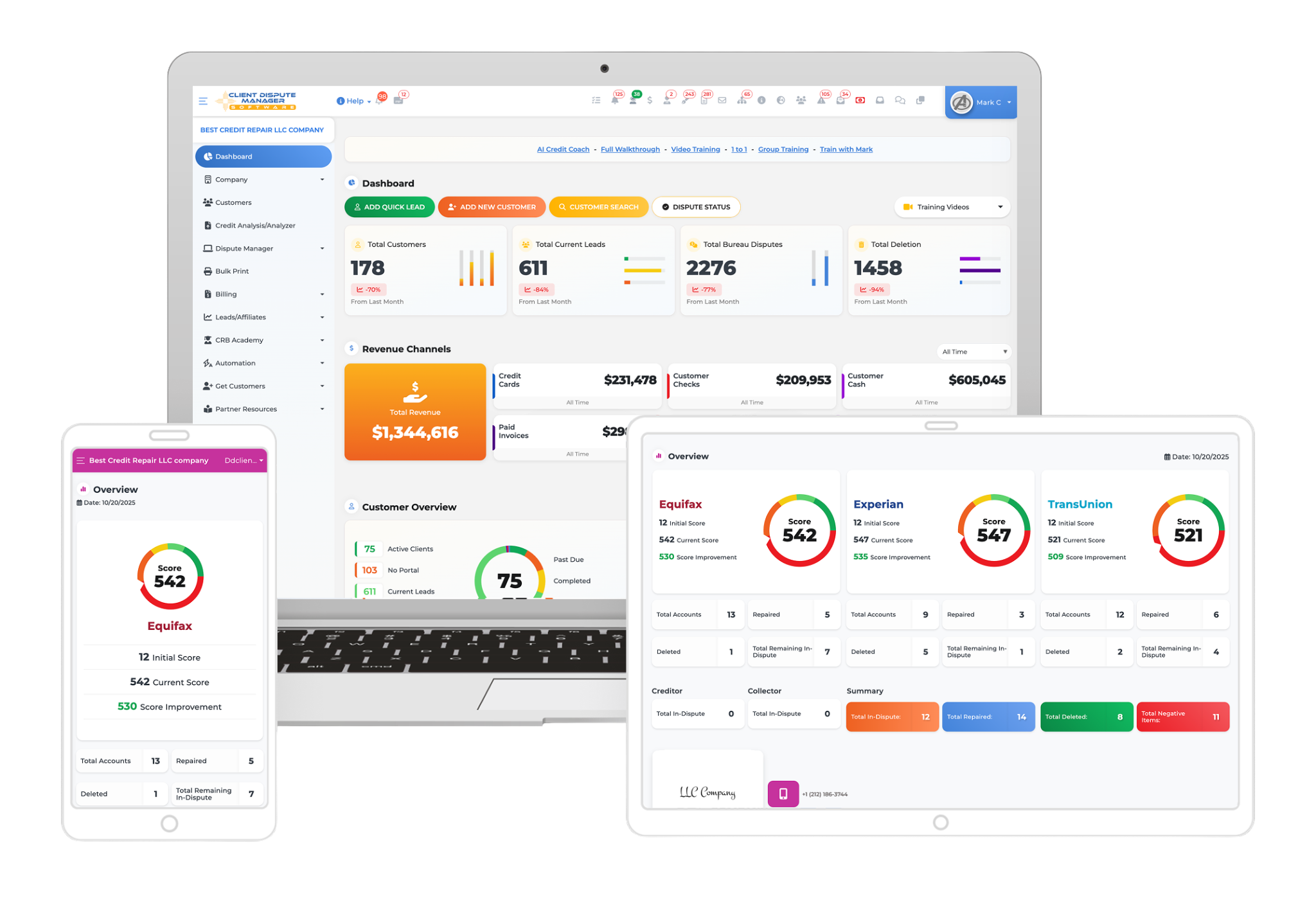
Client Dispute Manager Software can help you organize charge-off disputes, create letters, and track each step of the process from one dashboard.
Start by selecting the credit bureau and marking the charge-off account for dispute. You can then choose a factual dispute reason, add a clear instruction, and select the dispute flow that matches the issue you identified.
The software also allows you to preview the letter before sending it to bulk print. You can assign the dispute round, set follow-up dates, and keep records of each letter and response.
You can also use AI-assisted and Metro 2 letter tools to help prepare dispute letters. However, every letter should be reviewed before it is sent. Make sure each statement is accurate, supported by the client’s records, and specific to the charge-off being disputed.
The software helps manage the workflow, but it does not determine whether information is legally inaccurate or guarantee a correction, deletion, or credit score increase.
Final Steps for Disputing an Inaccurate Charge-Off
A strong charge-off dispute starts with a careful review of the account. Check each reporting field, compare the information with your records, and identify the exact detail you believe is inaccurate or incomplete.
Then write a factual dispute letter, include supporting documents, and request a clear investigation. Keep copies of everything you send and track the response from the credit bureau or information furnisher.
The disputed information may be verified, updated, corrected, or removed depending on the investigation. No specific result is guaranteed.
The key is to stay accurate, organized, and specific throughout the process.

Mark Clayborne
Mark Clayborne specializes in credit repair, starting and running credit repair businesses. He's passionate about helping businesses gain freedom from their 9-5 and live the life they really want. You can follow him on YouTube.