Get Started for as Low a $107 for the First Month: Click Here
Get Started for as Low a $107 for the First Month: Click Here
Written by Mark Clayborne
Last updated on April 9, 2026
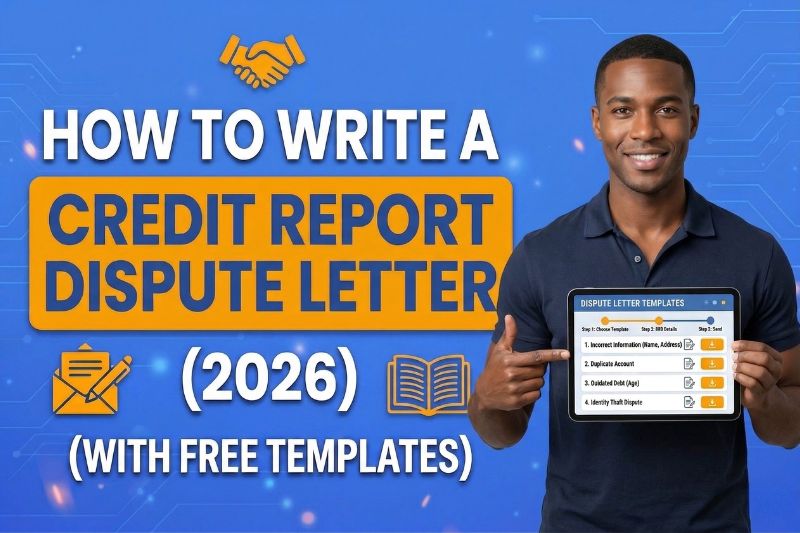
A credit report dispute letter must include five things: your full name and mailing address, the account name and number exactly as it appears on your report, a one or two sentence description of the specific error, your requested resolution, and a list of the documents you are enclosing as evidence.
That is the complete structure. Everything else is optional. Bureau investigators process hundreds of letters each day. A short, factual, specific letter with solid documentation resolves faster than a long letter with weak evidence.
The goal of the letter is not to tell your story. The goal is to present a clear factual contradiction between what the creditor reported and what your documentation proves.
This guide covers how to draft a dispute letter for any type of credit report error, free templates from the Consumer Financial Protection Bureau and the Federal Trade Commission, when to use certified mail, what digital tools generate dispute letters automatically, and how to use consumer advocacy resources when a bureau fails to act.
If you have not yet identified which errors on your report qualify for a dispute, see the guide on what types of errors can be disputed on a credit report before writing your letter.

Draft your dispute letter by identifying the specific account, naming the exact error, and stating the correction you want in plain language. Do not explain your full financial history. Do not apologize. Do not use emotional language. Bureau investigators are not evaluating your situation.
They are comparing your documentation against what the creditor reported. A letter that states the error clearly, attaches the right documents, and requests a specific correction is the most effective dispute letter you can write.
The five required elements, each handled in a single sentence or short phrase:
Write the letter in plain language. Grade 8 reading level. No legal jargon. The creditor’s representative reviewing the dispute does not need citations or formal language. They need a factual discrepancy they can verify against their own records.
Use this checklist before sealing the envelope or uploading your submission:
If you are disputing a personal information error, include a copy of a government-issued photo ID alongside the letter. Bureaus require identity verification before updating personal information entries.

These mistakes appear in most ineffective dispute letters:
After you write the letter, read it once and ask: does this letter contain a specific factual claim and the documentation to support it? If the answer is no, add both before sending.
The Consumer Financial Protection Bureau publishes a free dispute letter template at consumerfinance.gov. The Federal Trade Commission publishes sample dispute language at consumer.ftc.gov.
Both are built to match the format and language bureaus expect, which reduces processing delays caused by missing information. Adapt either template by inserting your specific account information and error description.
These are the authoritative free sources. Do not pay for a dispute letter template that the federal government provides at no cost.
The three most common dispute scenarios each require a slightly different letter structure. The frameworks below outline the key elements for each.
Use this framework for any factual inaccuracy: a wrong balance, an incorrect account status, a credit limit reported below the actual limit, or a personal information error.
Key elements for a basic error dispute letter:
Send to the bureau by certified mail with return receipt requested. Use the mailing addresses listed in the guide on how to dispute credit report errors with Equifax, Experian, and TransUnion.
Use this framework when a payment is marked 30, 60, or 90 days late but your records show it was paid on time.
Key elements for a late payment dispute letter:
If the creditor reported the late payment after a payment processing delay on their end rather than a late payment on yours, include a statement from the creditor acknowledging the payment was received on time. A late payment notation caused by a creditor’s processing error is fully disputable.
Use this framework when an account appears on your report that you never opened or authorized. Fraudulent account disputes require additional documentation beyond the standard dispute letter.
Key elements for a fraudulent account dispute letter:
Fraudulent account disputes follow a separate process from standard disputes. File your FTC Identity Theft Report at identitytheft.gov before submitting the dispute letter. That report is what triggers the bureau’s obligation to block the fraudulent item under the FCRA’s identity theft provisions.
For the complete fraudulent account dispute process, see the guide on how to dispute identity theft and fraudulent accounts on your credit report.
Yes. Send every credit report dispute letter by certified mail with return receipt requested. The return receipt card is your written proof of the exact date the bureau received your letter.
Under 15 U.S.C. 1681i of the Fair Credit Reporting Act, the 30-day investigation window starts from the date of receipt, not the date you mailed the letter. Without that receipt card, the bureau controls the narrative on when the clock started.
The return receipt card is not the only document you need to keep. Store five items in your dispute file after every mailed dispute:
If the bureau fails to complete its investigation within 30 days of the date on your return receipt card, the disputed item must be deleted from your report. That deadline is not a guideline.
It is a legal requirement under the FCRA. Keep your return receipt card in your dispute file until the matter is fully resolved and the correction appears on your credit report.
For a full explanation of what the FCRA requires during the investigation process, see the guide on your legal rights when disputing credit report errors.

Three categories of digital platforms provide dispute letter templates or tools: government websites, credit bureau online portals, and credit repair software.
The most important distinction to understand before choosing a platform is whether the tool actually generates and submits your letter, or whether it links you to the same free government resources you can access directly.
Platforms that charge for access to CFPB or FTC templates are charging for a redirect. The templates themselves cost nothing.
The Consumer Financial Protection Bureau at consumerfinance.gov and the Federal Trade Commission at consumer.ftc.gov both publish free dispute letter templates with step-by-step instructions.
These templates are written by federal consumer protection agencies to match the language bureaus expect. They are updated when the law changes. They cost nothing and require no account creation.
Each bureau’s official dispute portal, at equifax.com, experian.com, and transunion.com, includes a built-in dispute submission form. These forms walk you through the process of identifying the disputed item, selecting a reason, writing a brief description, and uploading documentation.
The portals do not generate a formal letter. They submit your dispute electronically. For consumers who prefer a written letter with a full paper trail, the government templates above are the better option.
Credit repair software platforms generate bureau-specific dispute letters automatically based on the item type and the factual grounds for the dispute.
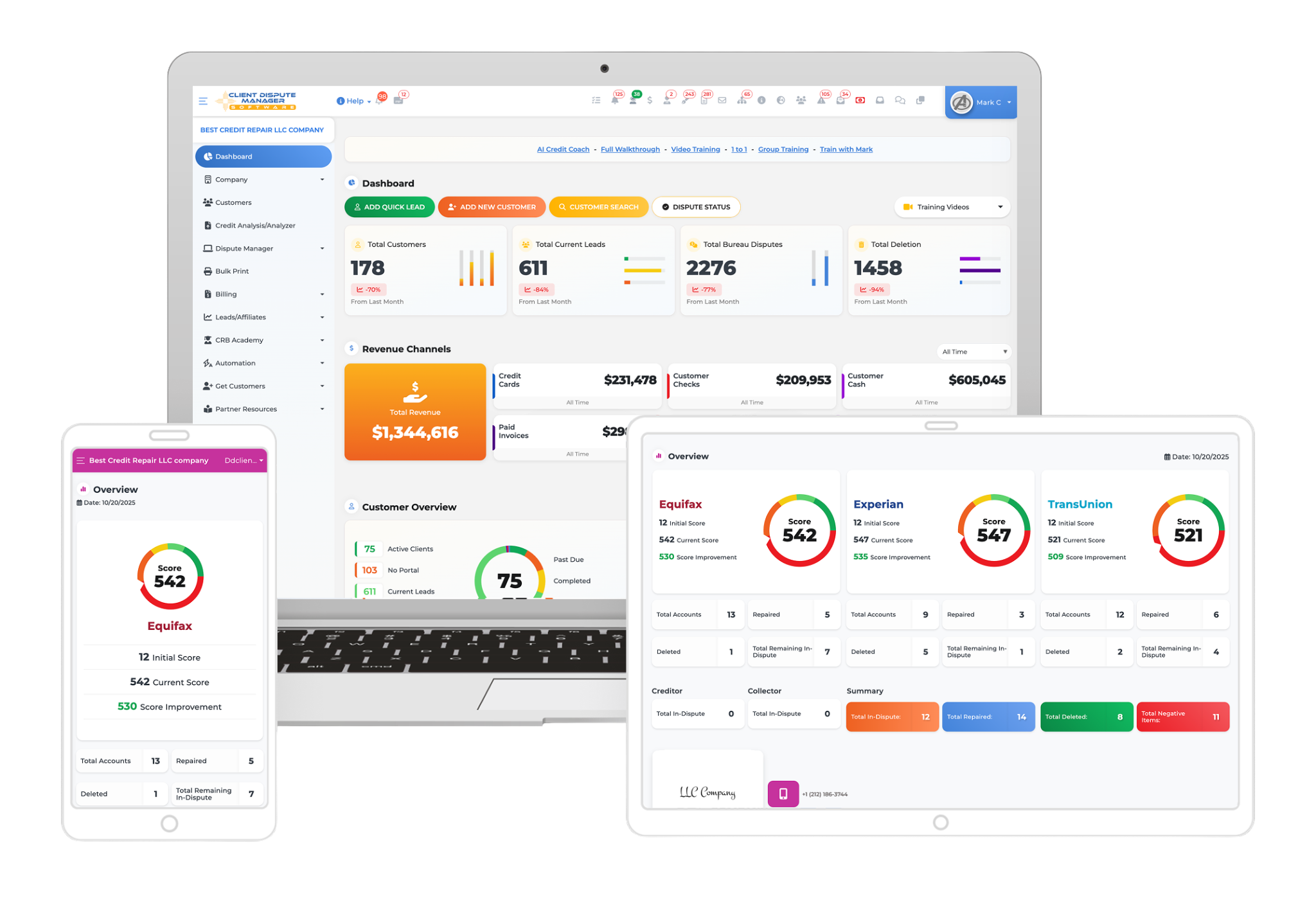
Client Dispute Manager Software, built by certified credit consultant and CROA practitioner Mark Clayborne, generates dispute letters for each of the three major bureaus, populates them with the client’s specific account information and error details, and formats them correctly for submission.
For consumers managing multiple disputes across all three bureaus simultaneously, automated letter generation eliminates the drafting time and reduces the risk of missing a required element. For a full comparison of credit repair software options, see the guide on credit repair software and apps for disputing errors.

Three free consumer advocacy tools are available when a bureau fails to correct a credit report error after a dispute: the Consumer Financial Protection Bureau complaint portal at consumerfinance.gov, the Federal Trade Commission complaint assistant at reportfraud.ftc.gov, and AnnualCreditReport.com for pulling updated reports to confirm whether a correction has appeared.
Each tool serves a different purpose. Knowing which one to use and when prevents wasted effort and keeps your escalation on the fastest possible path.
The Consumer Financial Protection Bureau complaint portal at consumerfinance.gov is the most direct escalation tool available to consumers.
File a complaint against the bureau if it fails to complete its investigation within 30 days, reinserts a previously deleted item without notifying you within five business days, or ignores your written dispute entirely.
The CFPB forwards the complaint to the company and requires a response within 15 days. The CFPB can impose civil penalties on companies that violate the FCRA.
The Federal Trade Commission complaint assistant at reportfraud.ftc.gov handles complaints about credit bureaus and creditors engaged in inaccurate or deceptive reporting practices.
The FTC does not resolve individual disputes, but patterns of complaints contribute to enforcement actions against companies with systemic reporting problems.
If your dispute involves identity theft, file your Identity Theft Report at identitytheft.gov rather than reportfraud.ftc.gov. The identity theft report is the document that triggers the bureau’s obligation to block fraudulent items under the FCRA.
AnnualCreditReport.com is the tool you use after a dispute investigation concludes to confirm the correction actually appears on your report. Pull a fresh report from the bureau that investigated your dispute within 10 days of receiving the investigation result notice.
If the item was supposed to be corrected or deleted and it still appears, that is grounds for a CFPB complaint and potentially for re-disputing with new evidence.
For a full explanation of what your rights are if a dispute outcome is not what the law requires, see the complete guide on your legal rights when disputing credit report errors and the guide on how to dispute items on a credit report.
A credit report dispute letter should be one page or less. Include only the five required elements: your name and address, the account being disputed, the specific error, your requested resolution, and a list of enclosed documents.
Bureau investigators process hundreds of letters each day. Short and specific performs better than long and detailed. The documentation you attach makes the case, not the length of the letter.
No. The Fair Credit Reporting Act gives every consumer the right to dispute credit report errors directly with the bureaus at no cost and without legal representation.
Free dispute letter templates from the Consumer Financial Protection Bureau and the Federal Trade Commission are designed for consumers with no legal background. An attorney becomes relevant only if the bureau violates the FCRA and you pursue legal action for damages.
Yes, with one modification. The account information and error description will be the same for each letter, but address each one separately to the correct bureau and use that bureau’s specific mailing address.
Each bureau investigates independently, so send each letter as a separate certified mail submission with its own tracking number and return receipt card.
If the bureau fails to complete its investigation within 30 days of receiving your certified mail submission, the disputed item must be deleted under 15 U.S.C. 1681i. File a complaint at consumerfinance.gov with the Consumer Financial Protection Bureau.
The CFPB requires a response from the company within 15 days and can impose civil penalties for noncompliance with the Fair Credit Reporting Act.
Yes. Certified mail with return receipt requested gives you the exact date the bureau received your letter, which starts the 30-day investigation window under the Fair Credit Reporting Act.
Without this documentation, the bureau controls the timeline. Keep the return receipt card in your dispute file until the correction appears on your credit report and you have confirmed it in writing.
Writing an effective credit repair dispute letter gives you a clear path to challenge inaccurate or outdated items on your credit report. When you follow a structured format, include proper documentation, and stay consistent with your follow-ups, you improve your chances of getting results. Small details matter. Clear wording, accurate account information, and a focused request can make the difference between a rejected dispute and a successful update.
If you want to stay organized and track your progress, using tools that manage disputes, timelines, and responses can save you time and reduce errors. The key is to stay consistent, review your credit reports often, and take action when something looks wrong. With the right approach and persistence, you can take control of your credit profile and work toward stronger financial opportunities.

Mark Clayborne specializes in credit repair, starting and running credit repair businesses. He's passionate about helping businesses gain freedom from their 9-5 and live the life they really want. You can follow him on YouTube.
Experience our credit repair software, risk-free.