
Can You Dispute a Closed Account or Old Item? What the FCRA Actually Allows
Written by Mark Clayborne
Last updated on May 15, 2026
On this page
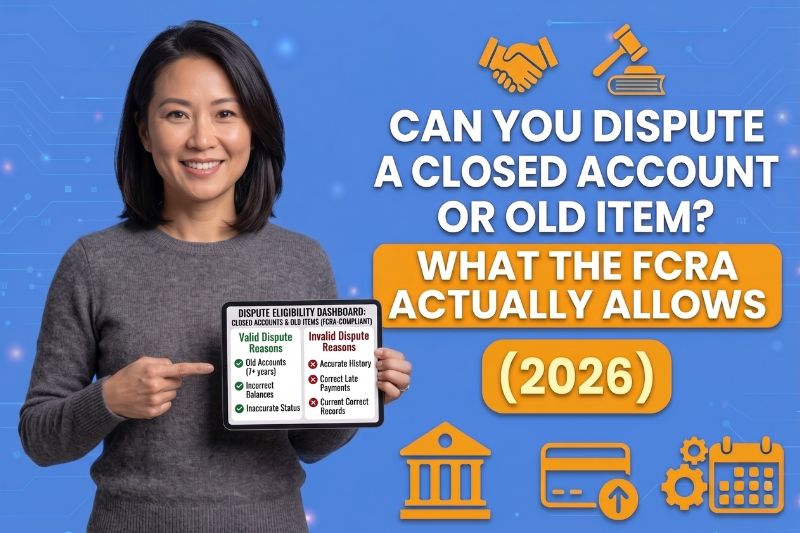
Yes. You can dispute a closed account and you can dispute an old derogatory item as long as it is still on your credit report and contains inaccurate information. Account closure does not remove your FCRA dispute rights.
Account age does not remove your FCRA dispute rights. What the FCRA requires is that the information on your credit report be accurate, and that requirement applies to closed accounts and old items the same way it applies to every other tradeline.
The strategy for disputing a closed account is the same as for any other account: identify the inaccuracy, gather the supporting documentation, and submit a specific dispute letter.
The strategy for disputing old items adds one decision layer: determining whether the item is within its FCRA Section 605 reporting period or past it, because those two situations require different actions. This article covers both, and the sections below address the most common questions consumers have about each one.
Why Might a Credit Dispute Be Rejected If the Account Is Already Closed?

A credit dispute about a closed account is rejected for the same reasons any dispute is rejected: the letter was too vague to trigger a meaningful investigation, no supporting documentation was attached, or a generic template letter was used that the furnisher closed without substantive review.
Account closure is not a valid basis for rejecting a credit dispute under the FCRA. The bureau’s investigation obligation under FCRA Section 611(a)(1) is triggered by the dispute submission itself, not by the current status of the account. A closed account continues to report information to the credit bureau after the account is closed.
The payment history, the balance at closure, any late payment flags, any charge-off or collection designation, all of that information remains on the credit report and is subject to the FCRA’s accuracy requirements. If any of that information is wrong, you have the right to dispute it.
The account being closed does not change that right and does not give the bureau or the furnisher any legal basis to decline the investigation.
The practical challenge with closed account disputes is documentation.
The longer an account has been closed, the harder it may be to obtain the specific bank statement, payment confirmation, or creditor letter needed to contradict the furnisher’s records. Creditor systems are sometimes purged after a number of years. Servicers change.
Accounts move between debt buyers. The documentation challenge is real, but it is a practical constraint on the strength of the dispute, not a legal barrier to filing it.
Can a Credit Bureau Refuse to Investigate Because an Account Is Closed?
No. Account closure is not one of the grounds on which the FCRA permits a credit bureau to decline to investigate a dispute. FCRA Section 611(a)(1) creates an investigation obligation when a consumer disputes the completeness or accuracy of any information on a credit report.
The section does not distinguish between open and closed accounts. The bureau’s investigation obligation is triggered by the dispute submission regardless of whether the underlying account is active.
The only grounds on which a bureau can legally decline to investigate are the frivolous or irrelevant designation under FCRA Section 611(a)(3). That designation requires the bureau to find that the dispute contains insufficient information to investigate, or that it is substantially the same as a prior dispute for which an investigation was already completed.
Account status has no role in either determination. If a bureau has told you that a closed account cannot be disputed, that statement does not accurately reflect the FCRA.
A consumer who receives that response can resubmit the dispute with a specific error description and supporting documentation, and if the bureau continues to refuse, can file a CFPB complaint citing the bureau’s refusal to investigate a legitimate dispute.
My Dispute Was Rejected Because the Account Is Too Old. What Are My Options?

A dispute is not legally rejected because an account is too old. The FCRA does not authorize credit bureaus to refuse to investigate disputes based on account age. If a bureau or furnisher has told you the account is too old to dispute, that statement does not reflect the FCRA’s actual requirements.
Your dispute rights under FCRA Section 611(a)(1) apply to any item currently on your credit report regardless of how many years old the account is. The practical impact of age is different from the legal impact.
Evidence becomes harder to obtain over time. Creditor records are often purged after several years. Payment confirmations are more difficult to reconstruct. The original creditor may have been acquired, restructured, or gone out of business.
Those are genuine constraints on what documentation you can assemble to support the dispute, but they do not give the bureau legal authority to decline to investigate. A well-documented dispute on a ten-year-old account is legally identical to a well-documented dispute on a two-year-old account from the bureau’s perspective.
The correct response depends on whether the item is within its FCRA reporting period or past it. If the item is within the reporting period and contains inaccurate information, the standard dispute process applies.
If the item has exceeded the FCRA Section 605 reporting period, the appropriate action is a removal request citing the reporting period calculation rather than a standard accuracy dispute. The section below covers that distinction specifically.
What Is the Difference Between a Too-Old Rejection and a Reporting Period Expiration?
A too-old rejection from a bureau or furnisher is an incorrect application of the FCRA. No section of the FCRA permits a bureau to reject a dispute on the grounds that the account is old. A reporting period expiration under FCRA Section 605 is a different matter entirely, and consumers frequently confuse the two.
FCRA Section 605 prohibits credit bureaus from reporting most derogatory items beyond seven years from the date of first delinquency. Chapter 7 bankruptcies may remain for ten years from the filing date. Chapter 13 bankruptcies are limited to seven years.
When an item has exceeded its Section 605 reporting period, it should not appear on your credit report at all, and the correct action is not a standard accuracy dispute but a written removal request citing Section 605 and the specific reporting period calculation.
That request identifies the date of first delinquency, calculates when the seven-year period expired, and asks the bureau to delete the item because its reporting period has ended.
If the bureau refuses to remove an item that has genuinely exceeded its reporting period, that refusal is a Section 605 violation and the basis for a CFPB complaint.
An item within the reporting period that contains inaccurate information requires the standard dispute process under Section 611(a)(1). An item past the reporting period requires a removal request under Section 605. The distinction determines which legal provision you invoke and which type of response you request from the bureau.
How Long Do Negative Items Stay on a Credit Report Under the FCRA?
Negative items stay on a credit report for the time periods specified in FCRA Section 605. The table below maps the most common derogatory item types to their applicable reporting periods and identifies the starting point for the clock in each case.
Knowing the correct start date is as important as knowing the limit, because the date that starts the clock varies by item type and is sometimes reported incorrectly by furnishers.
| Item Type | FCRA Reporting Period | Clock Starts From |
|---|---|---|
| Late Payments | 7 years | Date the payment was reported as late |
| Collection Accounts | 7 years | Date of first delinquency on the original account, not the date the account was sold to the collector or the date the collector first reported it |
| Charge-Offs | 7 years | Date of first delinquency on the underlying account |
| Repossessions | 7 years | Date of first delinquency on the account that led to repossession |
| Foreclosures | 7 years | Date of first delinquency on the mortgage |
| Chapter 7 Bankruptcy | 10 years | Date of filing, not the date of discharge |
| Chapter 13 Bankruptcy | 7 years | Date of filing |
| Hard Inquiries | 2 years | Date of the inquiry; dispute right applies only to unauthorized inquiries |
The date of first delinquency is the most important date in any calculation involving old items. FCRA Section 605 defines it as the month and year the delinquency that led to the negative event first occurred on the original account.
For a collection account, the clock starts when the original account first went delinquent, not when the debt was sold to the collector, not when the collection was first reported, and not when the consumer received the first collection notice.
Debt buyers and collection agencies sometimes report items with incorrect dates of first delinquency that extend the seven-year clock beyond what Section 605 allows. Disputing an incorrect date of first delinquency on an aged collection account is a legitimate and often effective dispute basis.
Does Waiting Too Long to Dispute an Error on a Credit Report Increase Rejection Chances?
Waiting longer to dispute an error does not increase the formal risk of a rejection. The bureau’s investigation obligation under FCRA Section 611(a)(1) applies whenever a dispute is filed, as long as the item is still on the credit report.
There is no deadline for filing a dispute, and account age alone does not give the bureau legal grounds to reject the submission. What waiting does affect is the practical strength of the dispute. Evidence becomes harder to obtain as time passes. Creditor records are often purged after several years.
Original creditors change systems, get acquired, or dissolve. Payment histories become more difficult to reconstruct from consumer records alone. The window when the original creditor still has documentation matching your records is usually within the first three to five years after the event.
The timing consideration that does matter strategically is proximity to the Section 605 reporting period limit. If an item you are disputing is within one to two years of its expiration date, the calculation shifts.
Assembling documentation and submitting a dispute for an item that will age off the report in 18 months may not be the most efficient use of effort compared to focusing that time on items with longer windows or higher financial impact.
Dispute when you have the evidence to support the dispute and when the item has enough time remaining on the report to make the effort worthwhile.
What Happens When an Item on Your Credit Report Has Exceeded Its Reporting Period?
When an item on your credit report has exceeded its FCRA Section 605 reporting period, it should not be there. The bureau is prohibited from reporting information that has exceeded the applicable time limit.
The correct action is a removal request citing Section 605, not a standard accuracy dispute under Section 611(a)(1). The distinction matters because the two processes invoke different legal obligations and request different outcomes: an accuracy dispute asks the bureau to investigate whether the information is correct, while a Section 605 removal request asks the bureau to delete the item because its time limit has expired regardless of its accuracy.
A Section 605 removal request requires three elements. First, identify the date of first delinquency for the item. This date is listed on most credit reports in the account detail section. If it is not listed, contact the original creditor in writing to request the date, or send a written inquiry to the bureau asking it to provide the date as part of your account information.
Second, calculate the reporting period. For most derogatory items, that is seven years from the date of first delinquency. For Chapter 7 bankruptcy, it is ten years from the filing date. Third, submit a written request to the bureau by certified mail citing FCRA Section 605, stating the date of first delinquency, showing the calculation that the reporting period has expired, and requesting deletion.
Include a copy of your credit report with the item marked. If the bureau refuses to remove an item that has genuinely exceeded its Section 605 reporting period, file a CFPB complaint at consumerfinance.gov and include the reporting period calculation in the complaint description.
The bureau is required to respond to the CFPB within 15 days. A refusal to remove a verifiably expired item is a Section 605 violation and the CFPB complaint creates a formal record of that refusal.
What Are Common Reasons Disputes Against Public Records Are Rejected?

Disputes against public records, including bankruptcies, civil judgments, and tax liens, are rejected for reasons that differ from standard account-level disputes. Three causes account for most public record dispute rejections.
The first is that furnisher direct dispute rights under Regulation V do not apply to information derived from public records. Regulation V (12 C.F.R. 1022.43) gives consumers the right to dispute inaccurate information directly with the furnisher, but that right explicitly excludes information derived from public records.
A dispute about a bankruptcy or a civil judgment must go through the credit bureau. Sending a Regulation V direct dispute to the creditor or the court clerk does not create an investigation obligation for public record items.
The second cause is that the dates associated with public records are often correct even when they feel wrong to the consumer, because they reflect official court filing dates and government records rather than furnisher-held account data.
A consumer who disputes the filing date of a bankruptcy because it does not match their memory of when they filed will typically receive a verified result because the bureau can confirm the date directly against public court records.
The third cause is strategic. The Section 605 reporting period question that applies to account-level aged items applies equally to public records. A civil judgment older than seven years from the date it was filed should not appear on a credit report.
A Chapter 7 bankruptcy older than ten years from the filing date should not appear. For public records approaching or past those limits, the Section 605 removal request is the correct path, and the same calculation applies: identify the filing date, calculate the reporting period expiration, and request deletion citing Section 605.
Dispute Strategy for Closed Accounts and Old Items: When to Dispute vs. When to Wait
Once you understand what the FCRA allows, the practical question is when disputing is worth the effort versus when waiting for natural expiration is the more efficient strategy.
The decision depends on three factors: whether the item contains inaccurate information that a dispute can address, whether supporting documentation is available to support the dispute, and how much time remains on the item’s reporting period. The table below maps five common scenarios to the right action.
| Scenario | Right Action | FCRA Basis |
|---|---|---|
| Closed Account With Inaccurate Information Within The 7-Year Reporting Period | Standard dispute under Section 611(a)(1), certified mail with supporting documentation naming the specific error | FCRA Section 611(a)(1) -- investigation obligation applies regardless of account status |
| Closed Account That Has Exceeded Its Section 605 Reporting Period | Section 605 removal request citing date of first delinquency and expiration calculation; not a standard accuracy dispute | FCRA Section 605 -- bureau is prohibited from reporting information past the limit |
| Collection Account With An Incorrect Date Of First Delinquency That Extends The Reporting Period | Dispute the specific date of first delinquency as a factual inaccuracy under Section 611(a)(1); attach documentation showing the correct original delinquency date | FCRA Section 611(a)(1) -- incorrect reporting period start date is a factual inaccuracy subject to dispute |
| Item Within 1 To 2 Years Of Its Section 605 Expiration With No Available Documentation | Weigh the effort against natural expiration; if documentation is unavailable and the item expires within 18 months, waiting is likely more efficient than disputing without evidence | FCRA Section 605 reporting period calculation |
| Item At Or Past Its Section 605 Reporting Period Limit | Written removal request to each bureau citing Section 605 with the expiration calculation; CFPB complaint if the bureau refuses to remove | FCRA Section 605 -- refusal to remove a verified expired item is a violation |
The most effective dispute basis for an aged collection account that is still within the reporting period is often the date of first delinquency itself. Collection agencies and debt buyers sometimes report incorrect dates of first delinquency that make accounts appear to have more time remaining on the report than they actually do.
Disputing that date specifically, with documentation showing the correct original delinquency date, is a factual inaccuracy dispute under Section 611(a)(1) and frequently produces either a corrected date that triggers earlier expiration or a deletion when the furnisher cannot verify the original account records.
Can You Dispute Inaccurate Information on a Closed Account Directly With the Furnisher?
Yes. Regulation V (12 C.F.R. 1022.43) gives consumers the right to dispute inaccurate information directly with the furnisher currently reporting the account, regardless of whether the account is open or closed.
The furnisher’s investigation obligation under Regulation V applies to any account it reported to the bureaus. Account closure does not exempt the furnisher from the requirement to investigate a direct dispute about information it furnished.
For closed accounts, the furnisher direct dispute is sometimes more effective than the bureau dispute because the furnisher still has the original account records in its own system. The bureau’s investigation of a closed account relies on an e-OSCAR coded inquiry to the furnisher, which may not compel a document-level review.
A direct dispute submitted to the furnisher’s dispute correspondence address by certified mail with the specific error described and the supporting documentation attached forces the furnisher to address the specific factual claim against its own records rather than simply confirming the data it previously sent.
A practical benefit of the furnisher direct dispute for aged closed accounts is what happens when the furnisher cannot verify the information. If the furnisher’s records for an old account have been purged or are incomplete, it may be unable to verify the disputed data within the 30-day investigation window.
Under the FCRA and Regulation V, a furnisher that cannot verify information it reported must correct or delete it and notify the credit bureaus of the correction. For old accounts where record availability is uncertain, a furnisher direct dispute creates the possibility of a deletion without requiring the consumer to prove the information is wrong.
Frequently Asked Questions About Disputing Closed Accounts and Old Items
The five questions below address the specific situations readers ask most after learning they can dispute closed accounts and old items.
Can a Debt Collector Re-Age a Collection Account to Extend Its Time on My Credit Report?
Yes, re-aging is a real practice and it is illegal. Re-aging occurs when a debt collector reports a collection account with a date of first delinquency that is later than the actual original delinquency date, which restarts the seven-year reporting clock and makes the account appear to have more time remaining on the report than it actually does.
The FCRA prohibits this practice. Under FCRA Section 623(a)(5), a furnisher that reports a collection account must report the date of first delinquency as the date the account was first delinquent with the original creditor.
A debt buyer cannot change that date when it purchases the account or begins collecting on it. If you believe a collection account on your report has been re-aged, dispute the date of first delinquency specifically as a factual inaccuracy under FCRA Section 611(a)(1).
In your dispute letter, state the date you believe the account originally became delinquent, explain that the date reported does not match the actual original delinquency date, and request that the bureau investigate the correct date of first delinquency and update the reporting period calculation accordingly.
If you have any documentation showing when the original account first became delinquent, attach it. A successful re-aging dispute can either correct the date, which may trigger immediate Section 605 expiration, or delete the account if the furnisher cannot verify the original delinquency date.
Does a Closed Account With a Zero Balance Still Affect My Credit Score?
Yes. A closed account with a zero balance can affect your credit score in several ways depending on its contents and how long ago it was closed. A closed account with a history of on-time payments continues to contribute positively to your payment history, which is the most heavily weighted factor in most credit scoring models.
A closed account with late payments, a charge-off, or a collection designation continues to contribute negatively to your score for as long as the item remains on the report within its Section 605 reporting period.
The specific impact of a closed account with a zero balance depends on the account type.
A closed credit card removes that account’s credit limit from your total available credit, which increases your overall credit utilization ratio if you carry balances on other accounts. That increase in utilization can lower your score even if the closed account itself had a clean payment history.
A closed installment loan, such as a paid-off auto loan or mortgage, typically has a neutral or mildly positive effect because it demonstrates completed repayment of a significant obligation.
The key variable is always whether the payment history on the closed account is positive or negative, because that history continues to influence scoring models until the account ages off the report.
What If the Original Creditor No Longer Exists and I Need to Dispute a Closed Account?
If the original creditor no longer exists, the dispute process still works but the documentation path changes. The credit bureau’s investigation obligation under FCRA Section 611(a)(1) applies regardless of whether the original creditor is still in business.
The bureau sends the investigation inquiry to the furnisher currently reporting the account, which may be a debt buyer, a successor servicer, or an entity that acquired the original creditor’s accounts.
For documentation, the fact that the original creditor is gone does not mean documentation is unavailable. Pull any statements, payment confirmations, or account correspondence you have from the original account relationship.
If you have a bank statement showing a payment made to the creditor during the disputed period, that document is your evidence regardless of whether the creditor still exists.
If the furnisher currently reporting the account cannot verify the information because the original records were not transferred during the acquisition or closure, it may be unable to complete the investigation within the 30-day window. An inability to verify results in a required correction or deletion under the FCRA.
For old accounts from defunct creditors, the furnisher direct dispute under Regulation V specifically is often the most productive path because it forces the current data owner to review what records it actually has.
Can I Dispute the Same Closed Account Item at All Three Credit Bureaus Simultaneously?
Yes. You can dispute the same item at all three credit bureaus simultaneously. Each bureau maintains its own credit file, and an inaccurate item reported to all three bureaus requires a separate dispute submission to each one. Submitting simultaneously is not only allowed but recommended when the same inaccuracy appears on all three reports, because each bureau operates on its own 30-day investigation window from the date it receives the dispute.
Staggering submissions unnecessarily delays resolution at the bureaus you contact later. Each bureau dispute is processed independently. A deletion at Experian does not automatically trigger deletion at Equifax or TransUnion.
If the furnisher corrects the information as a result of a dispute at one bureau, it is required under FCRA Section 623(a)(2) to notify all bureaus to which it furnished the incorrect information and to correct the data with each of them.
That obligation exists, but in practice consumers sometimes need to follow up with the other bureaus if the correction does not propagate automatically. Submitting separate certified mail disputes to all three bureaus at the same time creates three independent investigation obligations with three separate delivery confirmation receipts, giving you the most complete record and the fastest resolution across all three reports.
Does Paying Off a Collection Account Remove It From My Credit Report?
No. Paying off a collection account does not automatically remove it from your credit report. A paid collection is still a collection. It remains on the report for seven years from the date of first delinquency on the original account.
The status changes from unpaid to paid or settled, and that status update is visible to lenders reviewing the report, but the tradeline itself continues to report until its Section 605 reporting period expires. The path to removal after paying a collection is a negotiated pay-for-delete agreement, which must be reached before the payment is made.
A pay-for-delete arrangement is a voluntary agreement between the consumer and the collection agency in which the collector agrees to delete the tradeline from the credit report in exchange for payment. These arrangements are not required by the FCRA, and many collectors refuse to enter into them.
If a collector agrees to a pay-for-delete arrangement, get the agreement in writing before making any payment. If the collector does not delete the item after payment as agreed, dispute the tradeline with the bureaus and include a copy of the written pay-for-delete agreement as your supporting documentation.
The dispute basis is that the furnisher made a commitment to delete the item and failed to follow through.
Conclusion
Account closure does not limit your dispute rights. Account age does not limit your dispute rights. What account age does is change which legal provision applies and which action produces the best result. For closed accounts with inaccurate information that are still within the FCRA Section 605 reporting period, the standard dispute process under Section 611(a)(1) applies the same way it applies to any other tradeline.
For items that have exceeded their Section 605 reporting period, the correct action is a removal request citing the expiration calculation, not a standard accuracy dispute. Confusing those two paths is the most common strategic error consumers make when dealing with old or closed account items.
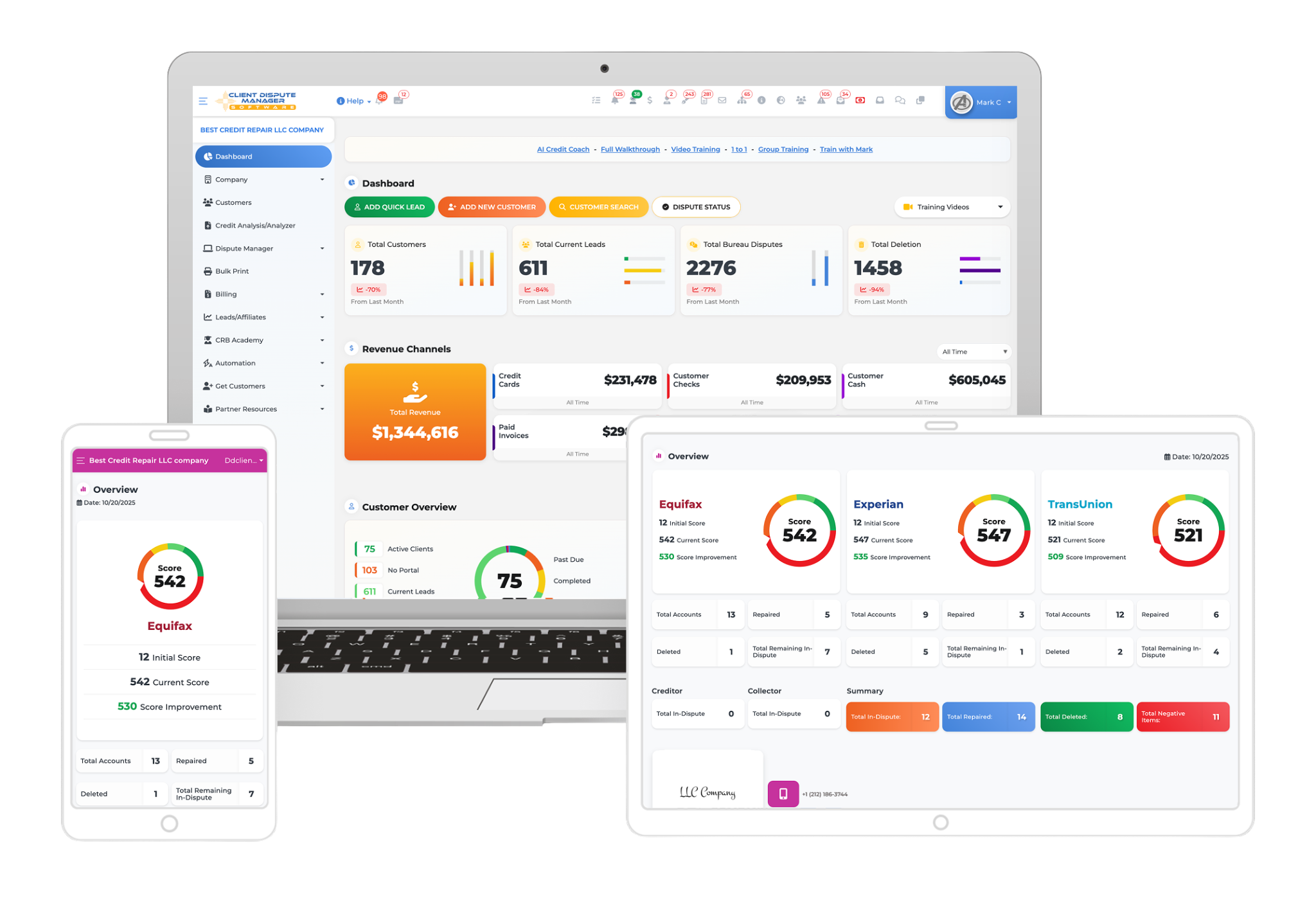
Client Dispute Manager Software is built to manage the complete dispute workflow, including tracking reporting period dates across multiple accounts, organizing Section 605 removal requests alongside standard disputes, monitoring furnisher direct dispute response windows, and recording every bureau response and re-dispute deadline in one place.
The platform handles the administrative complexity that causes the most fixable old-account disputes to stall. The 30-day free trial includes full platform access with no credit card required.

Mark Clayborne
Mark Clayborne specializes in credit repair, starting and running credit repair businesses. He's passionate about helping businesses gain freedom from their 9-5 and live the life they really want. You can follow him on YouTube.
Start Today and Explore the Features Firsthand!
Client Dispute Manager
Free 30-Day Trial
Experience our credit repair software, risk-free.