
Starting a credit repair business in Virginia in 2026 requires a clear understanding of federal consumer protection laws along with responsible business practices recognized within the state. Entrepreneurs who enter this field must prioritize transparency, proper documentation, and ethical client education while building systems that manage disputes efficiently and securely.
What Does A Credit Repair Business Help Consumers With?
A credit repair business assists individuals by reviewing credit reports and addressing entries that may be inaccurate, outdated, or unverifiable according to federal credit reporting standards.
The objective is to promote fair and accurate reporting rather than guarantee score increases. Services commonly include credit analysis, preparation of dispute communications, monitoring bureau responses, and educating clients about maintaining positive credit behavior.
Businesses that emphasize accuracy and communication tend to develop stronger client relationships.
Which Laws Apply To Credit Repair Businesses In Virginia?
Credit repair companies operating in Virginia must comply with both federal regulations and state consumer protection requirements.
The Credit Repair Organizations Act governs advertising practices, written agreements, disclosures, and billing rules across the United States. Companies cannot misrepresent services or collect fees before completing agreed work.
Virginia consumer protection laws prohibit deceptive or misleading business practices. Marketing materials and consultations must accurately describe services and expected timelines.
Understanding these legal expectations helps businesses operate responsibly and avoid regulatory problems.
Do You Need A License To Start A Credit Repair Business In Virginia?
Virginia generally does not issue a specialized license exclusively for credit repair services. However, entrepreneurs must still register their business entity and comply with local licensing requirements.
This usually involves forming a company with the Virginia State Corporation Commission and obtaining any required local business permits depending on where operations are conducted.
Online businesses should also verify local compliance obligations before serving Virginia residents.
Is Bonding Required For Credit Repair Companies?
Virginia does not universally require a surety bond specifically for credit repair businesses. Compliance instead focuses on lawful billing practices and honest service delivery.
The most important rule comes from federal law, which prohibits collecting advance fees before services are performed.
Aligning payment structures with completed work supports compliance while improving customer confidence.
What Federal Compliance Standards Must Be Followed?
CROA establishes mandatory operating requirements for all credit repair providers nationwide.
Businesses must provide written contracts outlining services, pricing, and consumer rights before beginning work. Clients must receive cancellation disclosures, and companies cannot promise guaranteed results.
Maintaining accurate records of disputes, timelines, and communications strengthens accountability and protects the business if disputes arise.
How Should You Structure The Business Legally?
Many Virginia entrepreneurs select an LLC structure because it separates personal liability from business obligations while improving professional credibility.
After forming the entity, common setup steps include:
- Obtaining an EIN from the IRS
- Opening a dedicated business bank account
- Preparing compliant client agreements and disclosures
- Implementing secure data management systems
A well-organized foundation supports smoother operations and future expansion.
What Services Should Credit Repair Businesses Offer In 2026?
Modern consumers expect guidance and transparency rather than unrealistic promises.
Effective service offerings often include detailed credit report evaluations, dispute planning, progress tracking, and educational coaching designed to help clients maintain long-term financial improvement.
Businesses that prioritize education often experience stronger client retention.
How Can Technology Improve Operations?
Managing disputes manually becomes challenging as the client base grows.
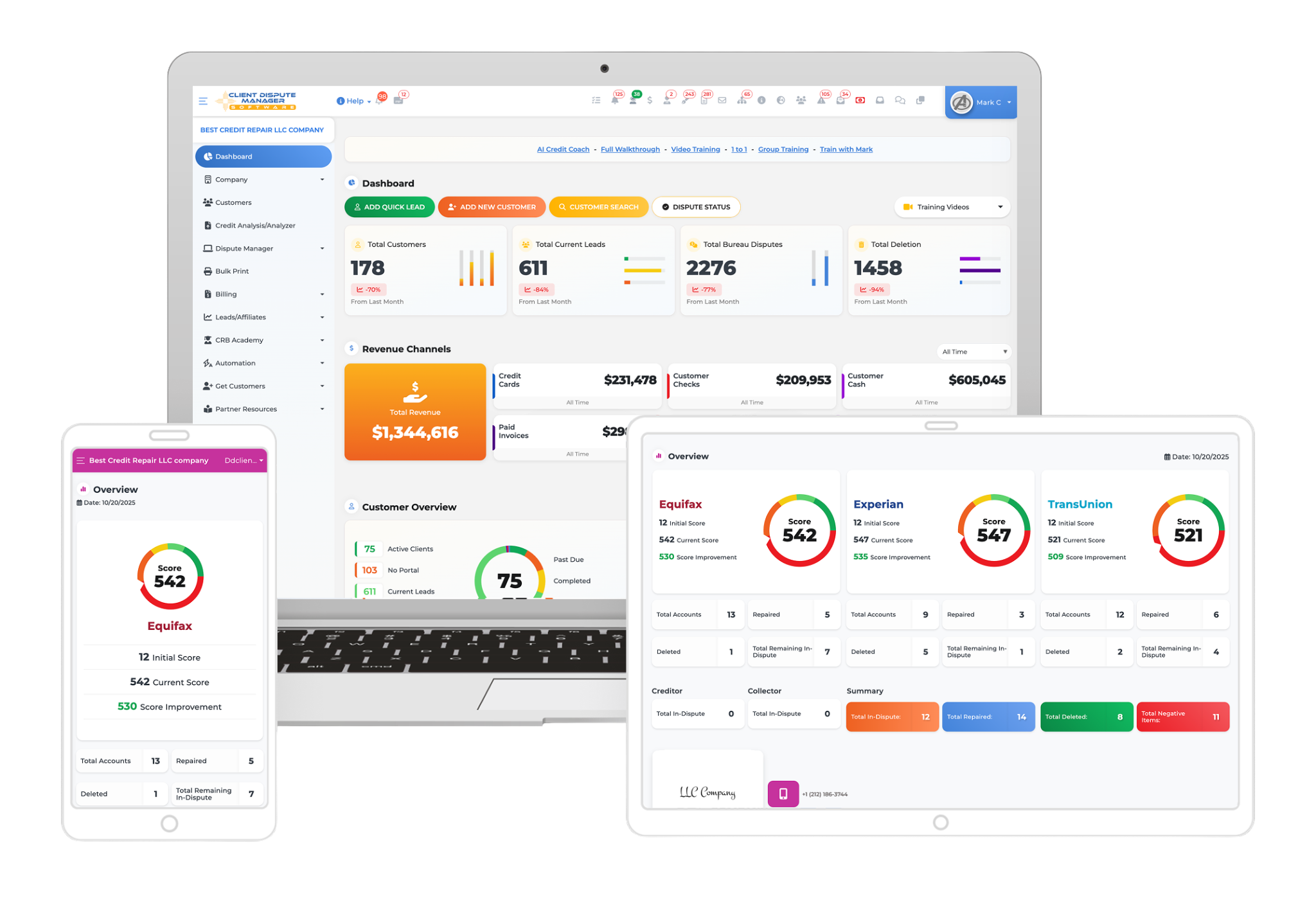
Credit repair software platforms help automate correspondence, organize client documentation, track investigation deadlines, and centralize records. Tools such as Client Dispute Manager enable entrepreneurs to maintain consistent workflows while reducing administrative tasks.
Automation allows business owners to focus more on service delivery and growth.
How Do You Attract Clients In Virginia?
Educational outreach is often more effective than aggressive advertising in financial service industries.
Consumers prefer businesses that explain processes clearly and set realistic expectations.
Common acquisition strategies include:
- Publishing educational credit resources online
- Building referral partnerships with mortgage professionals
- Optimizing local search visibility
- Hosting financial literacy webinars
Trust and clarity remain essential for consistent growth.
What Are Typical Startup Costs?
Startup costs vary depending on marketing strategy and technology choices.
Common expenses include entity formation, website development, compliance documentation, software subscriptions, and promotional efforts.
Compared with many industries, credit repair businesses can be launched with moderate investment when systems are carefully planned.
What Mistakes Should New Business Owners Avoid?
Many early challenges arise from misunderstanding legal requirements rather than operational complexity.
Common mistakes include:
- Making unrealistic advertising claims
- Charging clients before services are completed
- Using incomplete agreements or disclosures
- Failing to maintain organized records
A compliance-first approach protects both consumers and the business.
How Can You Scale After Launch?
Growth occurs through standardized systems instead of increasing workload.
Structured onboarding procedures, automated tracking tools, and consistent reporting processes allow businesses to expand efficiently while maintaining service quality.
Developing partnerships and educational programs can also create recurring revenue opportunities.
Frequently Asked Questions About Starting A Credit Repair Business In Virginia
Is It Legal To Start A Credit Repair Business In Virginia?
Yes. Credit repair services are legal when businesses comply with federal CROA regulations and Virginia consumer protection laws.
Can I Operate The Business From Home?
Yes, many businesses operate remotely or from home offices. Local licensing requirements may still apply depending on the municipality.
Do I Need Certification To Begin?
No certification is legally required, though education and training can improve service quality and compliance understanding.
How Long Does It Take To Launch?
Once registration, contracts, and operational systems are prepared, many entrepreneurs can begin accepting clients within several weeks.
Can Credit Repair Companies Charge Upfront Fees?
No. Federal law prohibits collecting payment before services are performed, making performance-based billing the safest structure.
Is Credit Repair Profitable In 2026?
Demand continues as consumers seek financial improvement assistance. Profitability depends on ethical marketing, efficient operations, and strong client relationships.
Final Thoughts: Is Virginia A Good State To Start?
Virginia provides strong opportunities for entrepreneurs who emphasize professionalism, organization, and consumer education. Businesses that operate transparently can build lasting trust within the market.
By combining federal compliance awareness with structured workflows and modern automation tools, credit repair entrepreneurs can develop scalable and reliable service businesses.
In 2026, consistency, ethical practices, and clear communication remain key advantages for long-term success.

Mark Clayborne
Mark Clayborne specializes in credit repair, starting and running credit repair businesses. He's passionate about helping businesses gain freedom from their 9-5 and live the life they really want. You can follow him on YouTube.
Start Today and Explore the Features Firsthand!