Get Started for as Low a $49 for the First Month: Click Here
Written by Mark Clayborne
Last updated on June 27, 2026

When a credit bureau returns a dispute with the words “verified as accurate,” most consumers assume a human investigator reviewed their account and confirmed the information. That assumption is wrong in the majority of cases. The bureau did not audit original documents.
No one called the creditor to verify the facts. What happened instead is that the bureau sent a two-digit code through an automated data exchange system, the furnisher’s system responded with a confirmation code, and the case closed.
That exchange took, in many instances, less than 24 hours. Understanding what “verified as accurate” actually means is the first step to disputing effectively. The phrase satisfies a legal obligation under FCRA Section 611(a)(1), which requires the bureau to conduct a “reasonable investigation.”
Courts have generally accepted the automated process as meeting that standard unless the consumer provided specific evidence the bureau ignored. That exception is the key. Knowing how the system works tells you exactly how to produce a result the automated process cannot close without a real review.
This article explains what the verified as accurate result means under the law, how the e-OSCAR verification system actually operates, what happens on the furnisher’s side of the exchange, and what your specific options are after a dispute comes back verified.
The sections below are built from the most common questions consumers ask after receiving this result, answered directly so you can identify your situation and act on it.
“Verified as accurate” means the credit bureau completed its reinvestigation process and the furnisher confirmed the disputed information is correct in its records. Under FCRA Section 611(a)(1), this result satisfies the bureau’s legal obligation to investigate your dispute.
What it does not mean is that anyone reviewed the original account records, audited the payment history, or contacted the original creditor to confirm the data from primary sources. The FCRA requires credit bureaus to conduct a reasonable investigation when a consumer disputes information.
The law does not define “reasonable” to mean a documentary audit. Courts have interpreted the standard broadly, and the automated exchange between the bureau and the furnisher through the e-OSCAR system has consistently been found to satisfy it.
A “verified as accurate” result can occur even when the underlying information is genuinely wrong, as long as the furnisher’s system confirms the data the bureau sent for verification. The result notice you receive uses different language depending on the bureau.
Experian uses “remains” to indicate the item was verified and will stay on your report. TransUnion uses “verified” in its investigation summary. Equifax describes the outcome as the item being confirmed as accurate by the reporting source.
Regardless of the phrasing, all three mean the same thing: the furnisher confirmed the information through the automated inquiry, and the bureau closed the case.
Credit scoring companies such as FICO and VantageScore do not reject credit disputes and play no role in the dispute investigation process. This is one of the most common misconceptions consumers have after receiving a “verified as accurate” result.
Scoring companies do not have access to your dispute submissions, do not communicate with credit bureaus about dispute outcomes, and do not have any authority to approve or deny a correction.
What credit scoring companies do is calculate your score based on the data currently in your credit report. If the bureau verifies an item as accurate and the item stays on your report, your score continues to reflect that item.
If a dispute succeeds and the item is deleted or corrected, your score recalculates based on the updated report data. The score is an output of the report, not a participant in the dispute process.
Contacting FICO or VantageScore about a dispute result will not produce any action because they have no authority over what your report contains.
Yes. Under the FCRA, credit bureaus are legally required to provide specific information about dispute outcomes, and the exact requirement depends on the type of result.
For a frivolous designation under FCRA Section 611(a)(3), the bureau must notify you within five business days of making that determination and must include the specific reason for the designation and the information you need to provide to trigger a proper investigation.
That notice is not optional. A bureau that designates a dispute as frivolous without sending the required notice has violated the FCRA.
For a standard “verified as accurate” result, FCRA Section 611(a)(6) requires the bureau to notify you of the investigation results, inform you that the item was verified, and explain your right to add a consumer statement to your credit file.
The bureau must also provide you with a free copy of your credit report if the investigation resulted in any change to the report.
You additionally have the right under FCRA Section 611(a)(6)(B)(iii) to request a written description of the procedure the bureau used in its reinvestigation and the name and address of the information source. Submit that request in writing within a reasonable time after receiving the dispute result.
Credit reporting companies verify disputes primarily through a system called e-OSCAR, which stands for Online Solution for Complete and Accurate Reporting. When you submit a dispute, the credit bureau does not forward your letter to the furnisher.
It translates the substance of your dispute into a two or three digit code drawn from a standardized list of dispute reason categories and sends that coded notice to the furnisher electronically. The furnisher receives the code, checks its own records, and responds with a verification code confirming or updating the information.
That response triggers the bureau’s determination and closes the investigation. The e-OSCAR system was designed to process high volumes of disputes efficiently across all three major credit bureaus. It handles millions of dispute transactions annually.
The standardization it requires is also its fundamental limitation from the consumer’s perspective. A dispute you described in specific detail in your letter may arrive at the furnisher as a generic two-digit code that conveys only the broad category of your dispute, not its substance.
The specific content of your dispute letter, the account history you described, the error you identified, the document you attached, these elements may not transmit through e-OSCAR in a form that compels the furnisher to review original records.
If the furnisher’s system matches the account data to the code and finds the reported information consistent with its records, it sends a confirmation and the bureau marks the dispute as verified.
That process can be completed in under 24 hours without anyone reviewing your letter, your documents, or the specific factual basis you provided. The FCRA requires bureaus to forward to furnishers “all relevant information” provided by the consumer under FCRA Section 623(b)(1)(A).
In practice, the degree to which relevant information is actually transmitted through e-OSCAR is limited by the system’s code-based structure.
Stating explicitly in your dispute letter that you are attaching documentation and requesting that it be forwarded to the furnisher under Section 623(b)(1)(A) creates a record of that request and puts the bureau on notice that it received relevant contradicting information.
Automated credit dispute management systems improve success by ensuring that every dispute submission includes the specific account identifiers, factual basis, and supporting documentation that the e-OSCAR system requires to route the dispute correctly, and by tracking investigation windows, response deadlines, and re-dispute opportunities so that no step in the escalation path is missed.
The weakest point in the e-OSCAR process from the consumer’s side is the translation step, where your specific dispute becomes a coded inquiry.
A well-constructed dispute that names the exact error, states the factual basis clearly, and attaches a document directly contradicting the reported information reduces the information lost in that translation because it gives the furnisher a specific set of facts to address even within the coded exchange.
Dispute management systems that generate letters organized around specific FCRA grounds, account-level identifiers, and document references rather than generic templates produce submissions that survive the e-OSCAR translation with more investigable specificity intact.
Beyond letter construction, the tracking function of a dispute management system addresses the second most common source of DIY failure. The FCRA investigation window is 30 days.
Re-dispute deadlines, CFPB complaint timelines, and furnisher direct dispute response windows all run from specific dates. Missing any one of those windows resets the process or reduces your legal options.
A system that logs every submission date, every delivery confirmation, and every bureau response date removes the administrative failure mode that causes the most correctable disputes to stall.
Reporting agencies use three primary verification methods for disputed claims: automated e-OSCAR exchange for standard account disputes, direct furnisher contact for cases involving documentation that cannot be resolved through the automated system, and internal database review for personal information corrections.
The method applied to your dispute determines whether your documentation was reviewed by a person before the case closed.
| Verification Method | Used For | What Actually Happens | Consumer Impact |
|---|---|---|---|
| E-Oscar automated exchange | Standard account disputes: payment history, balances, account status, dates | Bureau sends a coded dispute notice to the furnisher; furnisher confirms or updates electronically; bureau closes the case | Typically resolved within 30 days, but verification does not require document review by the furnisher |
| Direct furnisher contact | Disputes with attached documentation that contradicts the reported data; identity theft; mixed file disputes | Bureau agent contacts the furnisher directly to request review of specific documents or account records | Less common but more likely to produce a substantive review of the underlying account records |
| Internal database review | Personal information: name, address, Social Security number, date of birth | Bureau checks its own records and may request documentation from the consumer to confirm the correct information | Faster than account disputes because the bureau does not need to contact an external furnisher |
| Consumer statement review | Cases where the consumer disagrees with a verified result and adds a 100-word statement to the credit file | Bureau adds the statement to the file and includes it in future reports; does not trigger a new investigation | Visible to future lenders who pull the report but does not change the reported information |
The verification method that applies to your dispute depends primarily on what you submitted and whether it creates a direct factual contradiction the automated system cannot resolve. A dispute letter without documentation is processed through e-OSCAR in nearly every case.
A dispute with attached documentation that directly contradicts the reported information creates a stronger basis for direct furnisher contact, but the bureau retains discretion over which path it uses.
Credit reporting agencies do not require a specific format for dispute evidence. Each bureau’s online portal accepts specific file types, typically PDF, JPG, and PNG, with file size limits that vary by bureau.
Submitting by certified mail bypasses those technical constraints entirely, which is why mail is preferred for complex documentation.
What matters far more than format is specificity and legibility.
A bank statement that clearly shows the account name, the payment due date, and the payment date in a readable PDF is more effective than a high-resolution scan of a document that requires interpretation.
The document should make the contradiction self-evident. If a reviewer needs to read your letter to understand what the document shows, the document alone is not strong enough.
The strongest evidence submissions include one document that directly contradicts the reported information, with the relevant line or entry clearly identifiable without additional context. When submitting by certified mail, attach legible photocopies of your documents rather than originals.
Keep the originals. The bureau does not return submitted documents, and originals are irreplaceable if you later need them for a CFPB complaint, a furnisher direct dispute, or civil action.
Number your attachments and reference them in your letter by number so the reviewer can confirm each document was received. That practice also creates a clear record of what you submitted if the bureau later claims your documentation was insufficient.
A data furnisher issues an invalid credit dispute decision for one of four reasons: the dispute information was too vague for the furnisher to match to a specific account record, the furnisher’s own internal records confirmed the data as reported regardless of the consumer’s claim, the furnisher determined the dispute was substantially the same as a prior dispute for which it already completed an investigation, or the furnisher designated the dispute as frivolous under Regulation V because the consumer did not provide sufficient information to investigate.
Vague dispute information is the most common cause of an unfavorable furnisher determination. When a dispute arrives through e-OSCAR as a two-digit code without a specific factual basis, the furnisher’s system compares the coded dispute type against its own account record.
If the account record matches what was reported to the bureau, the furnisher confirms and the case closes. There is no obligation under the FCRA for the furnisher to investigate further when the dispute gives it nothing specific to contradict.
A furnisher confirmation based on internal records does not mean the furnisher reviewed original documents. Furnishers maintain their own account data systems, and those systems contain the information the furnisher originally sent to the credit bureau.
When a dispute code arrives, the furnisher’s system checks the account record in its own database. If the database record matches the reported data, the furnisher confirms.
The database record and the original account documentation are not always the same thing, particularly for accounts that have changed hands between servicers, been purchased by debt buyers, or carry complex payment histories.
The furnisher’s right to designate a dispute as frivolous under Regulation V (12 C.F.R. 1022.43) applies to direct disputes submitted to the furnisher, not to bureau disputes routed through e-OSCAR.
If you dispute directly with the furnisher and the furnisher finds the dispute frivolous, it must notify you within five business days with the specific reason and the information needed to trigger a proper investigation. That notice tells you exactly what the furnisher requires before it will open a meaningful investigation.
Understanding the furnisher’s decision is easier when you know which type it produced. If the bureau says the item was “verified as accurate,” the furnisher confirmed the data through the standard exchange.
If the bureau says the item was “updated,” the furnisher found a partial error and corrected some but not all of the information. If the bureau says the item was “deleted,” the furnisher could not verify the information within the investigation window, which is one of the most powerful and underused outcomes available to consumers.
A dispute can be denied even after the original creditor confirmed an error because the bureau processes the investigation through the furnisher currently reporting the account to the bureau, which is not always the original creditor.
If your account was sold to a debt buyer, assigned to a collection agency, or transferred to a different servicer, the entity reporting to the credit bureau is that buyer, agency, or servicer. When the bureau sends the dispute, it goes to the furnisher of record, not to the original bank or creditor that made the error.
This creates a common and frustrating scenario. You contacted the original creditor, received a letter or email confirming that the account information contains an error, submitted that documentation with your dispute, and still received a “verified as accurate” result.
The original creditor’s confirmation has no direct authority over the furnisher currently reporting the account. The furnisher of record has its own records, and those records may differ from what the original creditor told you.
The solution in this scenario is to use the furnisher direct dispute path under Regulation V alongside the bureau dispute. Regulation V (16 C.F.R. Part 660 and 12 C.F.R. 1022.43) gives consumers the right to dispute inaccurate information directly with the furnisher currently reporting the account.
Send a written dispute by certified mail to the furnisher’s dispute correspondence address, which is listed on your credit report. Include the original creditor’s written confirmation as your supporting documentation.
The furnisher is now required to investigate within 30 days and to notify all credit bureaus of any correction it finds. If the original creditor’s confirmation is in writing, preserve every version of it.
An email from a customer service representative, a letter on company letterhead, a written response to a formal complaint, all of these are documentation.
The more specific the confirmation, naming the account number, the exact error, and the correct information, the more effective it is as evidence in a furnisher direct dispute or a CFPB complaint.
There is also a scenario where the original creditor confirmed the error verbally but has not communicated that correction to the current furnisher. In that case, the bureau’s investigation found nothing contradicting because the correction has not yet traveled from the original creditor to the data furnisher currently reporting the account.
Following up with the original creditor in writing to request written confirmation, then forwarding that confirmation both to the bureau and to the current furnisher, is the correct sequence for resolving this type of discrepancy.

If the account provider does not verify information to the reporting bureau within the FCRA’s investigation window, the bureau is required to delete the disputed item from your credit report.
FCRA Section 611(a)(5)(A) requires the bureau to delete or correct information that cannot be verified within the 30-day investigation period. A furnisher’s failure to respond to the bureau’s verification request within the applicable window can result in deletion of the disputed item without the consumer having to prove the information is wrong.
The 30-day window starts from the date the bureau receives your dispute. In most cases, the bureau has 30 days to complete the investigation. If you submitted your dispute after requesting your free annual credit report through AnnualCreditReport.com, or if you submitted additional information after the investigation began, the window extends to 45 days.
If the furnisher does not respond within the applicable window, the bureau must delete or correct the disputed item. Furnisher non-response is more common than consumers expect.
Debt buyers and collection agencies that purchased old accounts sometimes lack the original account documentation needed to verify the dispute, particularly for accounts several years old that have changed hands multiple times.
Original creditors that have gone out of business, been acquired, or restructured may similarly be unable to respond within the investigation window. In those cases, the deletion requirement under FCRA Section 611(a)(5)(A) protects the consumer. If a furnisher verifies the information after deletion, the bureau may re-add the item to your credit report.
FCRA Section 611(a)(5)(B)(ii) requires the bureau to notify you before re-inserting previously deleted information and to provide the name and contact information of the furnisher.
You have the right to add a statement disputing the re-inserted information. If the bureau re-inserts information without providing the required advance notice, that failure is an FCRA violation.
A repeatedly rejected credit report dispute has three practical implications. First, it creates a documented record that the bureau and furnisher have been put on notice of the disputed information, which is relevant if you later pursue civil action under FCRA Sections 616 and 617.
Second, each rejection that is not accompanied by a new submission on a different basis can trigger a frivolous designation under FCRA Section 611(a)(3) on subsequent submissions, which gives the bureau legal authority to close the case without investigation.
Third, the derogatory item continues to affect your credit score and your borrowing costs for as long as it remains on your report.
critical distinction between a dispute that is repeatedly rejected because the same letter is submitted each time and a dispute that is repeatedly rejected despite new evidence each time is the legal and practical path forward.
Repeated submissions with no new information are legally pointless and can erode your credibility with the bureau’s dispute processing system.
Repeated submissions with new evidence, each one documented and escalating through the CFPB complaint and legal review paths, build the record that supports a successful resolution or a civil claim.
If you have disputed the same item twice with new evidence both times and received two verified results, the next appropriate step is a CFPB complaint combined with a legal consultation.
Two rounds of documented re-dispute, both rejected despite supporting documentation, creates the kind of paper trail a consumer attorney can evaluate for a potential FCRA claim.
The inaccurate item’s impact on your credit, loan terms, or financial opportunities constitutes the harm element that FCRA civil claims require.

Major credit bureaus conduct internal reviews of rejected disputes through two main processes: standard reinvestigation through e-OSCAR and escalated review through human analyst assignment.
The standard process applies to the vast majority of disputes and operates entirely through the automated exchange.
Escalated review is reserved for disputes involving documentation that creates a clear factual contradiction, identity theft cases, mixed files where another person’s information has been merged into your report, and disputes where the consumer has filed a CFPB complaint.
An escalated review involves a bureau employee examining the dispute and attached documentation before sending the inquiry to the furnisher. In some cases, the bureau employee determines that the documentation is sufficient to remove or correct the item without a full furnisher investigation.
others, the bureau contacts the furnisher with specific instructions to review the documentation provided by the consumer rather than relying on a database confirmation.
Filing a complaint with the Consumer Financial Protection Bureau is one of the most reliable paths to triggering an escalated review. When the CFPB receives a consumer complaint, it routes the complaint to the bureau and requires a response within 15 days.
That 15-day regulatory response window typically results in the bureau assigning the dispute to a human analyst rather than routing it through the standard e-OSCAR process.
The CFPB complaint does not guarantee deletion, but it substantially increases the probability that your dispute receives individual attention.
Waiting does not increase the formal risk of a rejection, but it reduces your practical options significantly. Evidence becomes harder to obtain over time. Creditor records are commonly purged after several years. Payment histories become more difficult to reconstruct.
The original creditor may have changed systems, been acquired, or gone out of business entirely, making written confirmation of the error much harder to obtain than it would have been closer to the time of the dispute.
There is also the reporting period consideration under FCRA Section 605. Most derogatory items remain on a credit report for seven years from the date of first delinquency.
If the item you are disputing is within two years of its reporting period limit, disputing it may not be the most efficient use of your effort because the item will age off the report on its own within a predictable timeline.
from expiration, earlier disputes produce better outcomes because the supporting documentation is more accessible from both the consumer and the original creditor. The practical rule is this: dispute when you have the evidence to support it.
A dispute submitted without evidence rarely produces a different result from a verified outcome, regardless of when you file it. Waiting to gather the right documentation is more productive than filing immediately with no supporting evidence.
The FCRA does not impose a deadline for disputing inaccurate information, so you are not penalized for taking time to prepare a stronger submission.

You have four specific recourse options after a reporting agency finds your dispute invalid. You can re-dispute with new evidence not included in your original submission. You can dispute directly with the furnisher under Regulation V.
You can file a complaint with the Consumer Financial Protection Bureau. Or you can consult a consumer attorney about a potential civil claim under FCRA Sections 616 and 617.
These four paths are not mutually exclusive and are designed to be used in sequence, with each one building the documentation that strengthens the next.
| Recourse Path | What It Triggers | Timeline | When To Use It |
|---|---|---|---|
| Re-Dispute With New Evidence | New FCRA reinvestigation obligation if the submission includes information not in the prior dispute | 30 days from receipt; 45 days if additional info submitted after the investigation starts | Any time you have a document or specific factual basis not included in your original letter |
| Furnisher Direct Dispute (Reg V) | Furnisher must investigate within 30 days and notify all credit bureaus of any correction | 30 days from furnisher receipt | When the bureau verified the item and you believe the furnisher's own records are contradicted by documentation you possess |
| CFPB Complaint (Consumerfinance.Gov) | Bureau must respond within 15 days; triggers escalated review in most cases | 15-day bureau response requirement from CFPB routing | After one or more re-disputes have been verified and standard channels have not produced a correction |
| Civil Action Under FCRA Sections 616 And 617 | Private right of action for actual damages, statutory damages up to $1,000 per violation, and attorney's fees | File within 2 years of discovery or 5 years of the violation | When the bureau or furnisher failed to conduct a reasonable investigation and the inaccurate reporting has caused documented financial harm |
The proper procedure for resubmitting a credit dispute after denial is to read the rejection notice first, identify the specific reason the bureau gave for the verified result, and build your re-submission around new information or evidence that addresses that specific gap.
Resubmitting the same letter with the same language is legally pointless. FCRA Section 611(a)(3)(B) allows the bureau to close a second dispute without investigation if it is substantially the same as the first. New evidence or a new specific factual basis resets that obligation.
Submit the re-dispute by certified mail to the bureau’s dispute processing address, which is listed on your credit report.
Include the account number, the bureau’s reference number for the disputed item, the exact error description, the new supporting document you are attaching, and a reference to FCRA Section 611(a)(1) and your right to a full reinvestigation.
Keep a copy of everything you send, including the tracking number and the delivery confirmation receipt. That receipt is the date from which the 30-day investigation window runs.
The FCRA does not impose a deadline for re-disputing a rejected credit report item. You can re-dispute at any time as long as the item is still on your credit report and you have new information or evidence to support the re-submission.
The reporting period limits under FCRA Section 605, typically seven years from the date of first delinquency for most derogatory items, are the practical outer limit. Once an item ages off the report on its own, there is nothing to dispute.
Within that outer limit, the timing of your re-dispute affects your practical success more than any legal deadline. Re-disputing when you have gathered the specific evidence needed to contradict the furnished information produces a different result from re-disputing before you have that evidence.
The most productive re-dispute is one that adds new information the prior dispute did not contain. Waiting to gather that information is a legitimate strategy.

There is no formal appeal process for a denied credit report correction request in the way that exists for some administrative decisions. What the FCRA provides instead is a sequence of escalating options, each one more direct and more legally significant than the last.
The re-dispute with new evidence is the first step. The furnisher direct dispute under Regulation V is the second. The CFPB complaint is the third. Civil action is the fourth. You can also add a consumer statement to your credit file under FCRA Section 611(b).
This statement, limited to 100 words, is included in your credit report and visible to lenders who review it. It does not remove the disputed item, but it creates a consumer-side record of the dispute that accompanies the item for as long as it remains on the report.
For situations where you are actively applying for credit while a dispute is pending, the consumer statement informs potential lenders that the item is contested.
The most effective “appeal” path is the CFPB complaint combined with the furnisher direct dispute, used in parallel. Filing the CFPB complaint triggers an escalated bureau review.
Disputing directly with the furnisher forces the data owner to address your evidence independently of the bureau’s process. Running both simultaneously creates two parallel investigations, both of which require documented responses within legally defined windows.
After a major credit bureau rejects your dispute, take six steps in order. First, read the rejection notice in full and identify the exact reason stated.
Second, request the method of verification in writing under FCRA Section 611(a)(6)(B)(iii) to document what process the bureau used and who provided the information.
Third, gather new evidence that directly contradicts the reported information and was not part of your original submission. Fourth, submit a re-dispute by certified mail with the new evidence and a specific, account-level error description.
Fifth, file a furnisher direct dispute under Regulation V simultaneously with the re-dispute, so both the bureau and the furnisher are required to investigate within the same 30-day window.
Sixth, if both come back verified despite new evidence, file a CFPB complaint at consumerfinance.gov and consult a consumer attorney about your options under FCRA Sections 616 and 617. Each step generates documentation. That documentation becomes relevant at every subsequent step.
The consumer who has a certified mail receipt showing the original dispute date, a copy of the bureau’s method of verification response, a re-dispute letter with new evidence, a furnisher direct dispute letter, and a CFPB complaint reference number is in a substantially stronger position than one who submitted one online dispute and accepted the verified result.
The five questions below address specific situations that come up frequently after a “verified as accurate” result. Each one covers a scenario not addressed in the main sections above.
If a credit bureau says your dispute is a duplicate, it has determined that your new submission is substantially the same as a dispute you previously submitted for which an investigation was already completed.
The bureau is not required to investigate again under FCRA Section 611(a)(3)(B), and the “duplicate” designation closes the case without a new reinvestigation.
The duplicate designation only applies when your new submission contains no information that was not already in the prior dispute. The FCRA’s “substantially the same” threshold has a clear exception: if your new submission includes any information that was not provided in the original, a new document, a new specific factual basis, a new error identification that differs from the first, that submission is no longer substantially the same and the bureau’s investigation obligation resets. The bureau must then investigate it as a new dispute within the standard 30-day window.
When you receive a duplicate designation, read the notice carefully. The bureau is required under FCRA Section 611(a)(3) to identify the specific reason for the designation and explain what information you need to provide.
That explanation tells you exactly what to add to your next submission to escape the duplicate threshold. A new bank statement for the disputed period, a creditor letter you did not previously attach, or a furnisher direct dispute under Regulation V filed in parallel with the re-dispute are all effective next steps that reset the bureau’s obligation.
Filing a dispute, re-disputing after a rejection, disputing directly with the furnisher, and filing a CFPB complaint all cost nothing. The FCRA gives consumers these rights at no charge, and credit bureaus are prohibited from charging consumers for submitting disputes or receiving investigation results.
The free annual credit reports available through AnnualCreditReport.com also cost nothing. The costs that do exist in the dispute process are indirect. Certified mail with return receipt, the recommended submission method for document-heavy disputes and re-disputes, typically costs between $5 and $10 per submission depending on weight and location.
Photocopying the documents you attach to each submission is a minor cost. These are the only direct expenses for a DIY dispute process conducted entirely within the FCRA’s consumer rights framework.
Legal representation introduces a different cost structure. If you consult a consumer attorney about a potential civil claim under FCRA Sections 616 and 617, most FCRA attorneys take those cases on contingency, meaning no upfront cost to you.
The attorney collects fees only if the case resolves in your favor, and those fees are paid by the defendant bureau or furnisher as part of the statutory damages framework.
Some attorneys charge a flat consultation fee for an initial case evaluation, typically between $100 and $300, to assess whether the facts support a viable claim before agreeing to take the case on contingency.
You can contact a credit bureau’s customer service after a rejected dispute, but customer service representatives do not have authority to override investigation results or reopen closed cases.
Contacting customer service after a verified result may help you understand the bureau’s process, confirm the address for your re-dispute submission, or clarify the meaning of a specific term in your investigation results notice.
It will not produce a different outcome on the investigation that already closed. The escalation paths that carry actual legal weight after a verified result are the re-dispute with new evidence, the furnisher direct dispute under Regulation V, the CFPB complaint, and civil action under FCRA Sections 616 and 617.
Each of these creates a new obligation for the bureau or furnisher that did not exist through a customer service inquiry. The CFPB complaint in particular produces the most reliable escalation because it requires the bureau to respond within 15 days and typically results in the case being assigned to a human analyst rather than processed through the standard e-OSCAR automated flow.
If you call customer service and are told to resubmit the dispute, ask for the correct dispute processing mailing address for the bureau and confirm the reference number for the item you are disputing. Use that information in your certified mail re-submission.
Document the date of the call, the name of the representative, and what they told you. That record becomes part of the documented history of your dispute, which is relevant if you later pursue a CFPB complaint or legal review.
A dispute is not rejected because an account is old. The FCRA does not allow credit bureaus to refuse to investigate a dispute based on the age of the account. If a bureau or furnisher told you the account is too old to dispute, that is not a valid basis for closing the investigation, and the statement may itself reflect a misapplication of the FCRA.
What account age does affect is how long a derogatory item can legally remain on your credit report. Under FCRA Section 605, most negative items must be removed from a credit report seven years from the date of first delinquency. Bankruptcies may remain for up to ten years depending on the chapter filed.
If an account is approaching or past that reporting period limit, the appropriate action is to dispute the item specifically on the basis that it has exceeded its lawful reporting period, not on the basis of any inaccuracy in the data itself. The bureau is required to delete items that have exceeded their reporting period under Section 605 once that fact is established.
If the account is still within its reporting period and you believe the information it contains is inaccurate, your dispute rights under FCRA Section 611(a)(1) apply regardless of the account’s age.
Age does create a practical challenge: evidence from several years ago is harder to obtain. Creditor records may have been purged. Payment confirmations may no longer exist in accessible form. If you can obtain the supporting documentation, the dispute process is available to you.
If you cannot, and the item is within two years of its reporting period limit, waiting for the item to age off may be more efficient than attempting to dispute without sufficient evidence.
A police report alone is frequently insufficient for a credit dispute because it documents that you reported a crime, not that a specific account or transaction was the result of that crime.
The credit bureau and the furnisher need documentation that connects the disputed account directly to the identity theft incident. A general police report that describes identity theft without naming the specific account, the creditor, and the approximate date of the fraudulent activity gives the furnisher limited information to investigate against its own records.
The most effective documentation for an identity theft dispute is the FTC Identity Theft Report filed at IdentityTheft.gov, not a police report. The FTC Identity Theft Report triggers a specific legal obligation under FCRA Section 605B: the credit bureau must block information resulting from identity theft within four business days of receiving the report along with your identification and a statement that the information resulted from identity theft.
That four-business-day block obligation does not apply to a standard police report submitted through the general dispute process. A police report does serve a supporting role when combined with the FTC Identity Theft Report. Including both documents in your dispute submission creates a more complete record.
The police report establishes that the incident was formally reported to law enforcement at a specific date. The FTC report triggers the Section 605B block obligation.
Together, they give the bureau and the furnisher a documented identity theft claim with both a law enforcement record and the federal report that the FCRA specifically recognizes as triggering block rights. If the bureau fails to apply the Section 605B block after receiving both documents, that failure is an FCRA violation and grounds for a CFPB complaint.
“Verified as accurate” is a legal determination, not a factual one. It means the bureau completed a process that satisfied its obligation under FCRA Section 611(a)(1). It does not mean the information on your credit report is actually correct.
The automated system that produced that result was built for volume and efficiency, not to resolve factual disputes between consumers and furnishers.
When that system produces a result that contradicts the evidence in your possession, the FCRA gives you four specific tools to challenge it through paths that carry progressively greater legal weight.
The consumers who get errors corrected are not the ones who accept the first result. They are the ones who read the rejection notice, identify the specific failure point, and return with a more targeted submission. Re-dispute with new evidence.
Dispute directly with the furnisher. File the CFPB complaint. And if the bureau or furnisher failed to conduct a reasonable investigation and that failure caused you documented harm, consult a consumer attorney.
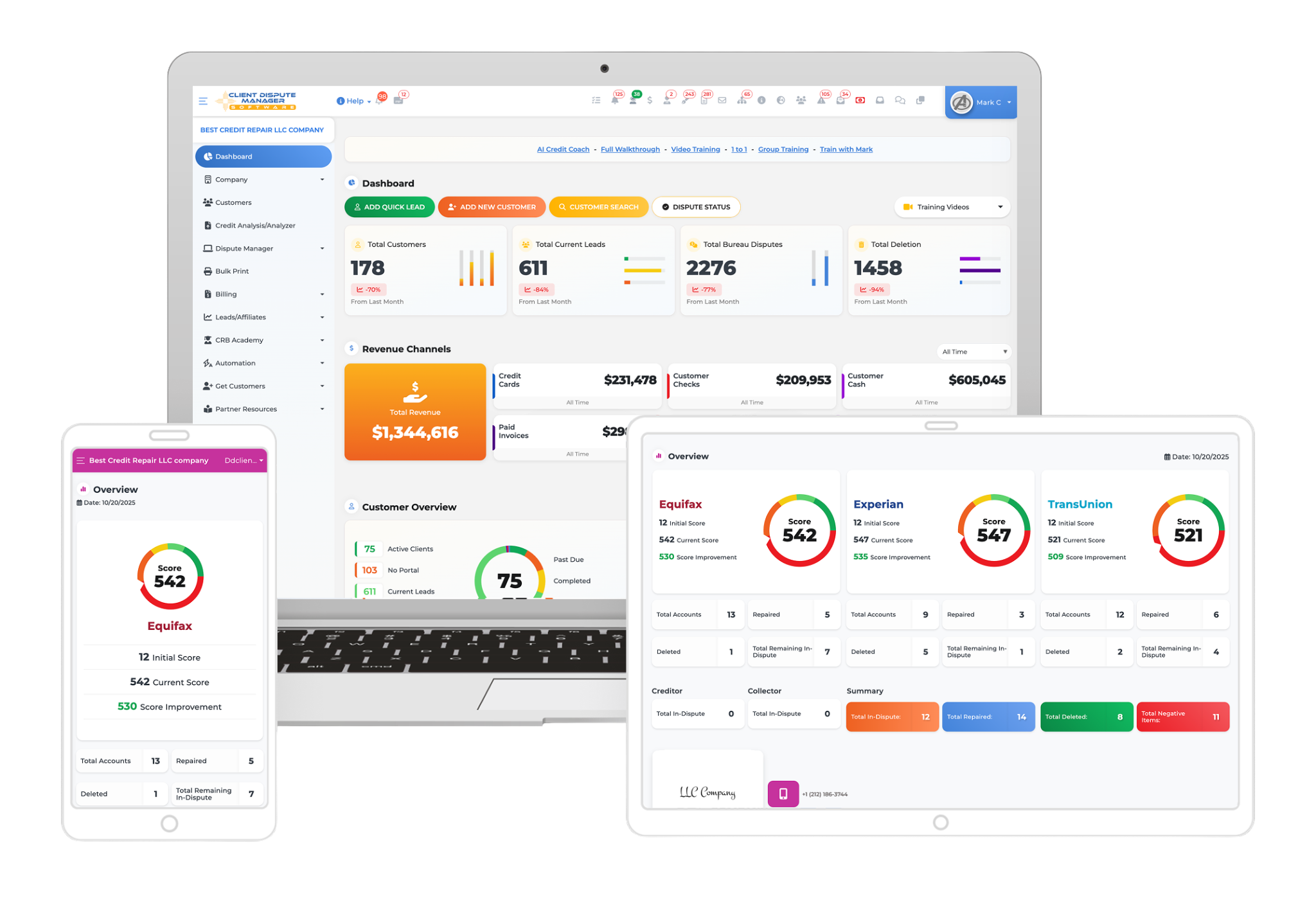
Each step builds the record that makes the next one stronger. Client Dispute Manager Software is built to organize that entire process, from first dispute through escalation, so no deadline is missed and no step falls through the cracks. The 30-day free trial includes full platform access with no credit card required.

Mark Clayborne specializes in credit repair, starting and running credit repair businesses. He's passionate about helping businesses gain freedom from their 9-5 and live the life they really want. You can follow him on YouTube.
Experience our credit repair software, risk-free.