Get Started for as Low a $107 for the First Month: Click Here
Get Started for as Low a $107 for the First Month: Click Here
Written by Mark Clayborne
Last updated on April 18, 2026

Getting a rejection notice after a credit report dispute is frustrating, especially when you were confident the item did not belong on your report. But a rejected dispute is not the end of the process. It is a signal to change your approach.
A credit bureau rejection means one of two things: the furnisher verified the item as accurate during the investigation, or your dispute was classified as frivolous and not investigated at all. Either way, there are multiple legally supported paths available to you after that result.
Knowing which one applies to your situation is the difference between spinning your wheels and making real progress.If your credit report dispute is rejected, it means the credit bureau investigated and found the disputed item to be accurate and verifiable.
You have several options: you can request the method of verification used in the investigation under FCRA Section 611(a)(6), submit additional evidence and request a reinvestigation, dispute directly with the original creditor under FCRA Section 623, add a 100-word consumer statement to your credit file, file a complaint with the Consumer Financial Protection Bureau (CFPB) or FTC if you believe the investigation was inadequate, or consult a consumer protection attorney about potential FCRA violations.

Credit bureaus reject disputes for two reasons. First, the item was verified: the bureau forwarded your dispute to the furnisher, the furnisher confirmed the information is accurate, and the bureau closed the investigation with the item intact. Second, the dispute was classified as frivolous under FCRA Section 611(f): the bureau determined it was repetitive, lacked a specific factual basis, or was not supported by a reasonable dispute reason.
What are the potential risks of initiating a dispute for an item you suspect is accurate? The investigation confirms the item, and repeated challenges on the same verified item risk a frivolous designation that allows the bureau to decline further investigation.
Understanding which of these two outcomes you are dealing with determines what your next step should be.When an item is verified, the furnisher confirmed the data through the bureau’s electronic investigation system. That confirmation is what the bureau relies on to close your dispute.
It does not necessarily mean the furnisher reviewed original records or conducted a meaningful independent review. It means they responded to the bureau’s inquiry with a confirmation.
What adverse outcomes can result from challenging a confirmed accurate entry? The item stays on your report, your dispute closes as verified, and if you resubmit the same challenge without new evidence, the bureau can designate it frivolous under FCRA Section 611(f) and decline to investigate further.
That designation makes subsequent disputes harder to process and is why your next move matters as much as the first one.
Under FCRA Section 611(a)(6), after a credit bureau returns a verified result on your dispute, you have the right to request the name, address, and telephone number of the furnisher that verified the disputed item, as well as information about how the verification was conducted.
Submit this request in writing to the bureau. The response reveals whether the furnisher conducted a meaningful review of original records or simply reconfirmed the reported data electronically. A generic confirmation without documentary support is grounds for escalating to a direct furnisher dispute under FCRA Section 623.
This is the first concrete action after a rejection and the most underused. Many consumers accept a verified result and stop there. They should not.
Send a written request to the bureau stating that you received their investigation result and are exercising your right under FCRA Section 611(a)(6). Ask specifically for the name, address, and phone number of the furnisher that verified the item, and for information about the method of verification used.
When the response arrives, look at what it actually tells you. If the furnisher confirmed the item through the bureau’s electronic E-OSCAR system without reviewing original account records, that is a signal that a direct furnisher dispute under FCRA Section 623 may produce a different result. The bureau relied on the furnisher. Now you go directly to the source.
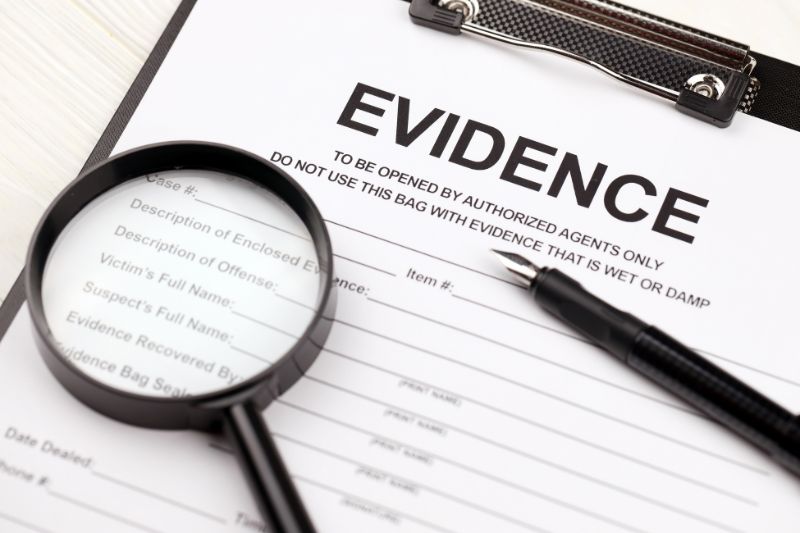
If your dispute was rejected because the item was verified, you can submit a reinvestigation supported by new evidence. The evidence must be new material not included in your original dispute. Bank statements, payment confirmations, creditor correspondence, or a debt validation response from the collector that reveals the furnisher cannot verify the specific account details are all valid grounds for a new dispute.
Submit the new evidence with a dispute letter clearly stating it was not part of the original submission. The bureau must investigate the new dispute within 30 days under FCRA Section 611.
A reinvestigation is not a repeat of the first dispute. It is a new dispute, supported by evidence that did not exist in your original submission. Without new material, the bureau can classify it as frivolous under FCRA Section 611(f) and decline to investigate.
What counts as new evidence depends on the error type. For a payment history dispute, a bank statement that was not included the first time, a creditor’s written confirmation of on-time payment, or an ACH receipt with a timestamp can all change the outcome.
For a collection account dispute, a debt validation response from the collector showing they could not verify the original creditor, account number, or balance at the time of default is strong new evidence.
For identity theft disputes, an updated or expanded FTC identity theft report with additional fraudulent accounts listed gives the bureau new grounds to act.In your reinvestigation letter, state clearly that this is a new dispute supported by additional evidence not previously provided.
List each new document by name and explain specifically how it contradicts or undermines the furnisher’s earlier verification. The more specific, the harder it is for the furnisher to simply reconfirm without reviewing the original records.
What are the differences between disputing with a creditor versus a reporting company? Disputing with a credit bureau triggers an investigation under FCRA Section 611. Disputing directly with the creditor or collector that reported the information, known as the furnisher, triggers a separate investigation obligation under FCRA Section 623(b).
The furnisher must conduct a reasonable investigation of a direct dispute and correct or delete any inaccurate data. A bureau verification does not end the furnisher’s Section 623 duty. A direct furnisher dispute forces an independent review of original records rather than an electronic reconfirmation through the bureau’s system.
When the bureau says the item is verified, it is relying entirely on what the furnisher told it. You now have the option to go directly to that furnisher and trigger their own independent investigation obligation under FCRA Section 623(b).
Send a written dispute letter to the furnisher’s designated dispute address. You can usually find this on the original account statement, in the bureau’s contact information for that account, or on the company’s website. Your letter should clearly identify the specific account, describe the inaccuracy, and state the correction you are requesting. Attach any supporting documentation.
The furnisher now has to investigate independently of the bureau’s prior conclusion. If they find an error during their own review, they are required under FCRA Section 623(a) to correct it and update the information reported to the bureaus.
A direct furnisher dispute is often more effective than a second bureau dispute because it bypasses the electronic reconfirmation step and requires the furnisher to look at original records.
Under FCRA Section 611(b), if a credit bureau dispute does not resolve an item to your satisfaction, you have the right to add a consumer statement of up to 100 words to your credit file explaining your position. The bureau must include this statement in any future credit report containing the disputed item.
A consumer statement does not remove the item or change the investigation result, but it ensures that every lender who pulls your credit sees your explanation directly alongside the negative entry.
A consumer statement is a disclosure tool, not a dispute outcome. It does not fix the problem, but it does ensure that no lender reviewing your credit report sees the negative item without context.
Keep the statement factual, specific, and professional. Name the account. State what you believe is inaccurate and what evidence supports your position. Avoid emotional language. Lenders read consumer statements when making credit decisions, and a clear, well-reasoned statement can influence how they interpret the negative item, even if it cannot remove it.
The bureau must include the statement in any credit report that includes the disputed item and must send it to anyone who received a copy of your report containing the item within the prior 2 years.
What are the limitations of dispute resolution on credit reports when using online credit repair companies? The primary limitation is legal, not technical: if the bureau investigated and the furnisher verified the item as accurate, the dispute process has concluded within the law’s requirements.
Filing a complaint with the CFPB complaint is appropriate when the investigation itself was inadequate: the bureau failed to conduct a reasonable reinvestigation, a deleted item was re-inserted without proper notice under FCRA Section 611(a)(5)(B), or documentation you submitted was ignored.
The FTC accepts complaints at ReportFraud.ftc.gov and uses the data for enforcement actions against systemic bureau and furnisher misconduct.
A CFPB complaint is not the same as a new dispute. It is a formal notification to a federal regulator that you believe the bureau or furnisher did not comply with the law. The CFPB forwards your complaint to the bureau and requires a response, typically within 15 days.
That response is tracked in the CFPB’s consumer complaint database and contributes to the agency’s enforcement data.
A complaint is appropriate in specific situations: the bureau refused to investigate a valid dispute without a lawful basis, a furnisher re-inserted a deleted item without the proper written notice required by FCRA Section 611(a)(5)(B), or the bureau acknowledged your supporting documentation but ignored it in the investigation.
An unfavorable outcome alone does not make a complaint appropriate. The investigation process has to have been flawed, not just the result.
What options exist if an accurate negative item significantly impacts my credit standing? You have four practical paths. First, time: most negative items expire 7 years from the original date of first delinquency under FCRA Section 605. Second, a goodwill letter sent directly to the original creditor requesting voluntary removal; there is no legal obligation to agree.
Third, a 100-word consumer statement added to your credit file under FCRA Section 611(b) so lenders see your explanation. Fourth, building new positive tradelines through secured credit cards, credit-builder loans, or authorized user accounts to offset the impact of the accurate negative item over time.
What are the success rates for disputing minor inaccuracies versus major ones? Minor errors, such as wrong personal information, incorrect account statuses, and unauthorized hard inquiries, have high success rates because the correction standard is clear and the furnisher either can or cannot verify the specific data point in question.
Major verified items, such as confirmed late payments, legitimate collection accounts, and documented bankruptcies, have very low dispute success rates because the FCRA’s accuracy standard works against the consumer when the information is correct.
| Path | What It Is | Legal Basis | Realistic Outcome |
|---|---|---|---|
| Wait | Let the 7-year reporting window expire | FCRA Section 605 | Item drops off automatically |
| Goodwill Letter | Written request to creditor for voluntary removal | No legal basis — voluntary | Possible, not guaranteed |
| Consumer Statement | 100-word explanation added to your credit file | FCRA Section 611(b) | Lenders see it; does not remove item |
| Build New History | Secured cards, credit-builder loans, authorized user | General credit building | Offsets impact over time |
Time is the most reliable of the four paths. The 7-year clock under FCRA Section 605 runs from the original date of first delinquency, not from when the debt was sold, when it was reported, or when you first disputed it.
Building positive history alongside that window is the most effective combination because new on-time payment data gradually reduces the proportional weight of older negative items.

What types of credit report issues require legal help rather than dispute services? Legal action becomes relevant when a credit bureau or furnisher violates a specific procedural obligation under the FCRA, not simply when a dispute result is unfavorable.
Situations that support legal action include a bureau refusing to investigate a valid dispute without a lawful basis, a furnisher re-inserting a deleted item without proper written notice under FCRA Section 611(a)(5)(B), continued reporting of information the furnisher knows to be inaccurate, or a bureau ignoring documentation submitted with a reinvestigation.
Under FCRA Section 616, willful noncompliance entitles you to actual damages, statutory damages up to $1,000 per violation, punitive damages, and attorney fees.
A result you disagree with is not automatically an FCRA violation. The bureau followed the process. The furnisher confirmed the item. The outcome was unfavorable, but the procedure was followed. Legal action becomes relevant when the procedure itself was violated.
The specific FCRA triggers that support a legal claim are: a bureau that refuses to investigate a clearly valid dispute, a furnisher that re-inserts a deleted item without the proper written notice required by FCRA Section 611(a)(5)(B), a creditor that continues reporting information it has been shown is inaccurate, or a bureau that closes an investigation without reviewing documentation you submitted.
Under FCRA Section 617, negligent noncompliance also entitles you to actual damages and attorney fees, even when the violation was not intentional.
The National Association of Consumer Advocates maintains a directory of consumer protection attorneys who handle FCRA cases at consumeradvocates.org. Filing a CFPB complaint before consulting an attorney creates a documented record of the issue that can support a legal claim.

Managing five different escalation paths across three bureaus, a direct furnisher, a CFPB complaint, and potentially a legal consultation is a significant workflow to track manually. Missing a deadline, using the wrong letter, or losing documentation in the process can set back a reinvestigation by another 30 days.
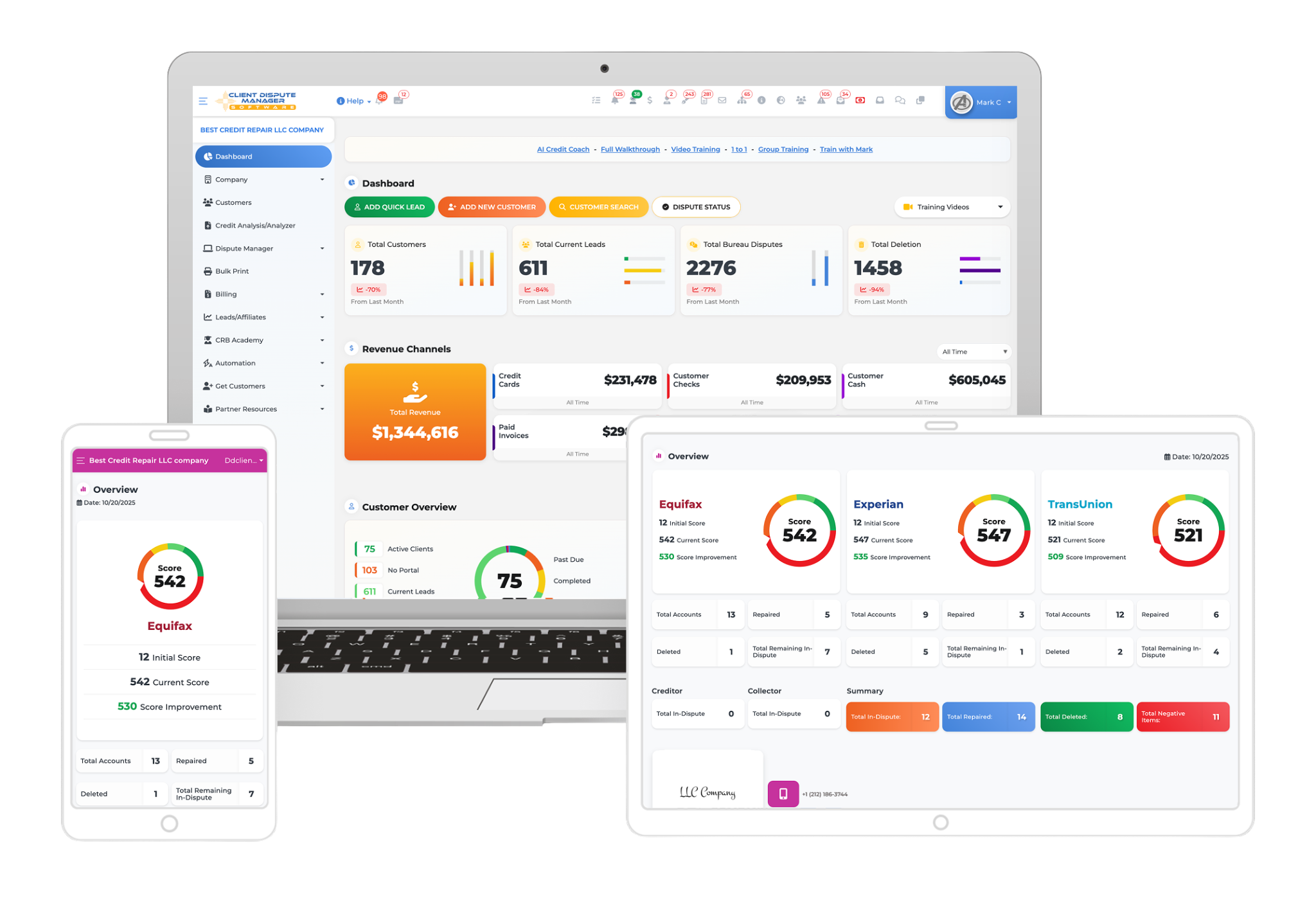
Client Dispute Manager Software was built by Mark Clayborne, a credit repair industry specialist with over 10 years of hands-on experience, to manage exactly this kind of multi-round, multi-bureau dispute process.
The platform tracks reinvestigation deadlines, generates FCRA-compliant dispute letters for every error type and escalation path, and keeps your full dispute history in one place so you always know where each dispute stands.
Mark Clayborne’s YouTube training library covers how to handle rejected disputes, how to escalate to a direct furnisher dispute under FCRA Section 623, when a CFPB complaint is appropriate, and how to document your case if legal action becomes necessary.
The 30-day free trial gives you access to the full platform to evaluate it before committing to a subscription.
What recourse do I have if a dispute is rejected because the item is confirmed accurate? You have five options. First, request the method of verification from the bureau under FCRA Section 611(a)(6). Second, submit a reinvestigation with new evidence not included in the original dispute.
Third, send a direct dispute to the furnisher under FCRA Section 623(b), which triggers their independent investigation obligation. Fourth, add a 100-word consumer statement to your credit file under FCRA Section 611(b). Fifth, if the bureau or furnisher violated a specific procedural obligation, file a CFPB complaint or consult a consumer protection attorney.
Client Dispute Manager Software tracks reinvestigation deadlines and generates letters for each escalation path automatically.
Where can I find guidance on appealing a denied credit report dispute? This article covers every available post-rejection path in detail. The CFPB also publishes consumer guides on credit report disputes at consumerfinance.gov.
For situations that may involve FCRA violations, the National Association of Consumer Advocates maintains a directory of consumer protection attorneys at consumeradvocates.org. Client Dispute Manager Software handles the workflow for reinvestigations, direct furnisher disputes, and multi-bureau tracking so you can manage the escalation process without losing documentation or missing deadlines.
What are the differences between disputing with a creditor versus a reporting company? Disputing with a credit bureau (Equifax, Experian, or TransUnion) triggers an investigation under FCRA Section 611. The bureau contacts the furnisher electronically and relies on their response.
Disputing directly with the creditor or collector that reported the item triggers a separate, independent investigation obligation under FCRA Section 623(b). The furnisher must conduct its own review and correct any inaccurate information. A bureau verification does not end the furnisher’s duty under Section 623.
Both paths can and should be pursued when a bureau dispute returns a verified result you believe is wrong.
What are the success rates for disputing minor inaccuracies versus major ones? Minor errors, including wrong personal information, incorrect account statuses, duplicate tradelines, and unauthorized hard inquiries, have high success rates because they involve specific, verifiable facts the furnisher either can or cannot confirm.
Major items like verified late payments, legitimate collection accounts, and confirmed bankruptcies have very low dispute success rates because they are accurately reported and the FCRA’s accuracy standard works in the furnisher’s favor. The most effective dispute strategies focus effort on items where there is a genuine factual basis for the challenge.
What types of credit report issues require legal help rather than dispute services? Legal action becomes relevant when a bureau or furnisher violates a specific procedural FCRA obligation.
This includes a bureau refusing to investigate a valid dispute, a furnisher re-inserting a deleted item without the written notice required by FCRA Section 611(a)(5)(B), or a creditor that continues reporting information it has been shown is inaccurate.
A dispute result you disagree with is not automatically a legal matter. Under FCRA Section 616, willful noncompliance allows you to recover actual damages, statutory damages up to $1,000 per violation, punitive damages, and attorney fees.
The National Association of Consumer Advocates at consumeradvocates.org maintains a directory of FCRA attorneys.
A rejected credit dispute is not a closed door. It is a redirect. The FCRA built multiple escalation paths into the law specifically because a single bureau investigation is not always the final word on whether information is accurate.
Requesting the method of verification, submitting a reinvestigation with new evidence, disputing directly with the furnisher, filing a CFPB complaint, and consulting a consumer protection attorney are all distinct legal tools available to you after a rejection.
Knowing which one fits your situation is what turns a setback into a strategy.The most effective post-rejection approach is a combination of the right next step for the specific rejection reason and a parallel effort to build positive credit history while the dispute process continues.
If the item turns out to be accurate and not removable, the 7-year reporting window under FCRA Section 605 is a fixed exit point you can plan around. If the process was flawed, the law gives you specific remedies. Either way, the next step is always clearer than it feels in the moment a rejection arrives.

Mark Clayborne specializes in credit repair, starting and running credit repair businesses. He's passionate about helping businesses gain freedom from their 9-5 and live the life they really want. You can follow him on YouTube.
Experience our credit repair software, risk-free.