Get Started for as Low a $49 for the First Month: Click Here
Written by Mark Clayborne
Last updated on April 9, 2026
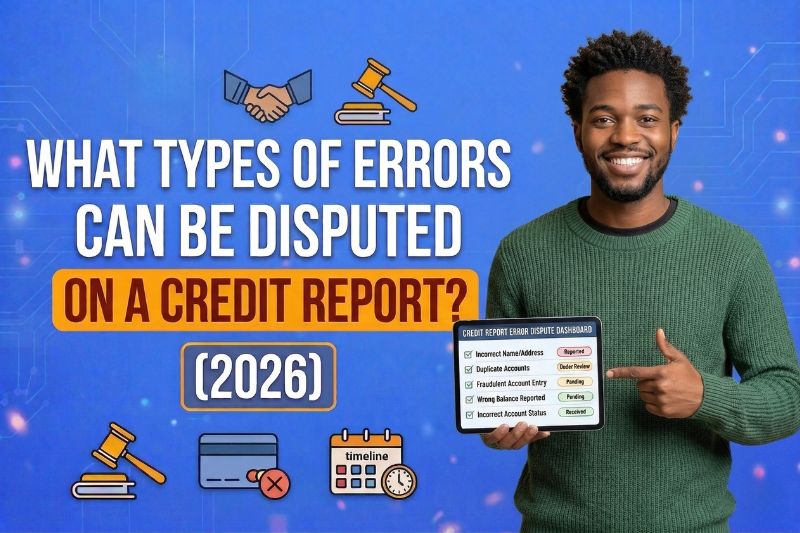
Most consumers who find something wrong on their credit report do not dispute it because they are not sure it qualifies. That uncertainty is the single most common reason disputable errors stay on reports for years, quietly raising interest rates and blocking loan approvals.
The Fair Credit Reporting Act gives you the right to dispute any item that is inaccurate, outdated, or unverifiable. Those three criteria cover four categories of credit report errors: personal information errors, account status errors, balance and credit limit errors, and fraudulent or duplicate accounts.
You do not need to prove fraud. You do not need an attorney. You need a copy of your report, a clear description of what is wrong, and documentation that supports your claim.
This article covers every type of credit report error that qualifies for a dispute under the FCRA, the specific signals that confirm an item is eligible, the documentation required before you file, and the preparatory steps that give your dispute the strongest possible foundation.
For the complete filing process, see the full guide on how to dispute items on a credit report.

Four categories of errors qualify for dispute under the Fair Credit Reporting Act: personal information errors, account status errors, balance and credit limit errors, and fraudulent or duplicate accounts.
An item qualifies if it is factually inaccurate, if it is older than the FCRA reporting window, or if the creditor cannot verify it when the bureau investigates.
Any one of those three conditions is sufficient. You do not need to meet all three to file. The most important thing to understand before filing is that inaccurate does not mean only wrong.
Under the FCRA, a credit report item is disputable if it is factually incorrect, if it should have fallen off your report based on the applicable timeline, or if the data furnisher cannot prove it is accurate when the bureau sends the investigation request. The four categories below define exactly what falls into each group.
Personal information errors are the most overlooked category of credit report mistakes. They do not carry their own score impact, but they create serious problems when a creditor sees conflicting identity data on your file.
More critically, a wrong Social Security number or a name linked to a different person can attach another consumer’s negative accounts to your credit report.
Personal information errors include:
Dispute personal information errors with each bureau reporting the incorrect data. Include a copy of your government-issued ID and a document confirming your correct information, such as a utility bill or bank statement with your current address.

Account status errors are among the most damaging items on a credit report because they misrepresent how you have managed debt.
A late payment reported by mistake, a charge-off that should show as paid, or an open account that was closed years ago can cost you a loan approval or significantly increase the rate you are offered.
Account status errors include:
Balance and credit limit errors affect credit utilization, which is one of the most heavily weighted factors in most credit scoring models. A balance reported higher than what you actually owe increases your utilization ratio and lowers your score.
A credit limit reported lower than the limit your creditor assigned produces the exact same effect, even if your balance is accurate.
Balance and credit limit errors include:

Fraudulent accounts and duplicate entries are the most serious category of credit report error. A fraudulent account means someone used your personal information to open credit without your knowledge or consent.
A duplicate entry means a single debt appears more than once on your report, which artificially multiplies the negative information a lender sees.
Fraudulent and duplicate accounts include:
Fraudulent accounts require additional documentation before the bureau is required to block the item. File an Identity Theft Report at identitytheft.gov through the FTC before submitting your dispute. That report is the primary document bureaus require to act on fraud-related claims.
A negative item is eligible for dispute when it meets at least one of three conditions under the FCRA: the information is factually inaccurate, the item is older than the applicable reporting window (seven years for most negative items, ten years for Chapter 7 bankruptcy), or the creditor that reported it cannot verify the information when the bureau investigates.
Eligibility does not depend on the size of the error or on how much damage it has caused to your score.
Before filing, check each entry on your report against these specific signals:
Any single indicator above is sufficient grounds to file. You do not need to wait until an error has lowered your score to act on it.

The documentation you need depends on the category of error you are disputing. Gather copies of every supporting document before you contact any bureau. Never send originals.
Bureaus do not return submitted materials, and you will need every document in your possession if your dispute is denied, if you re-dispute with new evidence, or if you file a complaint with the Consumer Financial Protection Bureau or pursue legal action.
Match your documentation to your error category:
For late payment errors:
For account status errors:
For balance and credit limit errors:
For fraudulent accounts:
For personal information errors:
The most common reason credit report disputes fail is not that the error was real. It is that the consumer filed without adequate documentation, disputed with the wrong party, or made a procedural mistake that gave the bureau grounds to close the investigation without correcting the item.
These mistakes do not reflect on the strength of your case. They reflect on the preparation that went into the dispute before it was submitted.
Avoid these specific mistakes before and after you file:

Before you contact any credit bureau about a disputed item, complete three things: pull your credit report from all three bureaus, identify every entry that meets an eligibility criterion, and gather the documentation that supports each specific claim.
Skipping any of these steps before filing does not save time. It creates the need to re-file, which extends the total resolution timeline and can give the bureau grounds to classify the follow-up dispute as insufficient.
Work through these steps in order:
Go to AnnualCreditReport.com and request reports from all three bureaus in the same session. You will need your name, current address, date of birth, and Social Security number to verify your identity. Reports are available for immediate download.
Pull all three at the same time so you can compare what each bureau is reporting before you file any disputes. An error on one bureau’s report is not automatically visible on the others and requires a separate dispute filing.
Select “Request your free credit reports” at AnnualCreditReport.com. No credit card is required and no subscription is involved. As of 2023, weekly free access replaced the previous annual limit for all consumers.
Download all three reports in one session and review each one in full before filing any dispute. If you prefer a mailed copy, that option is also available through the same site at no cost.
Mixed-file errors, where accounts belonging to a consumer with a similar name or Social Security number appear on your report, and incorrect payment history are the most frequently disputed credit report errors.
Both are fully disputable under the Fair Credit Reporting Act and are routinely corrected or removed through the bureau’s standard 30-day investigation process.
No. The FCRA gives you the right to dispute items that are inaccurate, outdated, or unverifiable. Filing a dispute on an item you know is factually correct is not effective and can be classified as frivolous if resubmitted without new evidence.
Accurate negative items remain on your report for up to seven years from the date of first delinquency.
Most negative items remain for seven years from the date of first delinquency under the FCRA. Chapter 7 bankruptcies stay for up to ten years. Errors do not fall off automatically before those deadlines.
They remain on your report until you dispute them and the bureau confirms the information cannot be verified, at which point the bureau must remove the item.
Not necessarily. Creditors report to the bureaus they have relationships with, and not every creditor reports to all three. An error on your Experian report may not appear on Equifax or TransUnion.
Pull all three reports from AnnualCreditReport.com and file a separate dispute with each bureau that is reporting the inaccurate item.
If the bureau determines the information is accurate, the item remains on your report unchanged and you receive written notice of the outcome. You can add a 100-word consumer statement to your report, re-dispute with new supporting evidence not previously submitted, file a complaint with the CFPB at consumerfinance.gov, or consult a consumer protection attorney about your rights under the FCRA.
Credit report errors are more common than most people expect, and many go unchallenged because consumers are unsure what qualifies. Any item that is inaccurate, outdated, or unverifiable can be disputed under federal law.
Once you understand the main error categories and the signals that confirm eligibility, you can review your report with clarity and take action without hesitation.
The key to a successful dispute is preparation. You need to identify the exact error, match it to the correct category, and support your claim with clear documentation. When you follow a structured approach, you reduce delays, avoid common mistakes, and improve your chances of getting inaccurate information corrected or removed.

Mark Clayborne specializes in credit repair, starting and running credit repair businesses. He's passionate about helping businesses gain freedom from their 9-5 and live the life they really want. You can follow him on YouTube.
Experience our credit repair software, risk-free.