

Seeing a collection account on your credit report can feel overwhelming. Whether you are an entrepreneur trying to qualify for funding or an individual working to rebuild your financial foundation, collections can lower your credit score and limit your opportunities. The good news is that not all collection accounts are permanent, especially if they are inaccurate or unverifiable.
If you are searching for how to remove collections from credit report, you are likely facing one of three situations. The debt may be incorrect. The account details may be inaccurate. Or you may not be sure whether the collection agency can legally report the account. Understanding the difference between valid debt and inaccurate reporting is the first step toward solving the problem.
In 2026, credit reporting rules continue to evolve, particularly around medical collections and dispute timelines. Under the Fair Credit Reporting Act, consumers have the right to dispute inaccurate or incomplete information. If a collection account cannot be verified within the required investigation period, it must be removed from your credit report.
This guide will show you:
- What collection accounts are and why they appear?
- When you can legally remove collections from credit report?
- How to dispute collection account entries step by step?
- How a pay for delete letter works and when it makes sense?
- What to include in a collection removal letter?
- Special rules that may apply to your situation
You will not find shortcuts or unrealistic guarantees here. Instead, you will learn a structured and legally grounded process that can help you correct inaccurate reporting and protect your financial future.
Now let us start with the foundation. What exactly is a collection account, and how does it end up on your credit report?
Key Takeaways:
- Start by reviewing all three credit reports carefully to identify inaccurate, outdated, or unverifiable collection accounts that may legally qualify for removal under federal credit reporting laws.
- Request debt validation from collection agencies to confirm ownership, balance accuracy, and reporting legitimacy before taking further dispute action.
- Submit structured written disputes to credit bureaus with supporting documentation when collections contain errors, incomplete information, or cannot be verified within the investigation period.
- Explore strategic options such as goodwill letters, pay-for-delete negotiations, or settlement agreements depending on whether the collection is paid, unpaid, or incorrectly reported.
- Use organized dispute tracking and credit repair tools to manage timelines, maintain compliance, and follow up consistently until inaccurate collections are corrected or removed.
What Is a Collection Account?

A collection account appears on your credit report when a creditor sends an unpaid debt to a third party collection agency. Once reported, the collection becomes a negative item that can significantly lower your credit score and remain on your credit report for up to seven years.
A collection account usually begins with missed payments. When an account becomes seriously delinquent, typically after 120 to 180 days of nonpayment, the original creditor may charge off the debt. After that, the debt is either assigned or sold to a collection agency. That agency then reports the collection to credit bureaus.
The moment it appears on your credit report, it becomes a separate negative entry from the original account. Even if you later pay the debt, the collection record can still remain unless it is removed through proper legal or negotiation processes.
Understanding how collections form is important because the strategy to remove collections from credit report depends on whether the information is accurate, outdated, incomplete, or unverifiable.
How Do Accounts End Up in Collections?
Accounts typically move to collections after a long period of missed payments. Here is how it usually happens:
- You miss multiple payments on a loan, credit card, or medical bill.
- The creditor marks the account as delinquent.
- After several months, the creditor charges off the account.
- The debt is sent to or sold to a collection agency.
- The collection agency reports the account to credit bureaus.
At that point, the collection agency becomes the reporting party. This matters because when you dispute collection account entries, you are often dealing with both the collection agency and the credit bureau.
How Do Collections Affect Your Credit Score?

Collections can significantly reduce your credit score, especially if they are recent. Credit scoring models view collections as a sign of serious delinquency.
The impact depends on:
- How recent the collection is?
- The total amount owed
- Your overall credit profile
- Whether you have multiple collections
Newer scoring models treat paid collections differently than older ones. In some cases, paid medical collections may have less impact or may not be reported at all under newer rules. However, unpaid collections still weigh heavily against your creditworthiness.
For entrepreneurs and business owners, this can mean higher interest rates, denied financing, or difficulty securing vendor credit.
How Long Do Collections Stay on Your Credit Report?
Collection accounts can remain on your credit report for up to seven years from the date of first delinquency, even if the debt is later paid.
The seven year period begins from the original delinquency date, not from when the account was sold or transferred to a collection agency. This distinction is important because some consumers mistakenly believe the clock restarts when the debt changes hands. It does not.
However, if the reporting is inaccurate, incomplete, or cannot be verified during a dispute, you may be able to remove collections from credit report before the seven year period ends.
Now that you understand what a collection account is and how it impacts your credit, the next question becomes critical.
Can you legally remove collections from your credit report?
Can You Legally Remove Collections From Your Credit Report?

Yes, you can remove collections from credit report entries if the information is inaccurate, incomplete, outdated, or unverifiable. Federal law gives you the right to dispute collection account reporting, and credit bureaus must investigate and correct errors within a specific timeframe.
The key issue is legality.
You cannot simply demand deletion of a legitimate and accurately reported debt. However, if a collection account contains errors or cannot be verified, the law requires that it be corrected or removed. Many people searching for how to remove collections from credit report assume every collection can be erased. That is not true. Removal depends on accuracy and compliance.
Understanding this distinction protects you from unrealistic expectations and helps you use the dispute process correctly.
The Difference Between Inaccurate and Valid Collection Accounts
Before attempting to remove collections from credit report records, you must determine whether the account is inaccurate or valid.
An inaccurate collection account may include:
- The wrong balance amount
- An incorrect date of first delinquency
- Duplicate reporting of the same debt
- An account that does not belong to you
- Reporting beyond the seven year limit
- Missing or incomplete documentation
In these cases, you have the legal right to file a dispute collection account request with the credit bureaus.
A valid collection account, on the other hand, is:
- Yours
- Within the legal reporting timeframe
- Accurately reported
- Properly verified if challenged
If the account is valid and verified, a standard dispute may not lead to removal. In that situation, options such as negotiating a pay for delete letter or requesting goodwill deletion may be considered. Even then, deletion is not guaranteed.
The strategy changes depending on whether the reporting is wrong or simply unfavorable.
What Rights Do You Have Under the Fair Credit Reporting Act?
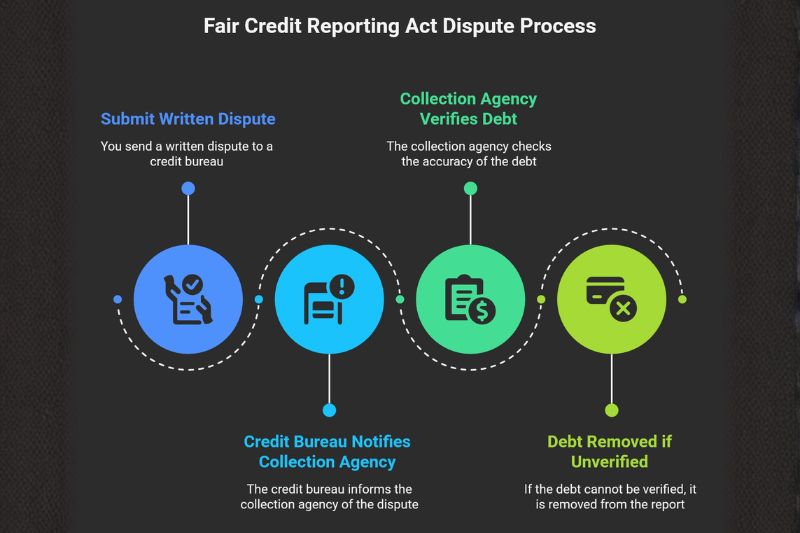
Under Section 611 of the Fair Credit Reporting Act, you have the right to dispute any information on your credit report that you believe is inaccurate or incomplete. Credit bureaus must investigate your dispute within 30 days and delete information that cannot be verified.
Here is what that means in practice:
- You can submit a written dispute to Experian, Equifax, or TransUnion.
- The credit bureau must notify the collection agency.
- The collection agency must verify the accuracy of the debt.
- If the debt cannot be verified, it must be removed.
This legal framework is the foundation for anyone learning how to remove collections from credit report entries correctly.
It is important to understand that the burden of verification falls on the reporting party, not on you. However, your dispute should be clear, specific, and supported by documentation whenever possible. Vague or incomplete disputes are more likely to be verified rather than deleted.
When Must a Collection Be Deleted by Law?
A collection account must be removed from your credit report when:
- The collection agency cannot verify the debt during an investigation
- The account is reported beyond the seven year limitation period
- The account belongs to another person
- The reporting contains material inaccuracies
If a collection agency fails to respond within the required investigation period, the credit bureau must delete the account.
This is not a favor and not a negotiation. It is a legal obligation.
However, if the collection is accurate and verified, the law does not require deletion. In that case, you may explore options such as negotiating a pay for delete letter or focusing on rebuilding your credit profile over time.
Knowing when the law supports removal and when it does not allows you to approach the process strategically rather than emotionally.
How Do You Remove Collections From Your Credit Report Step by Step?
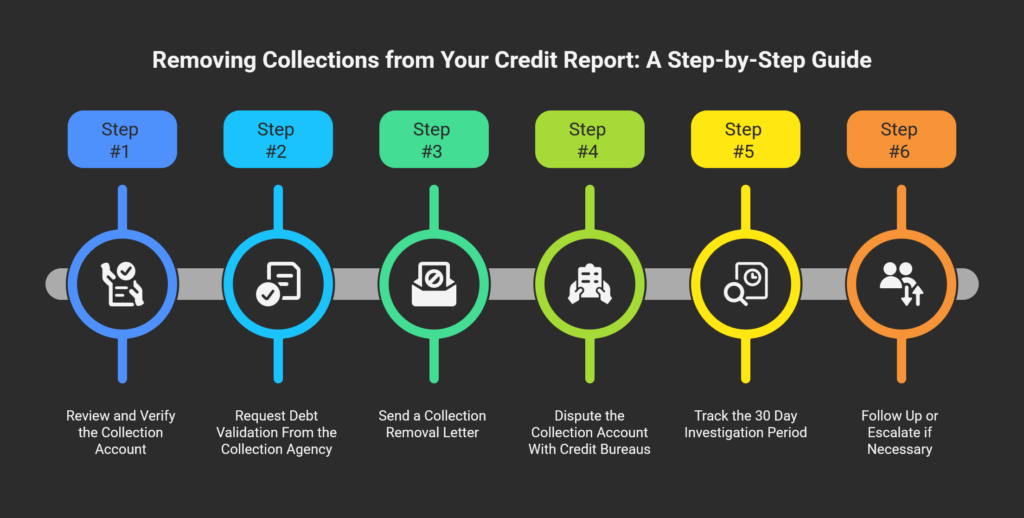
To remove collections from credit report records, you must review the account for accuracy, request debt validation, send a collection removal letter if errors exist, dispute collection account reporting with the credit bureaus, and track the required 30 day investigation period.
If you are serious about learning how to remove collections from credit report entries the right way, you need a structured process. Random letters and generic templates rarely work. Precision and timing matter.
Here is the step-by-step framework:
Step #1: Review and Verify the Collection Account
Before you attempt to remove collections from credit report listings, you must analyze the account carefully.
Start by reviewing all three credit reports from Experian, Equifax, and TransUnion.
Look for:
- Incorrect balance amounts
- Wrong dates of first delinquency
- Duplicate collection accounts
- Accounts that do not belong to you
- Reporting older than seven years
If the collection account contains errors, you have grounds to dispute the collection account reporting. If everything appears accurate, your strategy may shift toward negotiation instead of dispute.
This step prevents wasted effort and protects your credibility in the dispute process.
Step #2: Request Debt Validation From the Collection Agency

If you question the legitimacy of the debt, request validation directly from the collection agency.
A debt validation request asks the agency to provide proof that:
- The debt belongs to you
- The amount is correct
- They have the legal right to collect it
This step is separate from disputing with the credit bureaus. It is a direct request to the collection agency.
If the agency cannot properly validate the debt, that strengthens your position when you later dispute collection account reporting with the credit bureaus. Validation failures can support efforts to remove collections from credit report entries.
Always send requests in writing and keep copies for your records.
Step #3: Send a Collection Removal Letter
If you identify inaccuracies, the next step is to send a collection removal letter. A collection removal letter should include:
- Your identifying information
- The account number in question
- A clear explanation of the error
- A formal request for investigation and deletion
The purpose of this letter is not to argue emotionally. It is to highlight specific reporting violations.
If your goal is to remove collections from credit report entries due to inaccuracies, your letter must be precise. Avoid vague statements like “this is not mine” without explanation. Instead, identify the exact reporting issue.
In some cases, consumers may also explore a pay for delete letter strategy if the debt is valid but negotiable. However, that is a negotiation tactic, not a legal right.
Step #4: Dispute the Collection Account With Credit Bureaus
After reviewing and documenting the issue, formally dispute collection account reporting with the credit bureaus.
You can dispute:
- Online through the bureau’s website
- By mail with supporting documentation
- A written dispute often allows you to explain your position more clearly.
When you dispute collection account entries, the credit bureau must:
- Notify the collection agency
- Conduct an investigation
- Respond within 30 days
If the collection agency cannot verify the information, the bureau must remove collections from credit report listings.
This is where federal law supports your position.
Step #5: Track the 30 Day Investigation Period
Credit bureaus generally have 30 days to investigate your dispute. If the collection agency fails to verify the account within that timeframe, the bureau must delete the entry.
Tracking this timeline is critical.
Keep records of:
- The date you submitted your dispute
- Confirmation numbers or certified mail receipts
- Any responses received
If the 30 day window passes without proper verification, you may have grounds to request deletion again or escalate the issue.
Many disputes fail not because they are invalid, but because consumers do not track deadlines.
Step #6: Follow Up or Escalate if Necessary
If the dispute results in verification but you believe the information is still inaccurate, you may:
- Submit additional documentation
- File a second dispute with new evidence
- Add a consumer statement to your credit report
- Escalate the complaint to the Consumer Financial Protection Bureau
Learning how to remove collections from credit report entries often requires persistence. One dispute is not always enough, especially if the first submission lacked documentation.
The key is structured follow up, not repeated generic letters.
When handled properly, this step by step process gives you a legal and strategic path to remove collections from credit report entries that should not be there.
How Do You Dispute a Collection Account the Right Way?
To dispute collection account reporting effectively, you must identify the exact inaccuracy, submit a clear written dispute with supporting documentation, and monitor the 30 day investigation period required by law.
Specific, evidence based disputes are far more successful than generic complaints.
If your goal is to remove collections from credit report records, the way you dispute collection account entries matters. Many disputes fail not because the consumer is wrong, but because the dispute is vague or unsupported.
Let us break down how to do this correctly.
Should You Dispute Online or by Mail?
You can dispute collection account entries either online through a credit bureau’s website or by sending a written letter by mail.
Online disputes are faster and more convenient. However, they may limit the amount of detail you can provide and sometimes reduce your ability to attach extensive documentation.
Disputing by mail allows you to:
- Clearly explain the specific reporting error
- Attach supporting documents
- Maintain a physical paper trail
- Send via certified mail for tracking
If you are serious about learning how to remove collections from credit report entries through structured disputes, written disputes by mail often provide stronger documentation and clarity.
Regardless of the method you choose, the key is precision. Simply selecting “not mine” without explanation rarely leads to deletion.
What Documentation Strengthens a Dispute?
When you dispute collection account reporting, evidence increases your credibility.
Helpful documentation may include:
- Account statements showing payment history
- Identity theft reports if applicable
- Proof of incorrect balance calculations
- Letters from the original creditor
- Payment confirmations
- Copies of prior correspondence
If you requested debt validation from the collection agency and did not receive sufficient proof, that can also support your position. The goal is not to overwhelm the credit bureau. The goal is to show that the reporting is inaccurate, incomplete, or unverifiable.
Strong documentation improves your chances of successfully removing collections from credit report listings.
Why Generic Disputes Often Fail?
Many consumers send broad statements such as:
- “This account is inaccurate”
- “I do not recognize this debt”
- “Please remove this immediately”
While you have the right to dispute collection account entries, vague disputes often result in simple verification rather than deletion.
Credit bureaus forward your dispute to the collection agency. If the agency confirms the account matches its internal records, the bureau may mark it as verified.
To improve your outcome:
- Identify the specific error
- Reference dates and amounts
- Attach evidence
- Keep copies of everything
Learning how to remove collections from credit report entries is not about sending more letters. It is about sending better letters.
A precise dispute supported by documentation is far more powerful than multiple generic complaints.
How Client Dispute Manager Software Supports Structured Collection Disputes?

Successfully removing inaccurate collections is not just about knowing how to dispute collection account entries. It is about managing documentation, deadlines, follow ups, and compliance requirements consistently.
For individuals handling multiple disputes, and especially for credit repair businesses working with multiple clients, organization becomes critical. Missed deadlines, incomplete records, or poorly documented disputes can weaken your position and reduce the likelihood of correcting inaccurate reporting.
Client Dispute Manager Software is designed to help organize and manage the dispute process in a structured and compliant way. Instead of relying on spreadsheets, scattered emails, and manual tracking, the platform centralizes documentation and timelines into one system.
The software does not guarantee removal. What it does is help ensure that disputes are documented, tracked, and managed properly under the framework required by law. For anyone serious about understanding how to remove collections from credit report records efficiently and responsibly, process control matters just as much as strategy.
Start Today and Explore the Features Firsthand!
Key Features of Client Dispute Manager Software
Client Dispute Manager Software provides structured tools that support both consumers and credit repair professionals.
Key features include:
- Centralized client file management for organizing credit reports and dispute history
- Automated dispute tracking to monitor the 30 day investigation timeline
- Secure document storage for validation letters and correspondence
- Workflow management to prevent missed follow ups
- Custom dispute letter generation aligned with compliance standards
- Audit trail logs to maintain a record of actions taken
- Status tracking across multiple credit bureaus
These features help reduce manual errors and improve consistency when attempting to remove collections from credit report entries.
For credit repair businesses, this structure also supports regulatory compliance and internal accountability. For individuals, it creates clarity and organization during what can otherwise be a confusing process.
A strong dispute strategy is important. A structured system behind that strategy is what allows it to scale and remain compliant.
Start Today and Explore the Features Firsthand!
What Should a Collection Removal Letter Include?
A collection removal letter should clearly identify the account in question, explain the specific reporting error, reference your rights under federal law, and formally request investigation and deletion if the information is inaccurate or unverifiable.
If you are learning how to remove collections from credit report records, the collection removal letter is one of the most important tools in your process. However, the effectiveness of the letter depends on clarity, accuracy, and supporting documentation.
A well written collection removal letter is not emotional. It is structured, specific, and legally grounded.
Required Information in a Collection Removal Letter
To properly remove collections from credit report entries due to inaccuracies, your letter should include:
- Your full legal name
- Current address
- Date of birth
- Last four digits of your Social Security number
- The name of the collection agency
- The account number being disputed
- A clear explanation of the reporting error
- A formal request for investigation and correction
If you are disputing the validity of the debt, state that you are requesting verification under your rights provided by law. If the issue is a reporting error, identify the exact inaccuracy, such as incorrect balance, wrong delinquency date, or duplicate entry.
When you dispute collection account reporting, specificity increases your credibility. Avoid vague statements like “This is not accurate.” Instead, explain why it is inaccurate.
Supporting documentation, such as statements or prior correspondence, should be attached whenever possible.
Frequently Asked Questions About Removing Collections
How Long Does It Take to Remove Collections From a Credit Report?

Credit bureaus generally have 30 days to investigate a dispute. If the collection agency cannot verify the debt within that period, the collection must be removed.
In practice, the timeline depends on how quickly you submit documentation and whether the collection agency responds. If the account is verified, removal may not occur unless additional evidence is provided.
Learning how to remove collections from credit report entries often requires tracking deadlines carefully and following up when necessary.
Can I Remove Collections Without Paying?
Yes, you can remove collections from credit report listings without paying if the account is inaccurate, incomplete, outdated, or unverifiable.
If the collection agency cannot properly validate the debt during a dispute, the credit bureau must delete the entry. However, if the debt is valid and accurately reported, payment alone does not guarantee removal.
In some cases, a pay for delete letter may be used as a negotiation strategy, but deletion is not required by law simply because payment is made.
Does Removing Collections Increase My Credit Score?
Removing a collection account can improve your credit score, but the impact varies depending on your overall credit profile.
Collections are considered serious negative items. If you successfully remove collections from credit report records, especially recent ones, your score may increase. The size of the increase depends on:
- How recent the collection was
- Whether you have multiple collections
- Your other credit history
Score changes are not guaranteed, but deletion of negative entries generally improves credit health over time.
What Happens If a Collection Agency Does Not Respond?
If a collection agency does not respond to a dispute within the required investigation period, the credit bureau must remove the collection account from your credit report.
When you dispute collection account reporting, the bureau contacts the collection agency for verification. If the agency fails to verify the information within the legal timeframe, the item must be deleted.
This is one of the strongest legal paths to remove collections from credit report entries when verification cannot be completed.
Can I Dispute the Same Collection More Than Once?
Yes, you can dispute the same collection again if you have new information or evidence that was not included in the original dispute.
Submitting the exact same dispute repeatedly without new documentation may result in the bureau labeling it as frivolous. However, if you discover additional inaccuracies or obtain new proof, you have the right to submit a new dispute collection account request.
Strategic follow up is more effective than repeating identical letters.
Are Medical Collections Easier to Remove in 2026?
Medical collections are subject to updated reporting rules, which can make them less damaging or in some cases ineligible for reporting once paid.
Recent changes have reduced the impact of certain medical collections and delayed reporting timelines. If a medical collection is inaccurate or fails verification, you may be able to remove collections from credit report listings through the standard dispute process.
However, not all medical collections are automatically deleted. Accuracy and proper documentation still determine the outcome.
Conclusion
Removing collections from your credit report is not about shortcuts. It is about understanding the law, reviewing your reports carefully, and using a structured dispute process when inaccuracies exist.
If you came here searching for how to remove collections from credit report entries, you now understand an important truth. Collections can only be removed legally when they are inaccurate, incomplete, outdated, or unverifiable. Valid and properly reported debts cannot simply be erased because they are inconvenient.
The process requires:
- Careful review of your credit reports
- Requesting debt validation when appropriate
- Sending a clear and specific collection removal letter
- Filing a properly documented dispute collection account request
- Tracking the 30 day investigation period
- Following up strategically if needed
Persistence matters. Documentation matters. Precision matters. In some cases, negotiation strategies such as a pay for delete letter may apply. In others, the focus should be on correcting reporting errors under your rights provided by federal law. The key is choosing the correct strategy based on your specific situation.
Whether you are an individual rebuilding your financial profile or an entrepreneur working to improve access to funding, correcting inaccurate collections can be an important step toward stronger credit health.
Approach the process calmly. Stay organized. Keep records of every communication. When done properly, the dispute process is not about confrontation. It is about compliance and accuracy.
The goal is not to erase history. The goal is to ensure your credit report reflects the truth.

Mark Clayborne
Mark Clayborne specializes in credit repair, starting and running credit repair businesses. He's passionate about helping businesses gain freedom from their 9-5 and live the life they really want. You can follow him on YouTube.
Start Today and Explore the Features Firsthand!
Below Is More Content For Your Review:
