If you’ve searched for a 609 dispute letter, you’ve probably seen bold claims promising fast credit fixes, guaranteed deletions, or so-called “legal loopholes” hidden inside the Fair Credit Reporting Act (FCRA). Some sources say a 609 credit dispute letter can wipe negative items clean. Others insist it doesn’t work at all. So what’s the truth?
This confusion exists because Section 609 credit repair is one of the most misunderstood topics in the credit world. Section 609 of the FCRA does give consumers specific rights but those rights are often exaggerated, misapplied, or blended with unrelated dispute tactics. As a result, many people send a 609 letter with unrealistic expectations, only to feel frustrated when nothing changes.
This guide breaks it all down clearly.
In this article, you’ll learn what a 609 dispute letter actually is, what FCRA Section 609 really says, and how credit report verification works behind the scenes. We’ll answer the most searched questions like does a 609 letter work in 2026?, can it remove accurate information?, and how long does it take to see results? without hype, shortcuts, or false promises.
You’ll also see when a 609 dispute letter template can be useful, when it won’t help at all, and how it differs from other credit dispute methods under the law. Whether you’re dealing with credit issues yourself, learning about financial literacy, or exploring the credit repair industry, this guide is designed to give you accurate, practical, and compliant information you can rely on.
Let’s start with the most important question what Section 609 actually says under the FCRA, according to consumer protection standards enforced by the Federal Trade Commission.
Key Takeaways:
- Section 609 of the FCRA gives consumers the right to request disclosure of information reported on their credit file, helping them understand who reported an account and what data is being used.
- Section 609 itself does not remove negative items; inaccurate, incomplete, or unverifiable information must still be challenged through the formal dispute process.
- Successful credit disputes rely on documentation, accuracy checks, and proper verification requests rather than relying on generic “609 letter” templates found online.
- Understanding the difference between disclosure rights (Section 609) and investigation rights (Section 611) is essential for building an effective and compliant credit repair strategy.
- Using structured systems or credit repair software helps organize disputes, track bureau responses, and maintain compliance throughout the credit improvement process.
What Is a 609 Dispute Letter and What Does Section 609 Actually Say?

Understanding Section 609 starts with clearing up a major misconception. Many people assume a “609 dispute letter” is a special legal weapon that forces credit bureaus to delete negative items.
That’s not how the law works. Section 609 is real, but its purpose is often misunderstood and that misunderstanding is where most frustration comes from.
Let’s break it down clearly.
What Is a 609 Dispute Letter Under the FCRA?
A 609 dispute letter is not an official term found in the Fair Credit Reporting Act (FCRA). Instead, it’s a consumer-created request that references Section 609 of the FCRA to ask credit bureaus for information about how an account is being reported.
In simple terms, a 609 credit dispute letter is a request for disclosure, not a formal dispute demanding removal.
When someone sends a 609-style letter, they are usually asking questions like:
- Where did this information come from?
- What documentation supports this account?
- How is this item being verified?
This is very different from a traditional dispute letter that claims information is inaccurate. A 609 letter focuses on access to information, not proving an error.
That distinction matters because Section 609 gives consumers the right to see information, not the power to force deletions.
What Is FCRA Section 609 and Your Right to Credit Report Verification?

FCRA Section 609 outlines a consumer’s right to know what information is in their credit file and the source of that information. It requires credit bureaus to disclose details about accounts, including:
- The data reported
- The source of the information
- Any parties who accessed the report
This is often where the idea of credit report verification gets mixed up.
Section 609 does not require credit bureaus to prove an account is valid in court-style documentation. It requires them to disclose information they already have in their system. If the data exists and is properly sourced, disclosure alone does not trigger removal.
This interpretation is supported by consumer guidance from the Federal Trade Commission, which consistently clarifies that accuracy not wording determines whether information stays or goes.
Why the Term “609 Dispute Letter” Is Often Misunderstood?
The phrase “609 dispute letter” became popular online because it sounds powerful. Over time, it was marketed as a shortcut for section 609 credit repair, often paired with claims about loopholes or guaranteed deletions.
The reality is simpler and less exciting.
Section 609:
- Does not override accurate reporting
- Does not force automatic deletions
- Does not replace the formal dispute process under Section 611
When people use a 609 letter expecting instant results, disappointment usually follows. When it’s used correctly as a way to understand what’s being reported and why it can be informative, but it’s not a magic fix.
Before deciding whether a 609 approach makes sense, the next question is the one most people really care about: does it actually work in real-world credit situations today?
Do 609 Dispute Letters Really Work in 2026?

This is the question almost everyone asks before sending a letter and for good reason. Online, you’ll find stories claiming instant deletions alongside others saying the process is useless. The truth sits in the middle.
Whether a 609 approach works depends less on the letter itself and more on what’s actually being reported on your credit file.
Do 609 Letters Actually Work for Credit Report Errors?
Yes, but only in very specific situations.
When people ask whether 609 letters actually work, what they’re really asking is whether requesting information under Section 609 can lead to changes on a credit report. The answer is that it can help uncover problems, especially when an account contains missing, inconsistent, or unclear details.
For example, a 609 request may reveal:
- Incomplete account information
- Conflicting reporting dates
- Accounts that don’t clearly match the consumer’s identity
If a credit bureau cannot properly disclose the information it has on file, that account may later become vulnerable during a formal dispute. In that sense, a 609 letter can be useful as a diagnostic step, not a guaranteed solution.
How Effective Are 609 Letters for Challenging Credit Report Errors?
How effective a 609 letter is depends on the quality of the data being reported, not the wording of the request.
For genuinely incorrect or poorly documented items, asking for disclosure can highlight weaknesses that weren’t obvious before. That’s why some people see results after using a 609 approach it brings attention to reporting issues that need correction.
However, when information is:
- Accurate
- Properly sourced
- Consistently reported
a 609 letter alone usually changes nothing. In those cases, a formal dispute under other sections of the law is often required. So if you’re wondering does a 609 letter work, the honest answer is that it works best as a supporting step, not a standalone fix.
Can a 609 Dispute Letter Remove Accurate Information From a Credit Report?
No. A 609 dispute letter cannot remove accurate, verified information simply because documentation was requested.
This is where many myths fall apart. Credit bureaus are allowed to report negative items as long as they are:
- Factually correct
- Within legal reporting time limits
- Properly attributed to the consumer
Requesting disclosure does not override those rules. If an account is accurate and verifiable, it can remain on a credit report even after a 609 request is fulfilled.
Understanding this limitation is important, because it sets realistic expectations. A 609 letter may help you understand your credit file better but lasting changes depend on accuracy, compliance, and the correct dispute process.
Next, let’s look at what actually happens after a 609 dispute letter is sent, and how the review process works in practice.
How Does a 609 Dispute Letter Work Step by Step?
A 609 dispute letter is best understood as a request for information not a magic deletion request. When you send one, you’re essentially asking the credit bureau to show you what’s in your file, where it came from, and how it’s being reported.
The process is usually straightforward, but the results depend on what the bureau already has on record and how clean (or messy) the reporting is.
What Happens After I Send a 609 Dispute Letter?
After you send a 609 dispute letter, the credit bureau typically does three things:
First, they log your request and confirm your identity. If your letter doesn’t include enough identifying details, they may respond asking for additional information before they do anything else.
Second, they pull the account data from your credit file and prepare a response based on what they have available. This response usually includes the account details being reported, the source of the information, and other file-level disclosures.
Third, they send you a written response. In many cases, the response looks more like a “here’s what we have on file” report than a point-by-point argument. That’s normal because the goal is disclosure.
What a 609-style request can do well is help you spot issues like:
- Account details that don’t match you (name variations, address history problems)
- Dates that don’t line up
- Accounts that appear duplicated or strangely formatted
- Reporting that lacks clarity or consistency
If you find a real error, that’s when people usually move into a more direct correction path.
How Long Does It Take to See Results From a 609 Letter?

If you’re asking how long does it take to see results from a 609 letter, the realistic answer is: you’ll often get a response in a few weeks, but the timing depends on the bureau, the delivery method, and whether they need more documentation from you.
Also, it’s important to define what “results” means.
- If your goal is getting a response, that can happen relatively quickly.
- If your goal is changes on your credit report, that’s less predictable because a 609 request doesn’t automatically trigger deletions or corrections.
In other words, the timeline for receiving information is usually clearer than the timeline for seeing score or report changes. The letter gives you visibility; what you do with that information is what determines next steps.
How Do I Know If My 609 Dispute Was Approved or Verified?
A lot of people ask, “how do I know if my dispute was approved?” The tricky part is that a 609 request isn’t always treated like a traditional dispute where you get a clear “approved” or “denied” outcome.
Instead, look for these practical signals in the bureau’s response:
- They fulfilled the request: You receive disclosures and account details that address what you asked for.
- They couldn’t complete it as written: They ask for identity documents, proof of address, or clearer account references.
- They state the information is accurate: Sometimes the response includes language that the item has been “verified” or remains unchanged.
- You see a change on your report: The most obvious confirmation is checking your updated credit report later and noticing an item corrected, updated, or (less commonly) removed.
If the response feels generic, incomplete, or doesn’t match what you asked, that doesn’t automatically mean you “lost.” It often means the request didn’t pinpoint the account clearly enough or the bureau is responding with standard disclosures.
Next, it helps to understand how a 609 approach differs from other dispute methods, and why that difference matters when you’re trying to correct credit report errors.
What Is the Difference Between a 609 Dispute Letter and Other Credit Disputes?
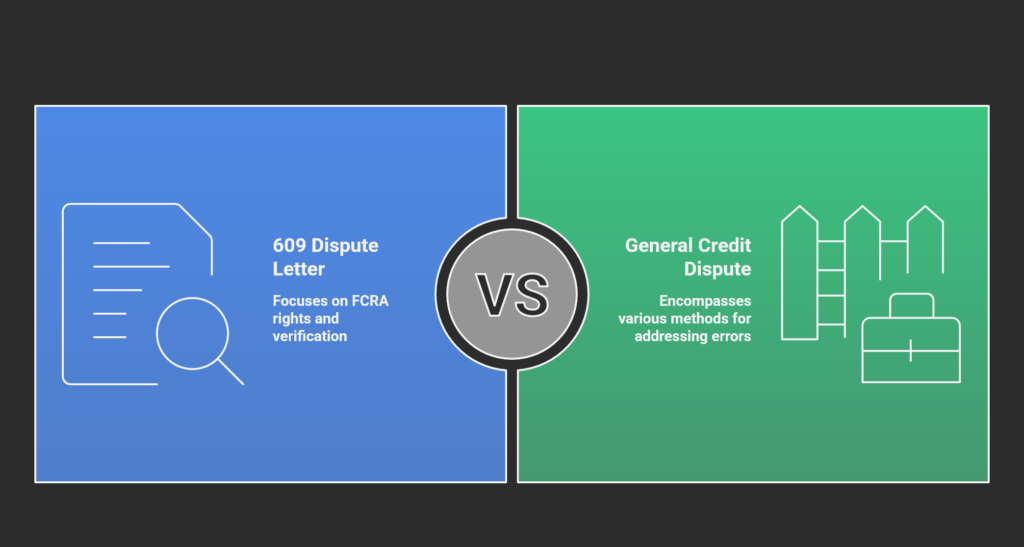
One of the biggest sources of confusion in credit repair is assuming that all dispute letters do the same thing. They don’t. Different sections of the law serve different purposes, and mixing them up often leads to unrealistic expectations.
Understanding how a 609 approach compares to other dispute methods helps you choose the right tool for the right situation.
609 Dispute Letter vs Section 611 Dispute, What’s the Real Difference?
The core difference comes down to disclosure versus correction.
A 609 dispute letter is based on a consumer’s right to see what information is in their credit file and where it came from. It focuses on access, transparency, and understanding the data being reported. This is why 609 requests often result in disclosure-style responses rather than clear “approved” or “denied” outcomes.
A Section 611 dispute, on the other hand, is the formal correction process. That’s the section of the law that governs how consumers challenge information they believe is inaccurate or incomplete and how credit bureaus must investigate those claims.
In practical terms:
- Section 609 helps you understand what’s being reported
- Section 611 is used to correct or challenge errors
People often run into trouble when they expect a disclosure request to function like a correction dispute. Knowing the difference prevents wasted time and frustration.
What Is the Difference Between a 609 and 604 Dispute Letter?
When people ask about the difference between a 609 and 604 letter, they’re usually running into terminology that’s been loosely used online.
Section 609 deals with disclosure of information in your credit file. Section 604, however, focuses on who is allowed to access your credit report and for what purpose. A request tied to Section 604 is typically about whether a creditor or company had a valid reason to pull your credit not about the accuracy of an account itself.
So the distinction looks like this:
- A 609-based request asks, “What information do you have on file, and where did it come from?”
- A 604-related request asks, “Was this credit inquiry or access legally permitted?”
They serve different roles, and neither replaces a formal dispute when the goal is correcting incorrect data.
What Are the Different Types of Credit Dispute Letters?
Not all credit dispute letters are created for the same goal. Over time, several types have become common, each with a specific purpose.
Some letters focus on requesting information, such as disclosure-based requests tied to Section 609. Others are designed to challenge accuracy, which is where formal disputes come into play. There are also letters used to address issues like identity theft, outdated information, or unauthorized inquiries.
Understanding the different types of credit dispute letters helps ensure you’re not using a disclosure request when a correction dispute is required or vice versa. When the method matches the problem, the process tends to be clearer, more efficient, and far less confusing.
With those distinctions in mind, the next step is learning how people typically draft and use a 609 dispute letter and why templates should be handled carefully.
How to Write a 609 Dispute Letter the Right Way?
Writing a 609 letter isn’t about clever wording or copying a script you found online. When it’s used correctly, it’s simply a clear, organized request for information. When it’s used incorrectly, it becomes another reason people believe Section 609 doesn’t work at all.
Here’s how to approach it the right way without hype or unrealistic expectations.
Step-by-Step Guide for Drafting a 609 Credit Dispute Letter
A step-by-step guide for drafting a 609 credit dispute letter starts with understanding your goal. You are not accusing the credit bureau of wrongdoing. You are asking for disclosure of what they are reporting and where it came from.
At a high level, the process usually looks like this:
- Identify Yourself Clearly: Include your full name, current address, and any previous address relevant to the account. This helps the bureau locate the correct file.
- Reference the Specific Account or Item: Be precise. Vague requests often result in generic responses.
- Request Disclosure, Not Deletion: Ask for the source of the information, how it’s being reported, and what data is associated with the account.
- Keep the Language Simple and Professional: Avoid emotional statements, threats, or legal jargon.
- Send the Letter Through a Trackable Method: This helps confirm the request was received.
This approach keeps the request focused and increases the chance of receiving a meaningful response.
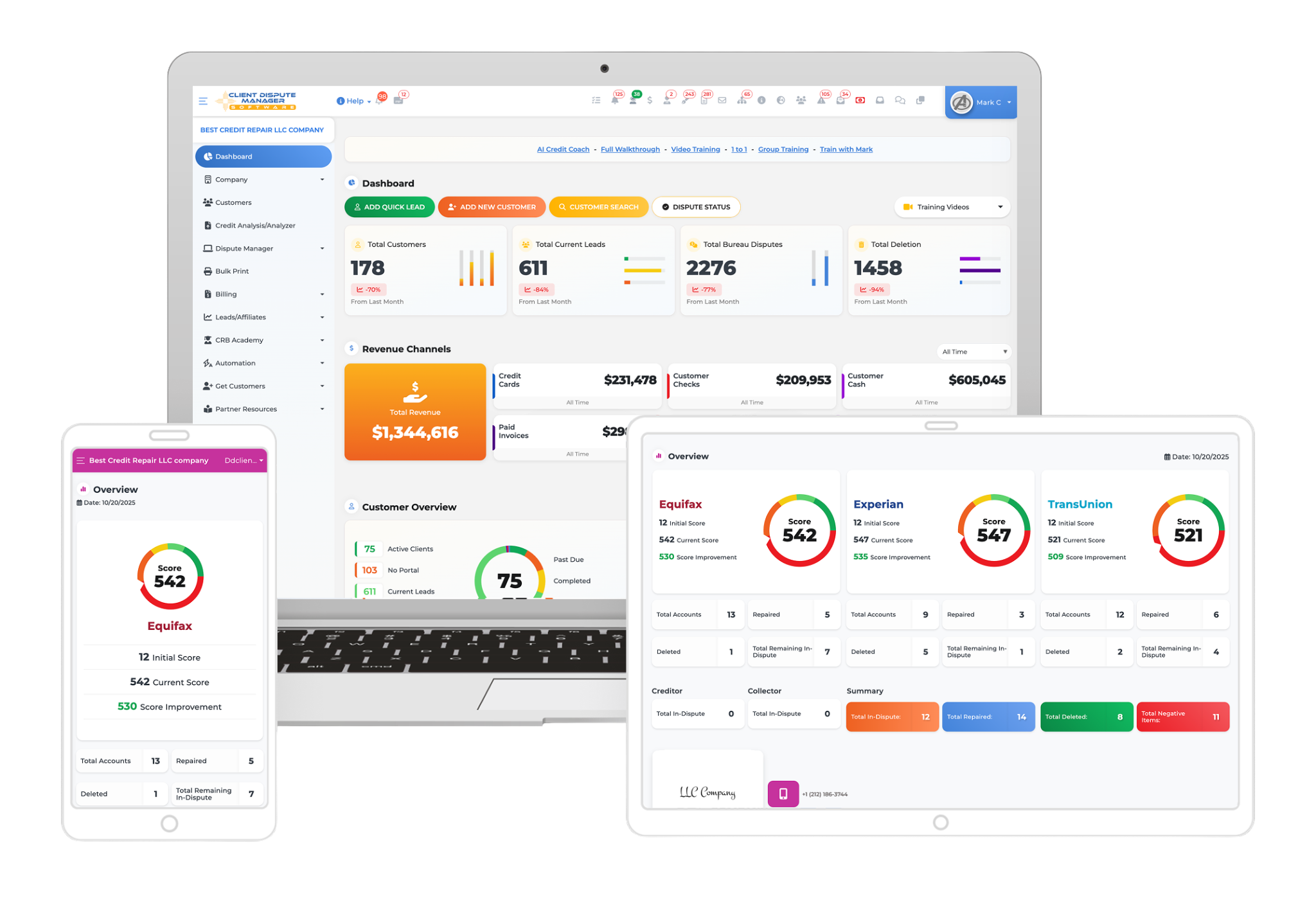
How Client Dispute Manager Software Supports the 609 Dispute Letter Process?

When Section 609 is used correctly, it’s about clarity, documentation, and next-step decisions not shortcuts. This is where Client Dispute Manager Software fits naturally into the process described throughout this guide.
Instead of treating a 609 dispute letter as a one-off action, the software helps turn it into a structured, trackable workflow, which is especially important for credit repair professionals and businesses managing multiple clients.
Start Today and Explore the Features Firsthand!
Key Features of Client Dispute Manager Software That Align With Section 609 Credit Repair
Client Dispute Manager Software is designed to support the real use of Section 609 information gathering, organization, and compliance rather than promoting unrealistic outcomes.
Key features that align with this article include:
- Disclosure Request Tracking: Easily log and monitor 609-related disclosure requests so it’s clear what was sent, when it was sent, and what response was received.
- Credit Bureau Response Management: Store and review bureau responses in one place, making it easier to identify missing details, inconsistencies, or verification language that may require follow-up.
- Separation of Disclosure vs Dispute Actions: Helps prevent a common mistake discussed earlier mixing Section 609 disclosure requests with formal dispute actions by keeping each step clearly documented.
- Client Communication & Transparency: Makes it easier to explain to clients what a 609 request can and cannot do, reinforcing realistic expectations and trust.
- Compliance-Focused Record Keeping: Maintains a clear paper trail, which is essential for businesses operating under CROA and FTC guidelines.
In short, Client Dispute Manager Software doesn’t promise results from a 609 dispute letter but it supports doing the process the right way, which is exactly the approach this guide emphasizes.
What Should a Legitimate 609 Dispute Letter Template Include?
A legitimate 609 dispute letter template is straightforward. It doesn’t rely on loopholes, special phrases, or aggressive demands. Instead, it typically includes:
- Your identifying information
- A clear reference to the account or item in question
- A request for disclosure under the FCRA
- A short, neutral explanation of what information you’re asking for
What it should not include are claims that the account must be deleted if documentation isn’t produced in a specific format. Those claims aren’t supported by the law and often trigger dismissive responses.
Templates are useful for structure but only when they’re customized and used with realistic expectations.
Frequently Asked Questions About 609 Dispute Letters
Do 609 Letters Really Work?
609 letters can work in limited situations, but not in the way many online claims suggest. They are most useful for requesting information about how an account is being reported and where that information came from. If a credit bureau’s records are incomplete or inconsistent, the disclosure may help identify issues that can later be corrected.
However, a 609 letter by itself does not force deletions and does not override accurate reporting.
Can I Use a 609 Dispute Letter to Challenge Outdated Information?
A 609 dispute letter is not designed to directly challenge outdated or obsolete information. Its role is disclosure, not enforcement of reporting time limits. If an item is past the legal reporting period, the proper approach is usually a formal dispute requesting removal based on obsolescence.
That said, reviewing disclosures through a 609 request can sometimes help confirm dates or reporting details before taking that next step.
Which Online Services Offer Templates for a 609 Dispute Letter?
Many websites and tools offer 609 dispute letter templates, often as part of broader credit education or credit repair platforms. The quality varies widely. Some provide simple, customizable formats focused on disclosure, while others market templates as guaranteed solutions which is a red flag.
The safest option is to use templates that explain why each section exists and encourage personalization rather than copy-and-paste use.
Can Client Dispute Manager Software Be Used for 609 Dispute Letters?
Yes. Client Dispute Manager Software can be used to track and document 609-style disclosure requests, including when they were sent and how credit bureaus responded. The software does not change how Section 609 works, but it helps ensure the process is organized, consistent, and easy to review especially when handling multiple accounts or clients.
Conclusion
After stripping away the hype, one thing becomes clear: Section 609 is not a loophole it’s a disclosure right. A 609 dispute letter can help you understand what’s in your credit file, where the information came from, and how it’s being reported. That visibility can be valuable, especially when you’re trying to identify real errors or inconsistencies. But it’s not a shortcut, and it doesn’t override accurate reporting.
What actually works in 2026 is a process-first approach. That means knowing when a 609 request makes sense, when a formal dispute is required, and when negative information is simply accurate and time-bound. Credit improvement happens through accuracy, documentation, and patience not special wording or guaranteed templates.
For individuals, this understanding helps set realistic expectations and prevents wasted effort. For entrepreneurs and credit repair professionals, it reinforces the importance of transparency, compliance, and clear communication with clients. Tools like Client Dispute Manager Software support this approach by keeping requests, responses, and next steps organized without promising outcomes that the law doesn’t support.
The real takeaway is simple: education beats shortcuts. When you understand what Section 609 actually does and how it fits into the broader credit reporting system you’re in a better position to make informed decisions, avoid misinformation, and focus on strategies that genuinely move your credit in the right direction over time.

Mark Clayborne
Mark Clayborne specializes in credit repair, starting and running credit repair businesses. He's passionate about helping businesses gain freedom from their 9-5 and live the life they really want. You can follow him on YouTube.
Start Today and Explore the Features Firsthand!
Below Is More Content For Your Review: