
Have you been wondering how to start a credit repair business but aren’t sure where to begin? Maybe you’ve heard about the opportunities in the credit repair industry and want to help people improve their financial health.
Starting a credit repair business can be rewarding, but it also requires a clear plan, the right tools, and — most importantly — a solid understanding of credit repair laws.
In 2025, staying compliant isn’t optional. Between the Credit Repair Organizations Act (CROA), state-specific rules, and credit repair business requirements, every step you take must be in line with the law.
This guide will walk you through 7 practical steps to start a credit repair business the right way — with a focus on credit repair business compliance so you can serve clients ethically and protect your new company from legal trouble.
Whether you’re an entrepreneur looking to launch your first venture or someone passionate about helping others rebuild their credit, this step-by-step approach will give you the knowledge to move forward with confidence.
By the end, you’ll understand the key credit repair laws, how to set up your business, and ways to keep operations smooth and compliant from day one.
Step #1: Understand Credit Repair Laws and Compliance

Before you start diving into the operational side, it’s important to know that understanding credit repair laws and ensuring full credit repair business compliance is the very first step to launching a safe and trustworthy company.
This not only protects your clients but also sets a solid legal foundation for your new venture.
Overview of the Credit Repair Organizations Act (CROA)
Before you officially start a credit repair business, it’s essential to understand the federal law that governs the industry: the Credit Repair Organizations Act (CROA). CROA is designed to protect consumers from deceptive practices and ensure they are fully informed before signing any agreement.
Under CROA, you must:
- Provide clients with a written contract that clearly explains their rights.
- Include a detailed description of the services you will provide.
- Inform clients of their right to cancel within three business days without penalty.
- Avoid making any false or misleading claims about what your services can achieve.
- Refrain from charging fees before services are completed.
Failure to follow CROA can lead to legal penalties, damage to your reputation, and even the closure of your business. By making compliance your first priority, you establish trust with clients and protect your company from costly mistakes.
State-Specific Credit Repair Laws You Need to Know
In addition to CROA, every state can have its own set of credit repair business requirements and credit repair laws. These can include:
- Licensing or registration requirements.
- Bonding requirements, where you may need to purchase a surety bond.
- Limits on the fees you can charge.
- Additional consumer protection disclosures.
For example:
- Some states, like California and Texas, require credit repair companies to obtain a surety bond before operating.
- Others may have stricter advertising guidelines or require specific language in your contracts.
To stay compliant:
- Check your state’s attorney general or consumer affairs website for up-to-date laws.
- Consult with a business attorney experienced in credit repair business compliance.
- Keep a compliance checklist to ensure you meet both federal and state requirements.
By understanding and following both CROA and your state’s specific regulations, you create a strong legal foundation for your credit repair business. This knowledge not only keeps you within the law but also builds credibility and trust with your future clients.
Step #2: How to Start a Credit Repair Business With the Right Tools?

Having the right systems and software in place from the start will help you meet credit repair business requirements, stay compliant, and work efficiently.
Choosing tools that support both your operational needs and legal obligations will make your daily workflow smoother and your client experience better.
Credit Repair Business Requirements for Software and Systems
The tools you select should allow you to securely store client information, track dispute progress, generate compliance-friendly contracts, and maintain detailed records.
They should also help you manage multiple clients at once, keep an organized dispute history, and make it easier to respond quickly to client questions.
Look for features like:
- Encrypted client data storage.
- Automated dispute letter generation.
- Progress tracking and reporting.
- Built-in compliance reminders.
A reliable system helps ensure you remain in line with credit repair laws while delivering organized, professional service.
Evaluating Options Like Client Dispute Manager Software
Start Today and Explore the Features Firsthand!
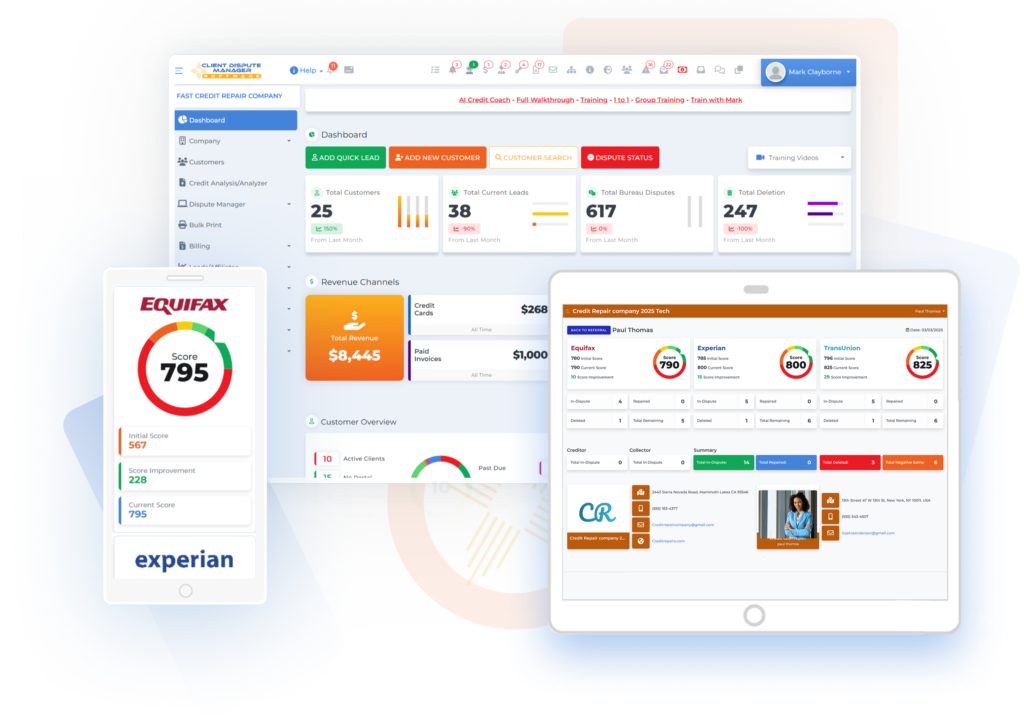
When comparing software solutions, focus on compliance support, ease of use, and scalability. Client Dispute Manager Software is one option that offers:
- Automation for faster dispute processing, helping you quickly prepare, send, and track disputes without unnecessary delays, saving valuable time for both you and your clients.
- Built-in compliance tools to help meet federal and state regulations, including reminders for required disclosures, contract elements, and state-specific forms.
- Client tracking features designed specifically for credit repair businesses, allowing you to monitor progress, document communication, and maintain complete case histories.
- Customizable dispute letter templates that can be tailored to each client’s situation while staying aligned with legal guidelines.
- A progress report generator to keep clients informed with clear, professional updates that build trust and transparency.
- Secure document storage with encryption to protect sensitive client data and meet privacy requirements.
- A centralized dashboard for managing all client cases in one place, making it easier to oversee tasks, deadlines, and case statuses at a glance.
Always assess:
- Whether the platform supports your state’s specific compliance requirements.
- How it integrates with your communication and marketing tools.
- The availability of training and customer support.
Choosing the right software early on will save time, reduce errors, and help you maintain a professional reputation from day one.
Start Today and Explore the Features Firsthand!
Step #3: Create a Compliant Credit Repair Business Plan
When starting a credit repair business, having a clear and compliant business plan is essential. Your plan should cover the credit repair business requirements you need to meet, outline your operational processes, and define how you will stay within the law while serving your clients.
Defining Your Target Market Without Overpromising Results
Identify who you want to serve — such as individuals with recent credit challenges, people seeking financial education, or small business owners.
Make sure your marketing and communications avoid unrealistic claims about results or timelines. Instead, focus on how your services can educate clients, assist with dispute processes, and guide them toward better credit habits over time.
Setting Realistic and Lawful Client Expectations
From the very first consultation, be transparent about what your credit repair services can and cannot do under the law, making sure clients understand the limits and scope of your work.
Provide written information about the dispute process, potential timeframes, and the client’s own role in improving their credit, such as paying bills on time and avoiding new debt.
Clearly outlining these credit repair business requirements reinforces your professionalism, helps clients stay realistic, and ensures you meet credit repair business compliance standards.
By setting clear expectations early, you reduce misunderstandings, build trust, and maintain compliance with both federal and state credit repair laws.
Step #4: Implement Legal and Ethical Credit Repair Practices

Ensuring credit repair business compliance doesn’t stop with your business plan — it must be part of your daily operations. This means following the law in every interaction, maintaining honest communication, and prioritizing your client’s best interests.
By adopting legal and ethical practices, you create a strong reputation and protect your business from regulatory issues.
Avoiding Common Credit Repair Scams
Be aware of tactics that regulators label as scams, such as charging upfront fees before services are completed, promising guaranteed credit score improvements, or advising clients to create a new credit identity.
These practices are not only unethical but also illegal under credit repair laws. Educating your team and clients about these red flags helps you avoid compliance violations and reinforces your credibility.
Ensuring Transparency and Proper Client Disclosures
Transparency is key to maintaining credit repair business compliance. Provide clients with clear, written disclosures that outline their rights, the services you will perform, timelines, and costs, ensuring all details are easy to understand and free from misleading language.
Include the required CROA cancellation notice and any state-specific language in your contracts to meet both federal and state credit repair laws.
Clear communication and thorough documentation not only protect clients but also safeguard your business in case of disputes or audits, while reinforcing your reputation as a trustworthy and law-abiding credit repair professional.
Step #5: Build Efficient Operations for Starting a Credit Repair Business

When starting a credit repair business, efficiency is essential for both profitability and compliance. Building organized operations ensures you can serve more clients effectively, maintain accurate records, and stay on top of legal obligations without feeling overwhelmed.
Streamlining Client Communication and Record-Keeping
Set up clear communication channels with clients, such as secure email, a client portal, or SMS updates, so they know how to reach you and receive timely responses. Keep thorough records of every interaction, signed document, and dispute filed.
Using case management software can help automate reminders, track progress, and store all necessary paperwork securely. This not only improves the client experience but also helps you meet credit repair business requirements for documentation.
Handling Disputes in Line With Credit Repair Laws
Your dispute handling process should follow all credit repair laws at both the federal and state levels. Use only truthful, verifiable information in your dispute letters, and avoid any misleading claims about the potential outcome.
Keep a log of all disputes submitted, responses received, and follow-up actions taken. A structured, compliant dispute process will not only protect your business but also strengthen your reputation as a trustworthy and law-abiding credit repair professional.
Step #6: Stay Updated on Credit Repair Laws and Industry Trends
Staying informed about every change in credit repair law is essential to keep your business compliant and competitive. Laws and industry practices can evolve quickly, and failing to adapt could put you at risk of legal issues or lost client trust.
By committing to ongoing learning, you position your credit repair business as a trusted, knowledgeable resource for clients.
Monitoring Changes in Federal and State Credit Repair Regulations

Both federal and state credit repair laws can change over time, impacting how you operate your business. Regularly review updates from agencies like the Federal Trade Commission (FTC) and your state’s attorney general’s office.
Subscribe to industry newsletters, join professional credit repair associations, and attend compliance-focused webinars to stay ahead of regulatory changes. Maintaining a checklist of updated requirements ensures you are always in step with the latest credit repair business compliance standards.
Ongoing Training for You and Your Team
Continued education isn’t just about legal compliance — it’s also about improving your skills and client services. Schedule regular training sessions for yourself and your team on dispute processes, communication best practices, and updates to credit repair laws.
Use resources like industry conferences, certification programs, and online courses to build expertise.
By making ongoing training a core part of your operations, you strengthen your team’s ability to provide accurate, ethical, and effective services while maintaining compliance at every step.
Step #7: Grow Your Credit Repair Business the Compliant Way
When starting a credit repair business, growth should never come at the expense of ethics or compliance. By focusing on sustainable practices and client-centered strategies, you can expand your services while staying aligned with credit repair business compliance requirements.
Ethical Marketing and Client Outreach Strategies
Market your services in ways that are transparent, truthful, and educational. Avoid making guarantees about credit score improvements or promising specific timelines for results, as these can violate credit repair laws.
Instead, highlight your expertise, compliance commitment, and the value of your process.
Use content marketing, educational webinars, and partnerships with financial literacy organizations to build credibility and attract clients who appreciate your honest approach.
Building a Strong, Trustworthy Credit Repair Brand
Your brand should reflect integrity, professionalism, and compliance at every touchpoint. This means consistent messaging across your website, social media, contracts, and client communications. Share testimonials that focus on client satisfaction and service quality rather than guaranteed results.
Demonstrating your adherence to credit repair business compliance builds trust and positions your company as a reliable leader in the industry.
Over time, this reputation will become one of your most valuable business assets, helping you grow without compromising on legal or ethical standards.
Conclusion
Starting a credit repair business in 2025 requires more than ambition — it demands knowledge, preparation, and a commitment to lawful practices.
By following these 7 steps — understanding credit repair laws, selecting the right tools, building a compliant business plan, implementing ethical practices, creating efficient operations, staying informed about regulations, and growing your business the right way — you lay the groundwork for long-term success.
Always prioritize credit repair business compliance and align every aspect of your operations with both federal and state credit repair laws. This not only protects your business but also strengthens your credibility with clients.
For those seeking a reliable way to manage disputes, track client progress, and maintain compliance from day one, consider exploring tools like Client Dispute Manager Software.
With the right foundation and resources, you can build a credit repair business that thrives ethically and sustainably.

Mark Clayborne
Mark Clayborne specializes in credit repair, starting and running credit repair businesses. He's passionate about helping businesses gain freedom from their 9-5 and live the life they really want. You can follow him on YouTube.
Below Is More Content For Your Review: