

To become a credit repair specialist, start by learning how credit reports work and which federal laws govern credit repair. Take a course, then check your state’s rules before you accept paying clients. Practice on sample reports and use secure, compliant tools. No degree is required, and certification is optional.
Have you ever considered becoming a credit repair expert? There is a huge market for credit repair specialists and people are desperate for help with repairing their credit. There are several different methods for learning credit repair. It is recommended that you choose a method that complements your learning style before becoming a certified credit repair consultant.
Table of Contents
Becoming a Credit Repair Expert Is Your Next Career

A good credit score is one of the most important financial tools an individual or business can possess. Having good credit opens many financial doors, such as being able to get good interest rates, secure loans, and make the major purchases you need in your life.
Indeed, an improved credit score can save you considerable amounts of money in interest over time and get you loans you otherwise wouldn’t qualify for.
This means there is a strong demand for credit repair services that can help people get their credit into better shape. It creates a good business opportunity for professionals who have the skill, drive, and knowledge to become credit repair specialists and successfully assist people in improving their scores.
Anyone who has a subpar credit rating should seriously consider working with a credit repair consultant to improve their score and maintain it in the years ahead. These services commonly work to identify incorrect items on your credit history and petition the major credit reporting agencies on your behalf to get them removed.
Bad credit repair companies give credit repair a bad name and incompetent credit repair companies that do not act with integrity when working with clients will be reprimanded. Ignorance of the law is not an excuse.
Follow state and federal laws closely. The Consumer Financial Protection Bureau and the FTC have taken action against credit repair companies that broke them.
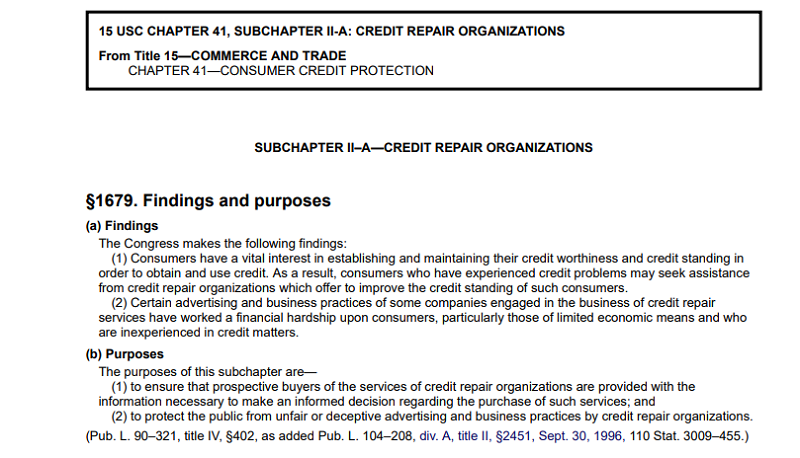
Read and understand the Credit Repair Organizations Act (CROA). This Act prohibits untrue or misleading representations and requires certain disclosures in the offering or sale of “credit repair” services.
For example, the Act bars companies that offer credit repair services from demanding advance payment, requires that credit repair contracts be in writing, and gives consumers certain contract cancellation rights.
What Is the Difference Between a Credit Repair Specialist, Consultant, Agent and Expert?
In most cases, there is no legal difference. Credit repair specialist, consultant, agent and expert are job titles that companies and individuals choose for themselves. None of them is a government license. What matters is whether the person or business follows the Credit Repair Organizations Act and any rules in the state where they work.
In practice, “specialist” often describes someone who reviews reports and prepares disputes. “Consultant” or “agent” may describe someone who also advises clients or sells services for a company.
People earn the word “expert” over time through experience. This guide uses “credit repair specialist” throughout.
Is Credit Repair a Legitimate Career?
Yes. Credit repair is a legal business in the United States when it follows federal and state law. The Fair Credit Reporting Act lets consumers dispute inaccurate information, and the Credit Repair Organizations Act regulates companies that help them. Some states restrict who may charge for credit repair, so confirm your state’s rules (see Step 4).
Under the Fair Credit Reporting Act (FCRA), consumers can dispute incomplete or inaccurate information with the credit bureaus, which generally must investigate.
The Credit Repair Organizations Act (CROA) sets clear limits for your business:
- No payment for any service until that service is fully performed
- A written, dated contract signed by the client. The contract must state the total cost, the services to be performed, the estimated completion time, your business name and address, and the client’s cancellation rights.
- A separate written disclosure of the client’s rights, including their right to dispute errors themselves, given before the contract is signed
- A right to cancel without penalty within three business days of signing. Check your state’s rules for any additional waiting period.
- No untrue or misleading claims about your services, and no advice to make false statements to a credit bureau
If you sell or enroll clients by phone, the Telemarketing Sales Rule also bars fees until the time frame you promised has passed and you have given the client a consumer report, issued more than six months after the results were achieved, that shows those results. This includes calls from consumers who respond to your ads or mailers, because credit repair is excluded from the TSR’s usual inbound-call exemptions (16 CFR 310.6(b)(5)-(6)). Ask an attorney how the rule applies to your sales process. Read the fee rule at 16 CFR 310.4 or the FTC’s guide to complying with the Telemarketing Sales Rule.
Credit repair can help when a report contains errors. Accurate negative information generally cannot be disputed away, so be honest about that from the first conversation.
Professional standards matter too. A sound code of ethics for a credit repair business means being honest about what you can and cannot change, putting fees in writing, protecting client data, and referring legal questions to an attorney.
Federal regulators have brought enforcement actions against credit repair companies that broke these rules. You can search past cases on the CFPB’s enforcement actions page and the FTC’s cases and proceedings page.
Do You Need a License or Certification to Do Credit Repair?
No single federal license is required to work in credit repair, and a private certification is not a government license. But the Credit Repair Organizations Act (CROA) applies to credit repair businesses, and some states add their own licensing, registration, bond or contract rules. Check your state regulator before you take on paying clients.
Certification is voluntary. A certificate from a training program shows clients you have studied the process. It does not give you legal permission to operate, and it does not replace CROA or your state’s requirements. The classes section later in this guide explains what a good program covers.
Read the full text of CROA before you open for business. The Consumer Financial Protection Bureau also publishes consumer credit rules and guidance. Step 4 below explains how to check your state’s rules.
How Do You Become a Credit Repair Specialist?
Follow seven steps: learn how credit reports and scores work, study the federal laws, take training, check your state’s rules, choose between a company job and your own business, practice on sample reports, and set up secure tools with compliant contracts. No degree is needed, but you should know the law before taking clients.
Credit repair affects people’s finances, so learn the basics before you take on your first client. Set aside time and a budget for training, and look at free options as well as paid ones.
For a longer study plan, read the Credit Repair Training Guide: 10 Essential Steps.
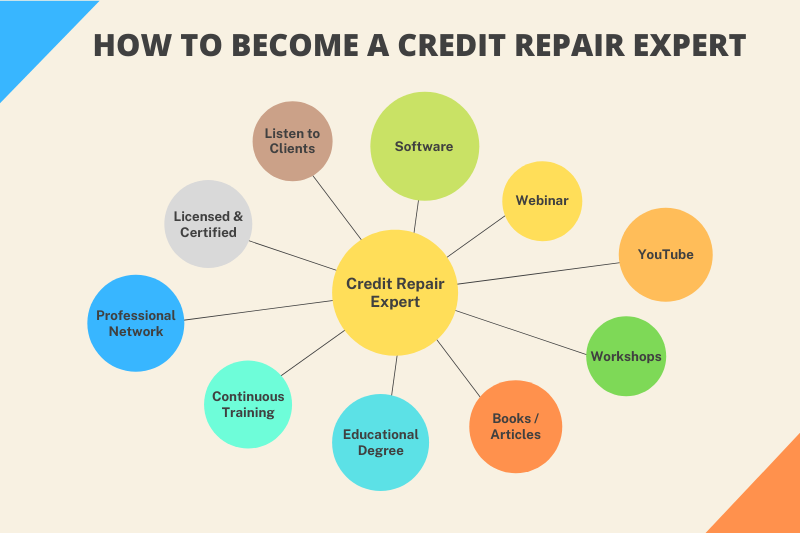
1. Learn How Credit Reports and Scores Work
Before you dispute anything, learn to read a credit report line by line. Understand account status, payment history, public records and inquiries, and how each bureau may report the same account differently. Learn the main factors that affect credit scores. This knowledge lets you spot errors and set honest expectations with clients.
Start with the CFPB’s credit reports and scores pages.
2. Study the Laws: FCRA, CROA, FDCPA and TSR
Credit repair is regulated. The Fair Credit Reporting Act covers consumer dispute rights, and the Credit Repair Organizations Act sets the rules for your business. The Fair Debt Collection Practices Act limits what debt collectors can do, and the Telemarketing Sales Rule adds stricter fee limits for services sold by phone. Know all four before your first client.
Read the official pages for the FCRA, CROA, FDCPA and Telemarketing Sales Rule on ftc.gov.
For a plain-language walkthrough, see how to be compliant with CROA and TSR in your credit repair business.
3. Take Credit Repair Training and Consider Certification
Choose a course that teaches the law, report analysis, dispute documentation and data security, and that fits how you learn best. Software tutorials, webinars, videos, books and workshops all work. Certification is optional, but a certificate from a structured course shows clients you have studied the process. The learning formats below can help you pick.
To compare programs and find free options, see Credit Repair Classes and Certifications: What to Look For, later in this article.
Software
The first method of learning credit repair is investing in credit repair software. The dispute process is the key to repairing a credit report, so you need to know how to do it effectively. Therefore, it is crucial to invest in a reliable Credit Repair Dispute Software that provides Credit Repair Specialists with the needed support.
The best credit repair software educates Credit Repair Specialists on the dispute process as well as how to utilize the software. While learning the software, you will gain valuable information and knowledge regarding the credit repair process.
There are several recommended credit repair software providers. One option is the Client Dispute Manager software. This software is highly recommended because credit repair training is offered within it.
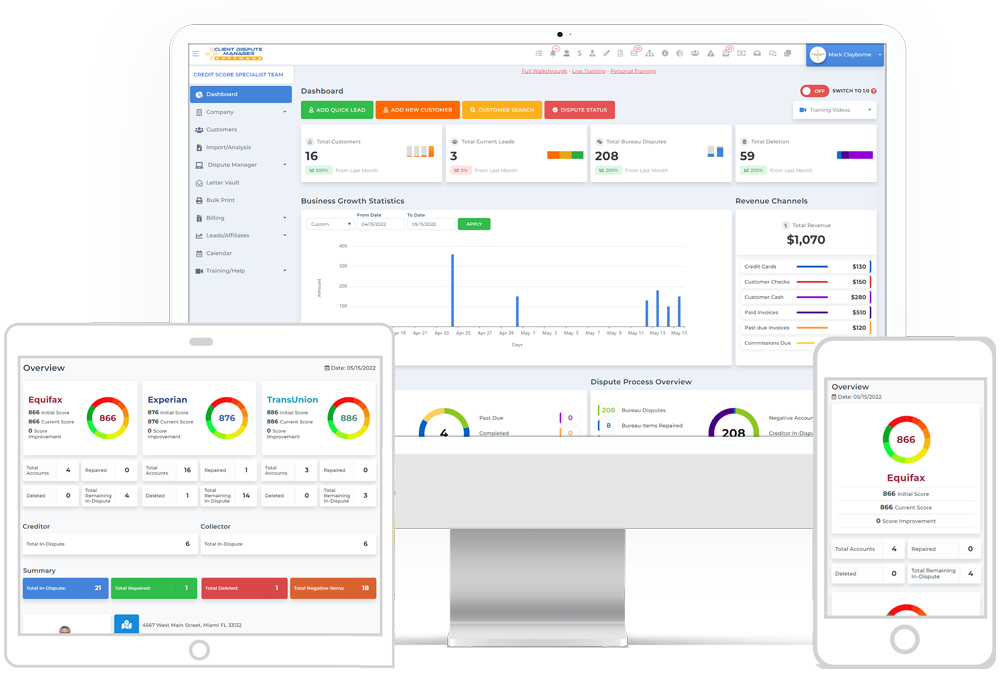
Client Dispute Manager software includes very helpful information, and the in-software videos walk you through the credit repair process step by step. The software not only manages your customers, but it also offers training on how to dispute, what letters to send, and when to send them.
Interestingly, it assists with managing your business and has extensive training and a lead generation training option, which is crucial to growing your business.
Webinar

In addition to selecting the correct software, it is highly recommended that you ensure that additional training is available in a format that complements your learning style.
For example, if you are a visual learner, you may prefer to see the information and training material. Therefore, highly visual training, such as webinars, may be preferred.
YouTube

Another option for a visual learner is credit repair education via YouTube videos. There are informative YouTube videos created by credit repair experts. They provide valuable information on credit repair, the dispute process, how to get started, and how to grow your credit repair business.
YouTube videos are also a great option for auditory learners and are often free! Auditory learners prefer to hear information, so YouTube videos are a great option for auditory learners as well.
In addition, podcasts or audiobooks may be a great method to learn about credit repair methods and the industry for auditory learners.
Books/Articles/Blogs
Also, if you retain information through reading and/or writing, a credit repair course that will allow you to take notes during the class may be the preferred learning method. Reading articles, blogs, e-zine articles, and books is also suggested. There are highly informative books written by credit repair experts that would provide detailed training.
One credit repair book written for beginners is Hidden Credit Repair Secrets by Mark Clayborne. After suffering from a poor credit report for years, he studied the credit repair industry and was able to repair his credit using his newfound credit repair knowledge. He shares his knowledge of credit repair in his book, Hidden Credit Repair Secrets.
This book is highly recommended for individuals new to the credit repair industry and who want to learn about the credit repair process.
Workshops
If reading a book is simply not enough, you may be more of a Kinesthetic learner. As a kinesthetic learner, you will enjoy and retain information best through hands-on activities and experiences.
A face-to-face course or credit repair conference would benefit a kinesthetic learner; this would allow interaction through role-playing and hands-on exercises.
4. Check Your State’s Rules
Federal law applies everywhere, but states can add their own rules. Start with your state attorney general’s office or consumer protection division, then look for any financial regulator that oversees credit services. Ask whether you must register or hold a license, and whether a surety bond or special contract terms apply. Confirm the rules before you accept payment.
Use this checklist for your state:
- Find the agency that regulates credit services businesses, often the attorney general or a financial regulator
- Check whether you must register or get a license before you advertise or sign clients
- Ask whether a surety bond is required
- Read any state rules on contract wording and cancellation periods
- Check whether your state limits who can charge for credit repair
- Save a copy of the rules you found and the date you checked them
CDMS has state guides for starting a credit repair business in California and starting a credit repair business in Texas. For other states, use the checklist above and confirm details with the regulator.
This article is general information, not legal advice. If you are unsure, talk to an attorney licensed in your state.
5. Decide Whether to Work for a Company or Go Independent
Working for an established credit repair company lets you learn under someone else’s systems and compliance processes. Going independent gives you more control, but you take on CROA duties, state requirements, data security and client contracts yourself. It can help to finish training and practice before deciding. Compare both paths in the table below.
| Factor | Working for a company | Going independent |
|---|---|---|
| Stability | Schedule and pay are set by the employer | Depends on the clients you find and keep |
| Responsibility | You follow company processes. The company may own the client relationship, depending on the arrangement, but you can still be liable for your own conduct | You own every client relationship and every decision |
| Startup needs | Training the employer provides or requires | Business registration, contracts, software, secure storage and any state license or bond |
| Compliance load | The company sets policies, but you still must follow the law | You are responsible for CROA, TSR, state rules and data security |
| Finding clients | The company may handle marketing, depending on the arrangement | You handle marketing and referrals yourself |
Working for a company does not remove your personal responsibility. CROA allows lawsuits against any person who fails to comply with it, so misleading claims or improper fees can create liability for you as well as your employer.
If you lean toward your own business, read these 5 hard truths about starting a credit repair business first.
6. Practice on Sample Reports
Draft practice disputes on sample reports first. Decide whether each item looks accurate, and write a practice dispute only for items that look inaccurate or incomplete. Send real disputes only on your own report, and only for items you believe are inaccurate or incomplete. Log the dates and responses for any real dispute you send.
7. Set Up Secure Tools and Compliant Contracts
Clients will share Social Security numbers and account details with you. Use software with secure storage instead of email folders, and limit who can access client files. Have your contract and CROA disclosure ready before you sign anyone, and confirm your fee timing follows CROA and, for phone sales, the Telemarketing Sales Rule.
The FTC’s guide to protecting personal information is a helpful checklist for small businesses that handle sensitive data.
Do You Need a Degree to Become a Credit Repair Specialist?
No. There is no degree requirement to work in credit repair, and a degree is not a license. Courses in business, accounting, personal finance or law can help you run a business and understand contracts. Treat a degree as optional background, and focus first on learning credit reports and the laws that apply.
If you are already in college, a personal finance or business law class is a useful extra. It is not a substitute for studying the FCRA and CROA directly.

Continuous Training

Continuous training is critically important to every profession, including the credit repair industry. Many aspects of the industry change frequently, especially in the area of technology.
Software, for example, has become more necessary than ever, and it’s important to learn which programs are heavily used in the industry as well as how to use and implement them in your business.
Seminars, courses, and programs keep you updated on the kinds of services customers expect to receive from a credit repair consultant as well as changing industry standards.
Laws also change occasionally, and it is important to keep your knowledge on them up-to-date.
Cultivate A Professional Network
Networking is also important for maintaining and growing a career as a credit repair specialist. Networking with other professionals not only furthers your own professional education but puts you in touch with people who can connect you with new clients to grow your business.
You can also find quality employees through a professional network when your business has grown to the point of needing to find additional staff. Professional networks can also provide you with critical continuing education programs and other resources.
Find a mentor credit repair expert if you can – someone who has experience in the credit repair business and is willing to teach you about the industry. They can be an invaluable resource for helping you avoid mistakes and achieve success as a credit repair expert yourself.
Get Licensed Where Your State Requires It
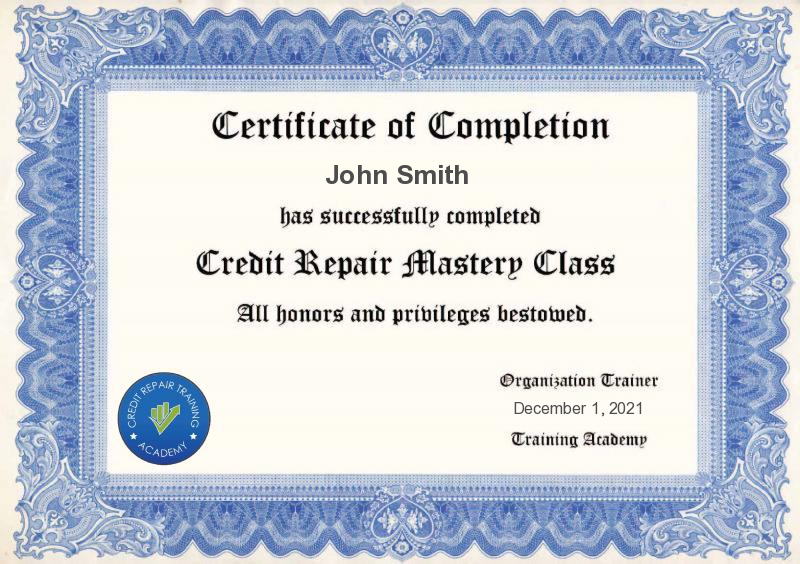
No single federal license covers credit repair, but some states require registration, a license or a surety bond before you can charge clients. Check your state’s rules first, as Step 4 explains. A certificate from a training program can show clients you have studied the process, but it is not a license and does not replace the Credit Repair Organizations Act or your state’s requirements.
Listen to Your Clients

An important but often overlooked way to become a credit repair expert is to listen to your clients and learn from the experiences you have with them. This is invaluable for understanding what you are doing right and the aspects of your business that could use work.
Other things you can do that could make your credit business likely to succeed:
- Constantly evaluating your credit repair consultant operations
- Being willing to make the needed changes
- Striving for improvement at every turn
- Putting your clients’ needs first
Word of mouth marketing is one of the most powerful tools to promote your business. And all it requires is giving customers a good experience and encouraging them to recommend you to others.
If you are not sure of your learning style, consider training that covers most of the styles of learning and will allow you to read, listen, watch, and participate. There is a lot of information to learn and seeing, hearing, reading, and participating will ensure that all learning styles are covered.
Credit Repair Classes and Certifications: What to Look For
A good credit repair class teaches the federal laws, how to read credit reports, how to document disputes and how to protect client data. It should cite official sources and never promise results. Compare programs by provider type, format, coverage and certificate, then check what that certificate actually means before you pay.
| Type of provider | Format | What’s covered | Certificate? | What to check |
|---|---|---|---|---|
| Trade association | Online modules or live events | Compliance and ethics standards | Often, after passing an exam | Who writes the exam and whether renewal is required |
| Online course platform | Self-paced video lessons | Varies widely, from basics to business setup | Often a completion certificate | The instructor’s background and whether law topics cite official sources |
| University continuing education | Scheduled classes, online or in person | Personal finance and business basics | Sometimes a certificate of completion | Whether the class covers credit repair law or only general finance |
| Free resources (government guides, software training, free courses) | Articles and short courses | Consumer rights and report basics | Sometimes | Whether the source is official and current, and what any certificate represents |
A good course should teach:
- The FCRA and consumer dispute rights
- CROA rules on contracts, disclosures, cancellation and fee timing
- The Telemarketing Sales Rule for phone sales
- The FDCPA and how debt collectors may act
- Credit report analysis
- Dispute documentation and record keeping
- How data is reported by creditors, including Metro 2 basics
- State rules and how to look them up
- Data security for client files
Questions to ask when you compare programs:
- Who teaches it, and do they have real credit repair experience?
- When was the material last updated?
- Does it link to the law itself or to ftc.gov and consumerfinance.gov?
- Does it include practice exercises with sample reports?
- What does the certificate say, and does it need renewal?
- Is the full cost and refund policy in writing before you enroll?
Avoid any course that promises guaranteed deletions, a set score increase or a certain income. No course can control what the credit bureaus decide, and claims like these mirror the misleading promises CROA prohibits.
For structured training from CDMS, see the Credit Repair Mastery class.
Should a Credit Repair Course Cover Metro 2 and Furnisher Disputes?
Yes, it helps. Metro 2 is the standard data format many creditors use to report accounts to the credit bureaus, and creditors that furnish data have their own duties under the FCRA. Understanding how an account is reported, and how to dispute directly with a furnisher, helps you spot where an error started.
Under the FCRA, furnishers must report accurately and must investigate disputes forwarded by a credit bureau. See 15 U.S.C. 1681s-2. Consumers can also dispute certain information directly with the furnisher under 12 CFR 1022.43, but a furnisher does not have to investigate a direct dispute that a credit repair organization submits or prepares (12 CFR 1022.43(b)(2)).
A goodwill letter is different. It asks a creditor for a courtesy adjustment rather than disputing an error, and the creditor can decline the request.
How Much Do Credit Repair Classes Cost?
Costs range from free resources to paid programs, and prices change often, so this guide does not list them. What you pay usually reflects the course length, live instruction, practice materials, software access and whether a certificate is included. Compare what each program teaches before you compare cost.
Ask for the full price and refund policy in writing before you enroll. Starting with free training can help you decide whether you want to pay for a deeper course.
Be careful with any program that sells itself on a return on investment. Your results depend on your own work, your market and how well you follow the law, and no course can promise income.
Are There Free Credit Repair Classes and Certificates?
Yes. Several free options teach the basics. Client Dispute Manager Software members get nine training programs, each with its own certificate and badge, at no extra cost. The CFPB and FTC publish free guides on credit reports and consumer rights. Free training is a good starting point, though a free certificate is still not a license.
- Certificates and badges included with CDMS software
- An overview of the nine CDMS certifications
- The free credit repair training and business course
- The CFPB’s credit reports and scores resources
Use free courses to learn the process and the law. Before you take clients, make sure your training covers CROA and your state’s rules in detail.
Should You Take Credit Repair Classes Online or Near You?
Online classes let you study at your own pace and replay lessons, which suits people who work another job. In-person classes near you, such as community college continuing-education courses or local workshops, give you live practice and the chance to ask questions directly. Either format works if the course covers federal law and your state’s rules.
If you search for classes near you, check whether the course is taught by someone with real credit repair experience. A local class can be especially useful for learning your own state’s requirements.
Many people combine both. They learn the basics online, then attend a live session or workshop for hands-on practice.
How Do Credit Repair Specialists Get Paid?
It depends on the business model. Employees may earn a wage or salary, sometimes with commission. Independent specialists may charge a monthly fee or a fee per completed item. Under CROA, no fee can be collected before the service is fully performed, and phone sales face stricter Telemarketing Sales Rule limits. This guide makes no income claims.
Common models include:
- A wage or salary from a credit repair company
- Commission on clients you enroll for an employer
- A monthly fee, billed only after that month’s services are performed
- A fee per item, charged only after the work on that item is complete
The monthly and per-item models may be unlawful for phone sales under the TSR and under some state laws. Get legal review before adopting any fee structure, and put the fee terms in your written contract.
Earnings vary widely and depend on your own work, your market and your compliance, so this article does not give income figures. Treat any program that promises a specific income with caution.
If you plan to run your own business, read a step-by-step guide to setting up your business.
The Benefits of Being A Credit Repair Expert
1. The Ability to Help People

One of the greatest joys of working in the credit repair industry is being able to help people. Customers come to you hoping you can improve something as important to their quality of life as their credit health, and you are responsible for delivering on that.
This is an enormous responsibility that can feel overwhelming at times but can also be one of the most rewarding careers you can have. When you learn that your help allowed a family to buy a home or a student finally get out of debt, it creates a strong personal satisfaction that shouldn’t be underestimated.
2. The Flexibility to Work as An Employee or Independently
A career as a credit repair specialist is more flexible than other jobs because you can seek employment from a traditional employer, go into business for yourself, or even work as a freelance credit repair consultant. This allows for different approaches that fit your preferences, career goals, and schedule.
Many people prefer the stability of working for an employer. So some credit repair specialists will look to work for an established credit repair agency. Others are entrepreneurs at heart and want nothing more than to start their own business.
It is relatively easy to start up your own credit repair business and begin serving your own clients, but doing so is a major undertaking that should be taken seriously. For people who are more interested in freelance work or doing credit repair projects some of the time, you can also take on projects and clients when it suits you.
3. You Learn A Lot About Good Credit Management
In the course of your professional work, you will learn a lot about good credit management practices that not only help you educate your customers on the topic but will also help you in your personal finance.
In teaching your clients about the various factors that impact their credit scores and by how much, you can apply that knowledge to your credit report. You will also learn how important it is to monitor your credit reports for any false information or signs of identity theft.
4. You Are an Expert

Being an expert in your field is a prestigious position. As a credit repair expert, you will be looked to as an authoritative source on the many nuances of this topic. This is a major responsibility, but it can result in a lot of pride in your work as a credit repair consultant.
When you have successfully positioned yourself as an expert in your field, you become aware of the big picture and how your industry is interconnected with others. A credit repair specialist can specialize in a particular area of credit repair and occupy an in-demand niche.
5. You Can Use Your Knowledge

Perhaps you already have extensive knowledge about credit repair topics and would like to use that knowledge professionally. You might also already be familiar with business management or have always dreamed of starting your own business.
Being a credit repair consultant is an in-demand business opportunity where you can put these skills to work and build a flourishing career as a credit repair specialist out of them.
Roles and Responsibilities of a Credit Repair Expert
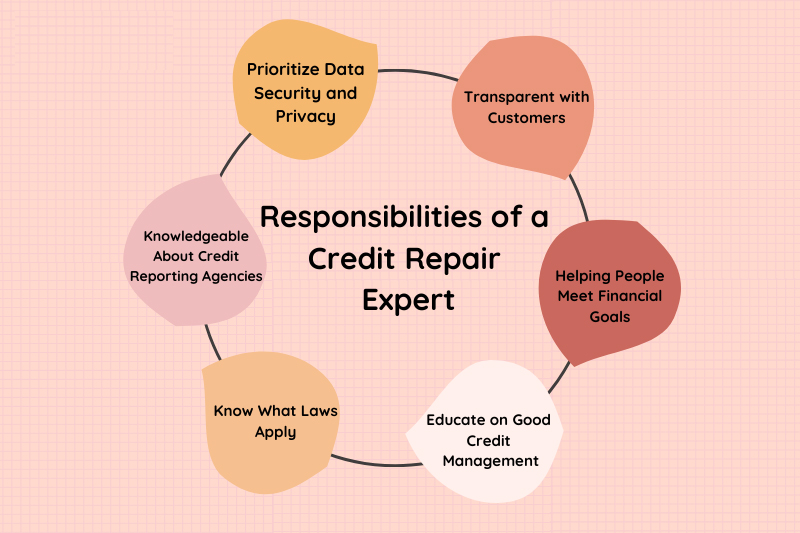
There are quite a few roles credit repair experts occupy as well as responsibilities you have to your customers.
1. Being Transparent with Customers

Customers looking for credit repair services are seeking someone trustworthy who can help them achieve a better credit rating. For this reason, you must be transparent and honest in all of your dealings with customers.
Because clients can find it hard to tell good providers from poor ones, be especially careful to show that your business is credible and follows the law.
Clients will appreciate transparency and honesty from their credit repair specialists and be more likely to think highly of you.
2. Helping People Meet Financial Goals

While credit repair companies cannot magically get consumers out of debt, they provide a number of services that equip clients with the right tools to make better financial decisions and maintain good credit going forward.
A qualified credit repair specialist will look over the negative items on a credit report and offer a variety of methods to handle each, including their pros and cons.
This helps customers address these negative items in the most effective way possible and ultimately meet their long-term financial goals.
3. Educate Customers on Good Credit Management
One of the most important responsibilities you will have in this profession is to educate customers on good credit management practices to maintain healthy credit going forward.
A credit repair consultant is responsible for educating customers on the options they have to improve their credit to decide for themselves the best way to move forward.
Each client’s financial information and background will be different, and people learn in different ways too. You will learn to tailor your approach to each client so that they will get the most out of your services.
4. Be Knowledgeable About the Major Credit Reporting Agencies
Credit repair customers need to work closely with not only their credit repair specialist but also with the major credit reporting agencies that oversee consumer credit history. Because of this, you need to have a strong understanding of how each of these companies works to manage your business most effectively.
The top three credit bureaus are TransUnion, Equifax and Experian. They are are similar, but they also have some notable differences, such as the fact that a person’s credit score can vary between the three agencies.
It is critically important for a credit repair consultant to understand all current laws and regulations that govern consumer credit. Doing so not only helps you provide better service to your clients but also prevents your business from having legal trouble.
For example, anyone providing credit repair services is required by law to present customers with a written contract outlining what they will do before services are rendered.
A credit repair specialist needs to understand federal and state regulations on credit repair practices. If you are ever in need of legal advice or have a legal question, be sure to contact an attorney qualified to help credit repair consultants.
5. Know What Laws Apply to The Profession
Federal agencies involved in consumer credit rights include the Federal Trade Commission and the Consumer Financial Protection Bureau. Key federal laws include the Fair Credit Reporting Act, the Credit Repair Organizations Act, the Fair and Accurate Credit Transactions Act, and the Fair Debt Collection Practices Act.
6. Prioritize Data Security and Privacy
When you work as a credit repair consultant, you run a business that closely handles your customers’ sensitive financial information. Hence, it is imperative that you prioritize the security of that data.
Undoubtedly, data breaches of sensitive financial information can be devastating for your business because you will lose customers’ trust. So invest in software and cybersecurity tools upfront to protect the information you work with.
You can certainly showcase the data security measures you take when trying to draw in new customers or affiliates to your business.
FAQs
How do I become a credit repair specialist?
Learn how credit reports and scores work, then study the FCRA, CROA, FDCPA and Telemarketing Sales Rule. Take a training course, check your state’s rules, and practice on sample reports. Decide whether to join a company or start your own business, and set up secure tools and compliant contracts before taking clients.
Do I need a license or certification to do credit repair?
No single federal license is required to work in credit repair, and a private certification is not a government license. But the Credit Repair Organizations Act applies to credit repair businesses, and some states add licensing, registration or bonding rules. Check your state regulator before you take on paying clients.
Are credit repair courses worth it?
A course is worth it when it teaches the law with official sources and gives you hands-on practice with reports and disputes. Start with free resources to learn the basics first. Be cautious of any course that promises guaranteed results or income, since no program can control bureau decisions or your business outcomes.
How long does it take to learn credit repair?
There is no fixed timeline. It depends on your study time and on what you already know about credit. Plan to keep learning after you start, because laws and bureau procedures change. Do not take paying clients until you understand CROA and your state’s rules, whatever pace you study at.
What skills does a credit repair specialist need?
You need careful reading to spot errors on reports and clear writing for dispute letters. Organization matters, since you will track deadlines and documents for many clients. You also need a working knowledge of consumer credit law. Honest communication matters most, because clients need realistic expectations about what can change.
What software do credit repair specialists use?
Many specialists use credit repair software to store client files securely and track disputes and deadlines. Look for secure storage with access controls. Client Dispute Manager Software includes in-software training on the dispute process alongside client management tools. Avoid keeping client data in email or unsecured folders.
How are credit repair specialists paid?
Employees may earn a wage or salary, sometimes with commission. Independent specialists may charge monthly or per completed item. CROA bars collecting any fee before the service is fully performed, and the Telemarketing Sales Rule sets stricter limits for phone sales. Earnings vary widely, so treat any promised income figure with caution.
What are the risks of working in credit repair?
The main risks are legal. Breaking CROA or the Telemarketing Sales Rule can lead to enforcement actions and lawsuits, and states can add their own penalties. Mishandling client data creates privacy risk, and unrealistic promises can damage your reputation. Reduce these risks by learning the law and never promising results.
Conclusion
No matter the method you choose, the credit repair training that you receive should be easily accessible and detailed. As a Credit Repair Specialist, you will have to opportunity to assist thousands of people with your knowledge. Invest in your training and you will be well on your way to becoming a Credit Repair Expert.
Bonus: Now that you have read this article, why not take your new skill and start your own credit business helping others? We have free training that can help you do just that.
Click here to learn more.
